
Why Electrify?
Here's the simplest way to think about electrification: it's the shift from burning fuel to using electricity as the energy source that keeps your home comfortable. While electrification is a broader movement that spans transportation, industry, and commercial buildings, for most homeowners, the conversation begins and ends with HVAC. That's where the biggest opportunity lives.
Today's gas furnaces and oil boilers produce heat through combustion, relying on a fuel source that must be piped, stored, and burned. Electric systems take a fundamentally different approach. They use electricity to move heat or generate it through resistance, with no need for a gas line, no open flame, and none of the safety risks that come with on-site combustion.
How Electrification Works in HVAC Systems?
Heat Pumps (Air-Source and Ground-Source)
A heat pump is the technology most synonymous with HVAC electrification, and for good reason. Rather than creating warmth by burning something, a heat pump transfers heat from one place to another using a refrigerant cycle. In winter, it absorbs heat from outdoor air and transfers it inside. In summer, it reverses that process, absorbing heat from your home to keep things cool. One system, two functions, zero combustion.
Air-source heat pumps are the most widely installed option for electrification trends and have made enormous leaps in cold-weather performance. The Lennox SL22KLV cold-climate heat pump, for example, operates reliably down to -20°F and maintains up to 100% capacity at 5°F. That kind of performance has erased the old assumption that heat pumps are only viable in mild climates.
Ground-source heat pumps, often called geothermal systems, take a different approach. They tap into the stable temperatures just below the earth's surface to deliver consistent heating and cooling regardless of what's happening outside. The upfront investment is higher, but the long-term efficiency gains are substantial.
For homeowners in the most extreme conditions, dual-fuel systems pair a heat pump with a gas furnace, giving you electric efficiency for most of the year and combustion power on the coldest days. It's a practical on-ramp to full electrification without sacrificing comfort.
Electric Furnaces and Ductless Mini-Splits
An electric furnace generates heat through resistance elements and distributes it through your existing ductwork. It eliminates combustion entirely and works well in moderate climates or as part of a heat pump system. No gas line required, no carbon monoxide concerns.
Ductless mini-splits offer something different: room-level precision. Each indoor air handler connects to an outdoor unit through a small refrigerant line rather than ductwork, which makes installation in older homes, additions, or hard-to-heat spaces far simpler. If you've ever had a room that's always too hot or too cold compared to the rest of the house, a mini-split could be a solution.
Why HVAC Electrification Is Growing?
Environmental Regulations and Rising Efficiency Standards
Building codes and appliance standards across the U.S. are increasingly pushing new construction and replacements toward electric solutions. Efficiency benchmarks like the Seasonal Energy Efficiency Ratio (SEER2) and Heating Seasonal Performance Factor (HSPF2) keep rising, and today's variable-capacity heat pumps exceed those standards with room to spare. States and municipalities are also updating their codes in ways that favor or require all-electric construction, creating structural momentum that isn't going anywhere.
Shift Toward Renewable Energy Compatibility
One of the most compelling long-term arguments for electrification is how well it pairs with clean energy. A gas furnace will always need gas. An electric heat pump can run on whatever electricity your home has access to, including power generated by your own solar panels. As renewable energy becomes more accessible, an electrified home becomes a genuinely sustainable one. Net metering programs even allow homeowners to push excess solar energy back to the grid, offsetting costs further.
Utility Incentives and Rebates
The financial incentives available to homeowners considering electrification have never been stronger. Connect with your local Lennox dealer, who can walk you through what incentives apply to your specific situation.
Benefits of Electrification in HVAC
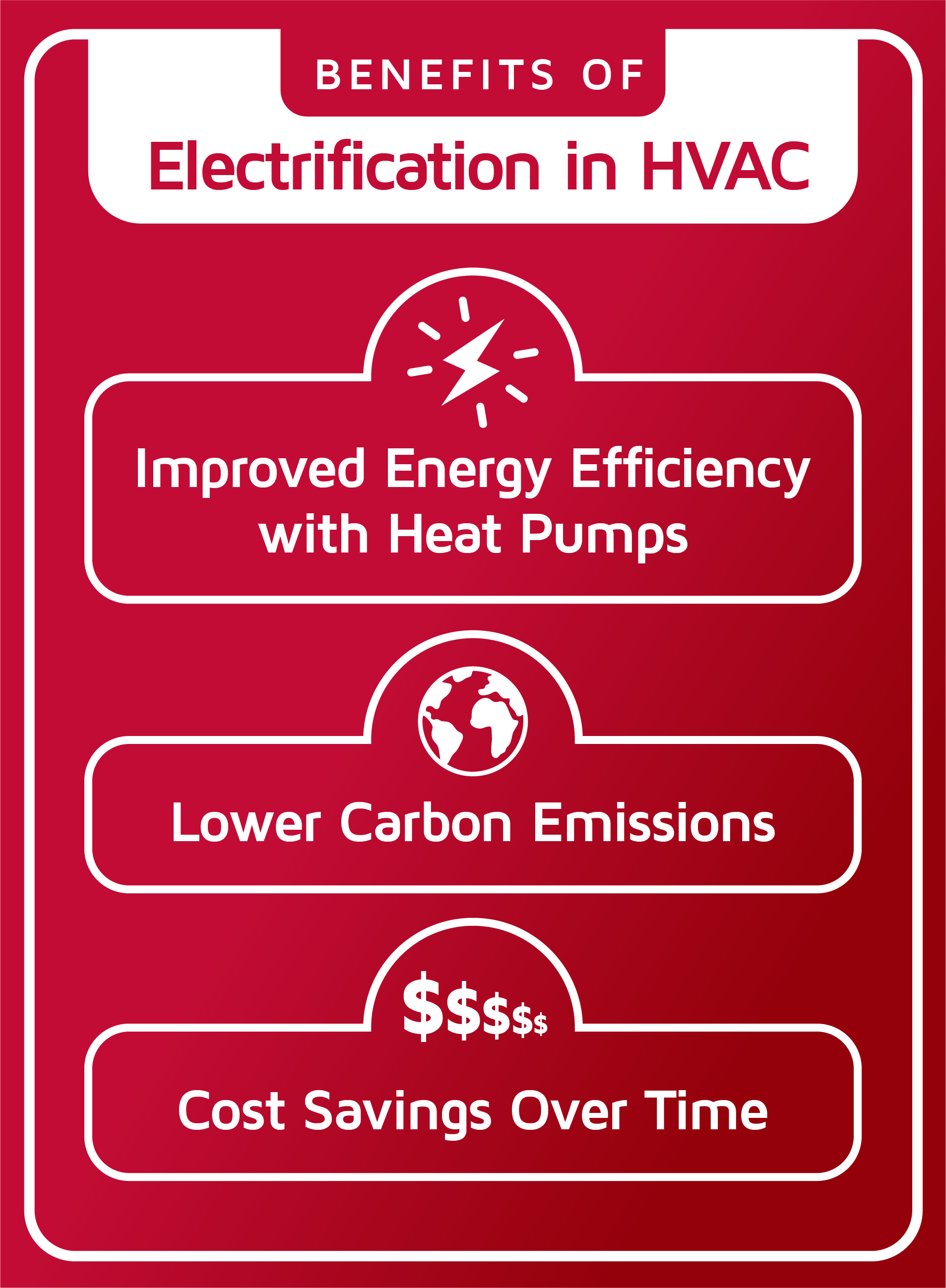
Improved Energy Efficiency with Heat Pumps: Compared to systems that generate heat, like traditional furnaces, heat pumps are highly energy efficient and make particularly smart use of electricity. A heat pump works by moving heat from one place to another. Because of this, it can deliver much more heat than the electricity it uses. This efficiency can translate to lower operating costs in appropriate climates.
Lower Carbon Emissions: Removing combustion from your home's energy equation cuts your direct greenhouse gas emissions to zero. And as the electrical grid continues to incorporate more renewable sources, the indirect emissions tied to your electricity use shrink as well. An electrified home gets cleaner over time without any additional action on your part.
Cost Savings Over Time: Greater efficiency translates directly to lower monthly energy bills. Add potential utility rebates and incentives on top of that, and the upfront cost of upgrading to an electric system becomes far more manageable than it might first appear.
Challenges of HVAC Electrification
Upfront Installation Cost
An electric heat pump system, with a heat pump and air handler, typically carries a higher sticker price than a basic air conditioner and gas furnace system. That gap narrows considerably when you factor in incentives and long-term operating savings, but it is a real consideration for upfront budgeting.
Electrical Panel Capacity
Many older homes were not wired with all-electric HVAC in mind. Upgrading your electrical panel to support new equipment is a one-time investment that also increases the overall value of your home and sets it up for additional electric technologies down the line.
Grid Dependency
An all-electric home relies on the power grid staying on. Battery storage systems and backup generators are well-established solutions to that concern, and the grid itself is getting cleaner and more resilient every year.
Performance in Extreme Climates
This is a concern that modern technology has largely addressed. Cold-climate heat pumps now perform reliably in conditions once considered outside the range of electric heating. For situations where that's still not enough, dual-fuel systems provide a built-in safety net.
Common Electrification Upgrades for Homes
Replacing an AC and furnace system with an electric heat pump system: The single biggest step toward a fully electrified home
Switching to electric water heaters: Heat pump water heaters are highly efficient and eliminate another gas appliance from the equation
Installing smart thermostats and energy management controls: Connected thermostats allow real-time monitoring and optimization of your electric systems
Improving insulation to support electrification upgrades: Electric systems perform best in a well-insulated home; reducing heat loss amplifies every efficiency gain
Is Electrification Right for Your Home?
There's no single answer that applies to every household. Several key factors shape whether and how you should move forward.
Your climate zone is the starting point. Cold-climate heat pumps have dramatically expanded the viable range for electric HVAC, but understanding how your local conditions interact with different technologies matters. A local Lennox dealer can give you specific guidance for your region.
Your existing HVAC system’s age tells you a lot about timing. A system approaching the 10 to 15-year mark is approaching the end of its reliable service life. That transition point is the ideal moment to evaluate whether your next system should be electric.
Your budget and energy goals shape which upgrades make the most sense first. Some homeowners start with a heat pump and add electric water heating later. Others pursue a whole-home approach from the start. Either path works.
A home energy audit is one of the smartest first steps you can take. It surfaces where your home is losing energy and helps you prioritize improvements so that any HVAC upgrade performs at its full potential from day one.
The Future of Electrification in HVAC
Smart home technology and electrification are moving in the same direction. Connected thermostats, zoning systems, and home energy management platforms give homeowners real visibility into how their systems are performing. Pair that with solar panels and battery storage, and an electrified home becomes not just a sustainable choice but an active contributor to a cleaner grid.
Ready to Make the Move?
Electrification represents a real shift in the way homes are heated and cooled. The technology is here, the financial incentives are real, and the long-term case is stronger than it's ever been. Whether you're driven by lower energy bills, a cleaner home environment, sustainability goals, or simply the need to replace an aging system, electric HVAC delivers on all of it.
When you're ready to find out which solutions are the right fit for your home, connect with a local Lennox dealer for a personalized assessment and a clear path forward.
We’re here to help make home comfort solutions a little clearer and a lot less stressful.
No Worries. It’s a Lennox.