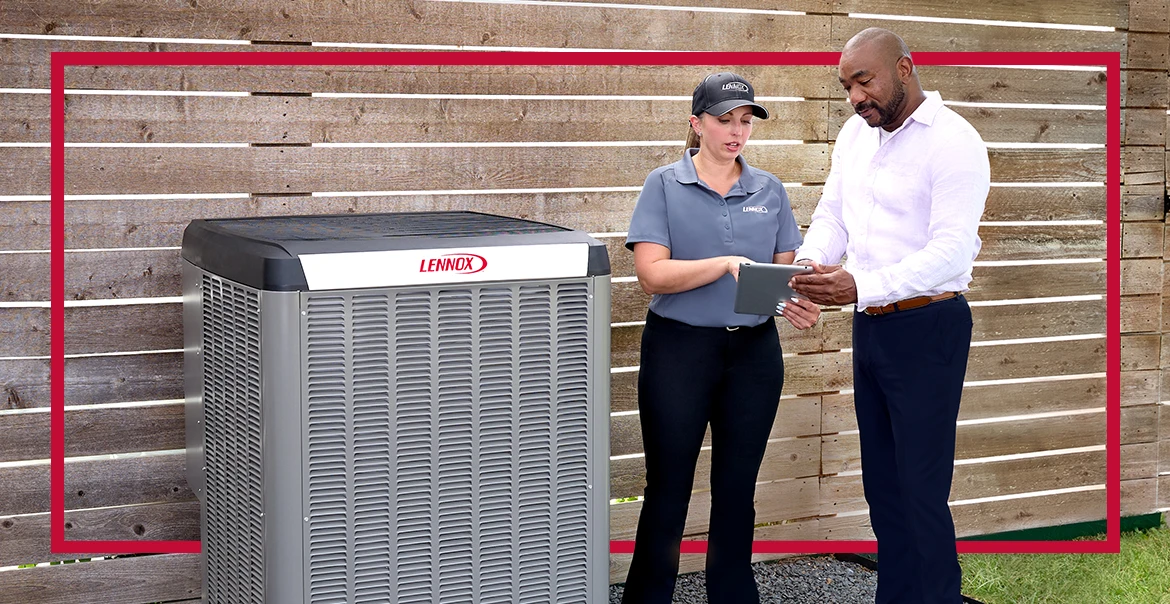
Buying and installing a new HVAC system is one of the biggest investments you'll make in your home, and understanding what drives the cost puts you in control. When you start researching HVAC system costs, the range of numbers can feel overwhelming. That's completely normal. But the most important shift you can make is moving away from thinking about price alone and toward thinking about value.
Looking Beyond the Upfront HVAC Cost
A new HVAC system isn't just about replacing old equipment. It's an upgrade to the way your entire home feels. Cleaner air. More consistent temperatures. Quieter operation. Lower energy bills. That's what a quality system actually delivers, and those benefits start showing up the moment it's installed.
When you factor in the cost of keeping an aging system alive, including repair bills that can run anywhere from $100 to $2,000 per visit, plus diagnostic fees of $90 to $350 and labor costs of $100 to $200 per hour^, the math starts to tell a very different story. A new system helps stop that cycle.
Factors That Influence HVAC System Costs
No two homes are exactly alike, and neither are their HVAC needs. From size to insulation needs to the year of construction, there are many aspects that’ll affect your HVAC system cost. Here are the key factors that shape what you'll pay.
- Size of Your Home and System Capacity
Your home's square footage is the starting point for any HVAC conversation. A properly sized system is critical. Too small and it can't keep up. Too large and it short-cycles, wasting energy and wearing out faster. If your home doesn’t require any new ductwork, expect your new HVAC system to fall within the following ranges*:
- Homes under 1,500 sq. ft. typically need a 1.5 to 2-ton system, with costs ranging anywhere from $4,500 (low) to $6,500 (typical) to $8,500 (high).
- Homes between 1,500 and 2,500 sq. ft. typically require a 2.5- to 3.5-ton system, with costs ranging from $5,000 (low) to $9,000 (typical) to $13,500 (high).
- Homes over 2,500 sq. ft. typically require a 3.5- to 5-ton system, with costs ranging from $13,500 (low) to $17,000 (typical) to $20,000 (high).

- Installation Complexity and Labor
Homes with existing ductwork in good condition cost less to work with than those that need duct replacement or modification. Accessibility matters too. Attics, crawl spaces, and tight basements all affect how long installation takes and what it costs. Homes that require new ductwork, electrical upgrades, or structural modifications will incur higher labor costs, but professional installation ensures your system runs at peak efficiency and operates as designed.
- Brand, Equipment Quality, and Warranty
The brand you choose has a direct impact on both your upfront cost and your long-term peace of mind. Brands like Lennox are engineered for reliability and backed by warranty coverage that can save you thousands over your system's lifespan. A 2025 American Home Comfort Study found that contractor recommendations are the biggest influence on brand selection. That trust is earned through consistent performance, dependable products, and the confidence contractors have in the systems they install.
- Product Features
Product features also play a major role in determining the price of a new HVAC system. While standard models provide reliable heating and cooling, more advanced systems often include features that enhance comfort, efficiency, and performance. These may include smart home compatibility for greater control and scheduling flexibility or advanced air filtration that helps improve indoor air quality. As you move up in features, you're not just paying for the equipment itself; you're investing in a system that delivers a more personalized, energy-efficient, and comfortable home experience for years to come.
Cutting Energy and Costs
A new HVAC system doesn't just replace what you had. It breaks the cycle of repair bills, surprise breakdowns, and energy waste that older systems quietly pile onto your monthly budget.
And if your current system is aging, you're likely spending even more keeping it alive. Minor repairs like thermostat or sensor issues can run $100 to $600. Major component fixes can jump from $1,000 to $5,000, depending on the size of the component and the time it takes to replace it. On top of that, you're often paying $90 to $150 just for a diagnostic visit, $100 to $200 per hour in labor, and $150 to $350 for any emergency or after-hours calls^. Those costs don't just hurt your wallet. They chip away at your peace of mind.
Look for systems with high SEER2 or AFUE ratings for the most energy-efficient solutions. Simple efficiency upgrades that work alongside your new system, such as sealing air leaks, improving insulation, sealing ducts, or installing a smart thermostat, can save an additional 15 to 30 percent on annual energy costs. That's another $170 to $330 back in your pocket every single year**.
Why Upgrading Your HVAC Is Worth It?
Think of a new HVAC system as an upgrade that pays you back. It removes the stress of scheduling service visits and the constant worry that your AC or furnace might fail at the worst possible moment.
Many modern systems feature variable-capacity operation, which means they adjust heating and cooling output to match exactly what your home needs at any given moment, like a dimmer switch for your comfort. Variable-speed blower motors ramp airflow up or down gradually, keeping temperatures even throughout your home without the sudden blasts of hot or cold air that older systems produce.
The result? A home that simply feels better, all the time.
And the savings are real. Upgrading to a modern, high-efficiency HVAC system typically reduces heating and cooling costs by 20 to 40 percent, with homeowners saving $100 to $800 per year, depending on the system type and efficiency level. Over a standard 13-year system lifespan, that adds up to $1,300 to $10,400 in total energy savings*^.
How to Choose the Right HVAC System for Your Home?
- Start with your home's actual needs. Your home's size, layout, and insulation quality all determine the system capacity you need. A proper load calculation, something a trusted Lennox dealer will do for you, ensures you're not overpaying for an oversized unit or struggling with one that can't keep up.
- Decide on the right system type. From central air systems to ductless options, each has its strengths. Traditional heat pumps work well in moderate climates. Cold climate heat pumps are a strong fit for colder regions, as are furnaces paired with air conditioners. Your dealer can walk you through what makes the most sense for where you live.
- Consider energy efficiency. Higher-efficiency models cost more upfront but deliver meaningful long-term savings through lower utility bills. Features like variable-speed motors and smart thermostats optimize performance and comfort every single day.
Focus on Value, Not Just Price
A new, standard HVAC system can replace an aging unit, helping you avoid the ongoing expense of frequent repairs and provide reliable heating and cooling. A better system builds on that foundation, with higher energy efficiency, quieter operation, and more consistent temperatures that improve comfort while lowering monthly utility bills. The best systems deliver the highest levels of performance with advanced features like variable-capacity technology, variable-speed airflow, and zoning capabilities that maximize comfort, optimize energy use, and provide the greatest long-term value.
While the upfront investment increases at each level, so do the benefits. A trusted Lennox dealer can help you find the right system that fits both your budget and your goals for comfort and savings in the years ahead.
Ready to find your perfect fit? Connect with a trusted Lennox dealer near you and take the first step toward a home that feels better every single day.
We’re here to help make home comfort solutions a little clearer and a lot less stressful.
No Worries. It’s a Lennox.™