
How do Boilers Work?
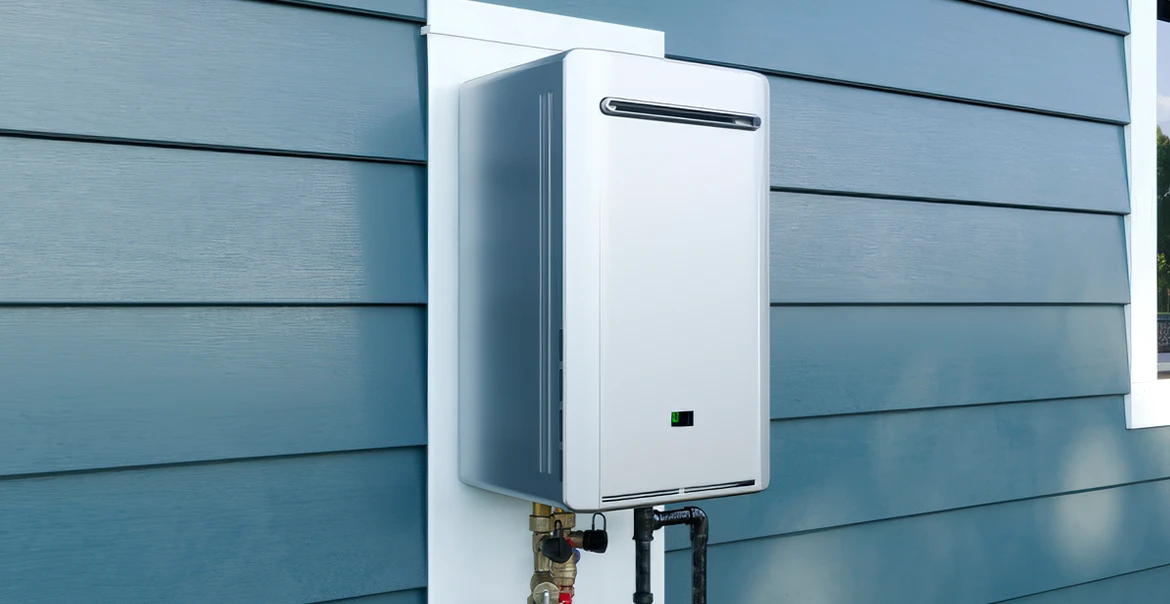
Instead of heating air like a furnace does, a boiler heats water and pushes it through radiators, radiant floor systems, or baseboard heaters to keep your living spaces comfortable and provide hot water through your taps. Because water holds and transfers heat more efficiently than air, boiler systems are known for delivering steady, even warmth throughout a home.
Traditional boilers handle that job by working alongside a separate cold-water storage tank and a hot water cylinder. The system heats a supply of water, stores it, and draws from that stored supply whenever your taps or heating demand it. It works, but it comes with trade-offs: you can run out of hot water if demand is high, the extra tanks take up real space in your home, and keeping a stored supply warm around the clock uses energy even when you do not need it.
A combi boiler takes a different approach. Short for combination boiler, it combines central heating and hot water delivery into a single, compact unit with no cylinder and no storage tank required. Instead of keeping water warm in reserve, it heats water on demand, right at the moment you turn on a tap or switch on your heating. That on-demand approach drives efficiency gains, space savings, and consistent hot water delivery that make combi boilers such a popular choice in modern homes.
Common residential applications include:
- Apartments and condos where space is limited
- Smaller to mid-sized single-family homes
- Homes replacing an aging conventional boiler system
- Households looking to cut energy costs without sacrificing comfort
What Makes a Combi Boiler Special?
When you turn on a hot water tap, the combi boiler fires up immediately. It pulls cold water directly from the mains, heats it fast using a gas burner, and sends it straight to your tap. No pump needed. No storage tank involved.
When you switch your heating on, the same unit redirects that heated water through your home's radiators or radiant floor system, keeping every room at the temperature you want.
Key components that make it all happen:
- Heat exchanger: Transfers heat from the burner to the water quickly and efficiently
- Gas burner: The engine of the system, igniting to heat water on demand
- Diverter valve: Switches the flow of hot water between your taps and your radiators, depending on what you need at any given moment
- Expansion vessel: Manages pressure changes as water heats and cools inside the system
- Pump: Circulates heated water through the central heating circuit to your radiators
- Controls and thermostat: Many modern combi boilers pair with smart thermostats that learn your schedule and adjust automatically, cutting energy use without cutting comfort
Benefits of Combi Boilers
Combi boilers have become the go-to choice for millions of homeowners, and it is easy to see why.
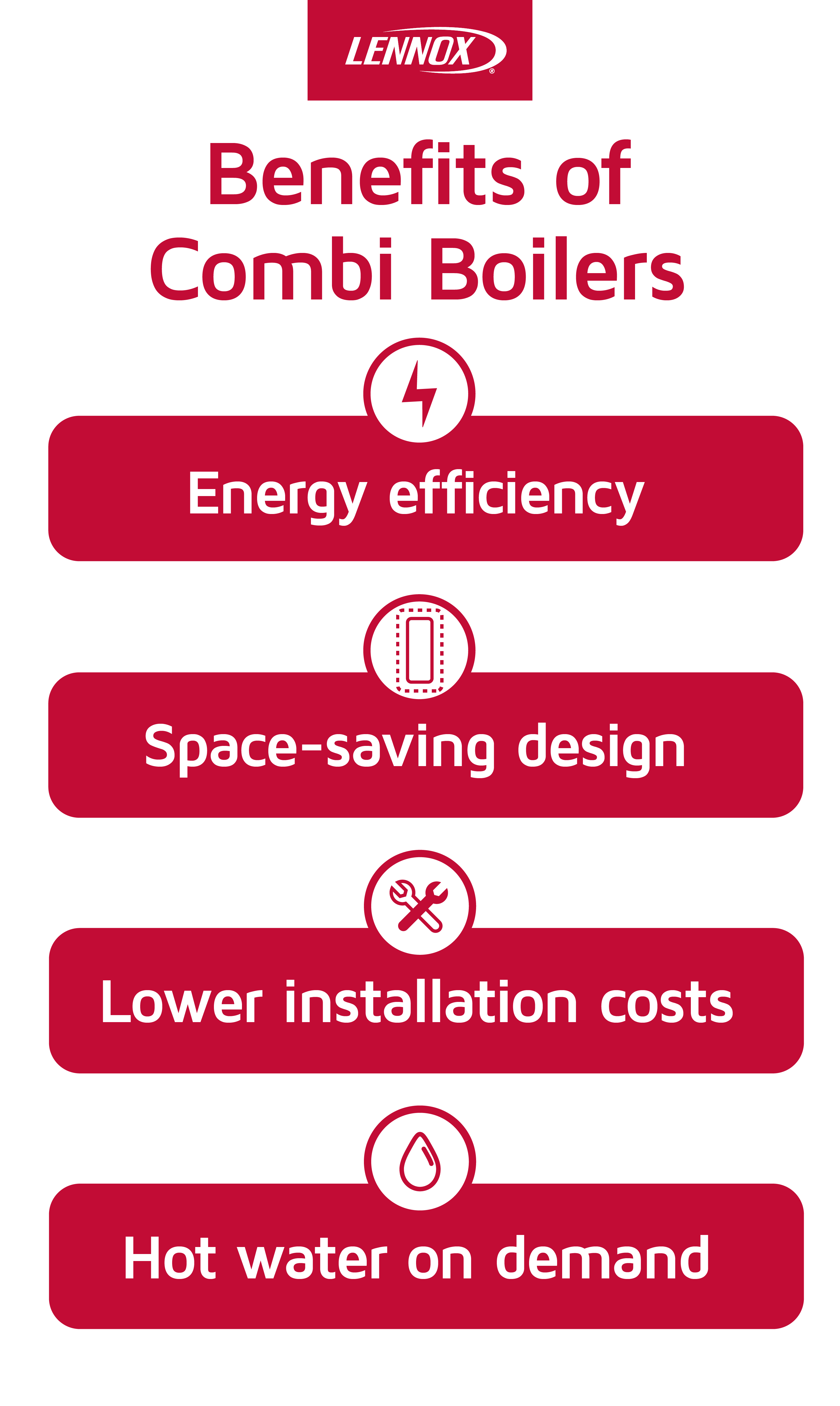
- Energy efficiency: Top-rated combi boilers can hit up to 95% AFUE (Annual Fuel Utilization Efficiency), meaning nearly all the fuel you pay for goes directly into heating your home and water. Many units also qualify for energy rebates, making the long-term savings even more real.
- Space-saving design: No bulky water tanks. No extra cylinders. Just one wall-mounted unit that frees up closet or utility room space.
- Lower installation costs: Fewer components means less labor and fewer materials during combi boiler installation, which typically brings the upfront cost down compared to conventional systems.
- Hot water on demand: Turn on the tap and hot water is there. No waiting for a tank to reheat. That kind of instant comfort makes a real difference in a busy household.
Limitations of Combi Boilers
Like any heating system, a combi boiler may not be the right fit for every home. Here is how it compares to other options:
- Flow rate limitations: Unlike a system boiler with a storage cylinder, a combi boiler heats water on demand. If multiple taps or showers run at the same time, the flow rate can drop.
- Mains pressure dependency: Combi boilers work directly off the mains water pressure. Homes with low pressure may see reduced performance compared to a system boiler, which uses a pump to boost flow.
- Single point of failure: Because heating and hot water run through one unit, a breakdown affects both at the same time.
- Not ideal for large homes: Bigger homes with many bathrooms and high heating demands are often better matched to a system or regular boiler setup.
How to Choose the Right Combi Boiler?
Certifications and Energy Performance Standards
Look for units that carry an ENERGY STAR certification or meet high AFUE ratings (90% or above is a strong benchmark). In the U.S., the Department of Energy sets minimum efficiency standards for residential boilers. A certified, high-efficiency combi boiler not only lowers your monthly bills but may also qualify your home for utility rebates or tax incentives. Always ask your installer about current programs in your area.
Professional Assessment and Installation
A certified technician will evaluate your home's heating load, existing plumbing compatibility, and water pressure before recommending a unit. Old or incompatible plumbing may need updates before installation, which can affect cost and timeline. Getting this step right from the start protects your investment, saves money on maintenance, and ensures the system runs at peak performance from day one.
Is a Combi Boiler Right for Your Home?
Ask yourself these questions before making the call:
- How many people live in your home? Larger households with multiple simultaneous hot water users may benefit more from a system boiler with storage capacity instead.
- What is your current plumbing setup? If your existing pipes are older or incompatible, factor in modification costs when comparing options.
- What are your efficiency goals? If lowering your energy bill and reducing your home's carbon footprint are priorities, a high-efficiency combi boiler is one of the strongest options available.
- How much space do you have? If space is tight, the compact, tank-free design of a combi boiler is a clear win.
Maintenance and Support for Combi Boilers
Routine Maintenance Tips
Keeping your combi boiler in top shape is straightforward when you stay consistent:
- Schedule an annual service with a certified technician to inspect the heat exchanger, burner, and all internal components
- Check the pressure gauge Most combi boilers operate best between 1 and 1.5 bar. If it drops below 1, the system needs repressurizing.
- Bleed your radiators once a year to remove trapped air that reduces heating efficiency
- Flush the system periodically to remove built-up sludge that can clog components and reduce performance
- Keep the area around the unit clear to ensure proper ventilation and easy access for servicing
Signs Your Combi Boiler Needs Servicing
Don’t wait for a full breakdown. Watch for these warning signs:
- Water leaking from the unit or nearby pipes
- Unusual banging, kettling, or gurgling sounds
- Pressure dropping repeatedly without explanation
- Inconsistent hot water temperature or weak flow
- Higher than usual energy bills with no change in usage
When to Call a Professional?
Some issues go beyond a quick fix. If you notice persistent leaks, a complete loss of heat, or error codes flashing on the display, it is time to call a certified technician right away. Attempting repairs on a gas appliance without proper training is unsafe and can void your warranty.
Speaking of warranty: Lennox backs its homeowners with strong warranty coverage and customer service that gives you real peace of mind long after installation day. A solid warranty is not just a safety net. It is a sign that the brand stands behind what it builds.
Is A Combi Boiler Right For You?
A combi boiler is a smart, efficient, and space-saving solution for the right home. It delivers hot water on demand, heats your living spaces reliably, and can significantly cut your energy costs over time. The key is making sure the unit is sized correctly, installed by a professional, and maintained on a regular schedule. When all of those lines up, a combi boiler does not just heat your home. It makes it a more comfortable place to live every single day.
Ready to explore your options? Connect with a Lennox dealer to find the right system for your home.
We’re here to help make home comfort solutions a little clearer and a lot less stressful.
No Worries. It’s a Lennox.™