What Is a Flame Rollout Switch?
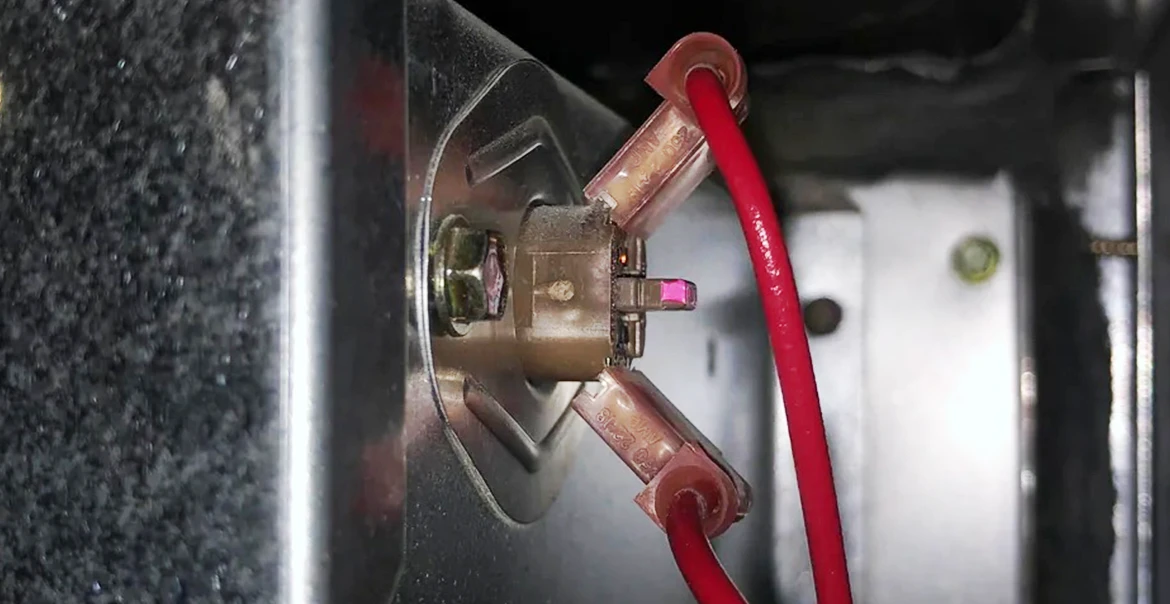
Most homeowners never think about their furnace's safety circuit until something goes wrong. The flame rollout switch is one of the most consequential devices inside that circuit. Positioned near the burner assembly and heat exchanger opening, it reads the temperature of the surrounding area every time your gas furnace runs. In normal operation, the switch stays closed and the furnace runs without interruption. However, if flames push outside the combustion zone or the heat at the sensor location climbs past its rated limit (generally between 350° F and 400° F), the switch opens, the safety circuit breaks, and fuel delivery stops within seconds.
Flame rollout is not a minor furnace quirk. When flames escape the combustion chamber, they can reach nearby wiring, insulation, or other materials that have no business getting that hot. Incomplete combustion during a rollout event also generates carbon monoxide, which is colorless, odorless, and toxic at concentrations that can build up faster than most people realize.
Two versions exist in residential furnaces. A manual-reset switch requires you to physically push a reset button before the system can fire again. An auto-reset switch cycles back on its own once the component temperature drops. Most homes have manual-reset switches, and for good reason: they put a pause in the process that forces a human decision before the burners relight.
How It Works, Step by Step
When a flame rollout event occurs, here is the sequence that follows:
The bimetallic thermal sensor inside the switch reaches its rated trip threshold.
The switch opens, breaking the furnace safety circuit.
The gas valve closes and all fuel delivery to the burners stops.
The furnace locks out and will not restart until the switch is manually reset or has cooled to a safe temperature.
The flame rollout switch does not operate in isolation. It works alongside the high-limit switch, pressure switch, and flame sensor as part of a fully interlocked safety circuit. All of those devices must signal "clear" before the gas valve is allowed to open.
Flame Rollout Switch vs. Limit Switch
Homeowners often confuse the flame rollout switch with the high-limit switch because both devices shut the furnace down when something goes wrong. They protect against fundamentally different hazards, though, and understanding that difference helps you communicate more clearly when a technician arrives.
The flame rollout switch focuses on fire and carbon monoxide risk. It lives near the burner and heat exchanger opening, and it trips when it detects flame activity or heat outside the combustion zone. The high-limit switch, by contrast, is concerned with overheating inside the furnace cabinet. It sits on or near the heat exchanger or supply plenum and trips when supply air temperature climbs past its safe threshold.
A burning smell and soot near the burners points toward the rollout switch. A furnace that overheats without any signs of flame escape points toward the high-limit switch. Both conditions require attention, but they follow different diagnostic paths.
Signs Your Flame Rollout Switch Is Tripped
A tripped flame rollout switch produces signals that set it apart from other furnace problems. The furnace will refuse to fire again until the switch is reset, which is different from short cycling where the system turns on and off repeatedly. You may also notice a smell of scorched plastic or metal near the unit, which is a prompt to shut the furnace down immediately. Visible soot or heat discoloration around the burner compartment is another clear indicator that flames have been moving somewhere they should not. On newer furnaces, the integrated control board will store a specific fault code when the rollout switch trips, so checking your display panel is always a useful first step.
If you press the reset button and the switch trips again on the very next startup, or if pressing it has no effect at all, the switch itself may have failed and calling a certified HVAC dealer should be the next step.
Common Causes of Flame Rollout Switch Tripping
Blocked or Cracked Heat Exchanger
Of all the things that can trigger a rollout event, a compromised heat exchanger ranks among the most urgent. When the heat exchanger cracks or becomes obstructed, the barrier between the combustion zone and the rest of the furnace breaks down. Gases and flames that should stay sealed inside can travel outward, and with them comes the potential for carbon monoxide to reach your living space.
Dirty Burners
Burner contamination is a more gradual culprit, but no less capable of causing real problems. Carbon deposits accumulate on burner ports over time, and it does not take much buildup to disrupt the flame pattern. As little as 1/16 of an inch of soot on a port can redirect flames away from the combustion chamber and toward the rollout switch. A fouled flame sensor can also create erratic ignition behavior that compounds the stress on the combustion zone. Airflow restrictions make all of this worse: a clogged filter, blocked return-air grilles, or a failing blower motor all reduce the volume of air the burner needs to combust cleanly.
Flue or Vent Blockage
When your furnace cannot push exhaust gases out of the flue properly, those gases exert back-pressure on the combustion zone. That back-pressure is what pushes flames outward toward the rollout switch. NFPA 54 requires that vent systems be evaluated for blockages, restrictions, and corrosion during combustion safety inspections. In practice, the most common culprits are bird nests that form in off-season months, accumulated debris, and ice or snow that seals the vent termination after a winter storm. Any accumulation or buildup can effectively cap an exhaust pipe. Checking vent openings after significant weather is a simple step that prevents a preventable trip.
Gas Pressure and Inducer Motor Issues
Manifold gas pressure that falls outside the acceptable operating range will produce abnormal flame behavior that the rollout switch is designed to catch. The gas valve controls how much fuel reaches the burners, and when that pressure is off or the valve itself malfunctions, flames can extend beyond their intended path. A failing combustion air inducer motor creates a similar scenario: without proper draft, exhaust gases cannot move through the system efficiently, and flames roll back toward the switch.
Is It Safe to Bypass a Flame Rollout Switch?
No. Removing or bypassing the rollout switch eliminates the only active protection against uncontrolled flame escape in the combustion zone. Without it, there is nothing to interrupt gas flow if flames travel where they should not. The fire risk that creates is real, and so is the carbon monoxide risk. The U.S. EPA's National Ambient Air Quality Standards set the allowable carbon monoxide threshold at 9 ppm over an 8-hour period and 35 ppm over a 1-hour period. A malfunctioning furnace without its safety controls could potentially exceed those levels if something is wrong with the system. Bypassing the switch may also void your furnace warranty and put you in conflict with local building codes.
How a Professional Addresses Flame Rollout Switch Issues?
A technician's job does not end at pressing the reset button. A thorough professional diagnosis involves cleaning the burners, inspecting and testing the heat exchanger for cracks or obstructions, verifying manifold gas pressure, clearing the vent system, checking the inducer motor, and confirming that every safety control in the circuit is operating within spec. The ENERGY STAR Maintenance Checklist specifies that technicians performing heating-season service should check all gas connections, gas pressure, burner combustion, and the heat exchanger. NFPA 54 Annex G outlines equivalent safety inspection protocols for existing furnace installations, and a qualified technician should be following those or comparable standards on every visit.
Preventing Flame Rollout Problems
The most reliable way to avoid a flame rollout event is consistent, scheduled maintenance.
Annual professional tune-up: Book a heating system inspection before each heating season. A technician will clean the burners, inspect the heat exchanger, verify gas pressure, check the vent system, and test all safety controls before the first cold night of the year.
Filter replacement: The type of filter you have will determine how often you should replace it, but ENERGY STAR recommends checking your filter monthly during heavy-use seasons and swapping it out whenever it looks dirty. A clogged filter puts your combustion zone under stress it was not designed to handle.
Clear vent openings after winter weather: After any storm that drops significant snow or ice, physically verify that your intake and exhaust pipes are unobstructed before running the furnace.
Don’t Let Your Switch Trip
The flame rollout switch does not get much attention until it trips, but it is one of the most important safety components your furnace has. Treat a single tripping event as a prompt to investigate, not a problem to reset and walk away from. Annual maintenance, regular filter changes, and knowing when to call a professional are the habits that keep this switch from ever becoming an emergency. If your switch has tripped or you are seeing any of the warning signs described above, find a local Lennox dealer and schedule a professional inspection before running the system again.
We’re here to help make home comfort solutions a little clearer and a lot less stressful.
No Worries. It’s a Lennox.