
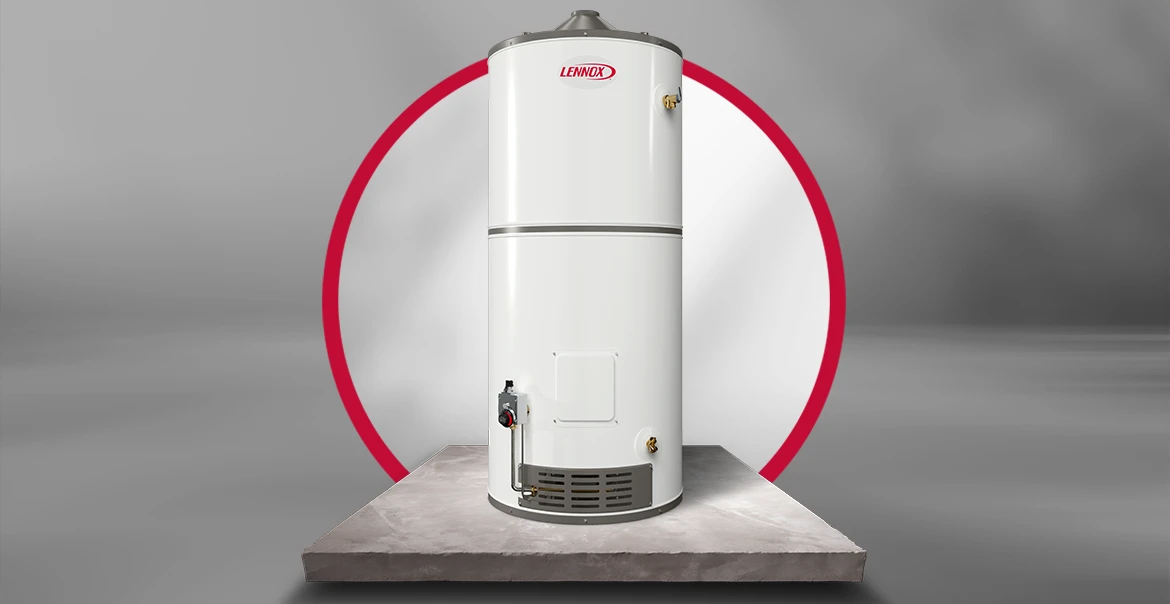
What Is a High-Recovery Water Heater?
Think about what actually happens on a busy weekday morning in a house with four or five people: back-to-back showers, a load of laundry spinning, and a dishwasher finishing its cycle. That kind of stacked, overlapping demand will drain a standard tank fast, and once it is empty, the wait begins. A high-recovery water heater is designed specifically to close that gap. It is a storage tank unit, but one outfitted with significantly more heating power so the tank can bounce back before the next person needs it.
How a High-Recovery Water Heater Works?
The gap between a standard unit and a high recovery unit comes down to how much heating power each one has, and that power is measured differently depending on fuel type.
For gas water heaters, that measurement is BTU per hour, or British Thermal Units per hour. One BTU is the amount of energy it takes to raise one pound of water by one degree Fahrenheit. So a unit rated at 40,000 BTU per hour can move that much energy into the water every hour, which is what actually determines how fast the tank recovers after a draw. Conventional gas water heaters typically run between 30,000 and 36,000 BTU per hour. High recovery gas models cross the 40,000 BTU threshold, which is the extra energy output that lets them catch up to demand instead of falling behind it.
Electric water heaters use watts instead of BTUs, since they run on electrical resistance rather than a flame. A standard electric unit is built around two 4,500-watt heating elements that work one at a time. High recovery electric models increase both the wattage and how the elements operate, often running dual 5,500-watt elements in sequence so the tank never has a long gap in active heating. More watts moving through the water at once simply means less time spent waiting for the next full tank.
To get grounded in the basics before going further, check out what a water heater is and how it works.
Fuel Type Options
High-recovery gas models generate more heat output than electric models, which is why they lead on recovery speed. They require proper venting and a correctly sized gas line, so the infrastructure requirements are real. High-recovery electric models are generally less complicated to install, but they need a 240-volt dedicated circuit to function. For households where energy efficiency is the top priority, heat pump water heaters offer another path worth exploring. ENERGY STAR data shows that certified heat pump water heaters consume up to 70% less energy than standard electric resistance units.
The Importance of Recovery Rate and First Hour Rating
Once you understand BTUs and watts, the next piece of the puzzle is recovery rate, which is the number that actually tells you how fast a water heater bounces back after someone drains it. Instead of measuring raw energy input like BTUs and watts do, recovery rate measures the output: how many gallons of groundwater temperature water a unit can heat up to full temperature in one hour. It is the difference between a spec on paper and what you actually feel when you turn on the faucet.
To make that number comparable across brands and models, the U.S. Department of Energy tests every water heater under the same fixed conditions. Incoming water is set at 58 degrees Fahrenheit, and the unit's performance is clocked from there. That consistency is what makes recovery rate a reliable way to compare units, rather than relying on a manufacturer's general claims.
Run a standard gas water heater through that test and it typically lands between 20 and 25 gallons per hour. Run a high recovery gas model through the same test and the number jumps to 30 to 40 gallons per hour. That gap, all measured under identical conditions, is the clearest proof of what the added BTU output from the previous section actually buys you in daily use.
What Affects Water Heater Recovery Rate?
A unit's rated recovery speed is a starting point, not a guarantee. Several variables determine what you actually experience at the tap:
Heating input: Whether measured in BTUs for gas or watts for electric, raw energy input is the primary lever. More input equals shorter recovery windows.
Tank capacity: Volume and speed are a tradeoff. A 75-gallon tank holds considerably more hot water than a 40-gallon unit but also demands more energy and more time to reheat completely. Sizing to your peak demand window, not just your daily average, is the right approach.
Supply water temperature: This one catches a lot of homeowners off guard. Groundwater in colder northern states can arrive well below 50 degrees Fahrenheit in January and February, far colder than the 58-degree benchmark the DOE uses in standardized testing. High-recovery units manage that real-world delta far better than conventional models, which is part of why they are popular in cold climates.
Uniform Energy Factor: UEF measures how efficiently a unit converts consumed energy into usable hot water during a simulated 24-hour cycle. This rating applies across the water heater category broadly, including high recovery models, since UEF reflects overall efficiency rather than recovery speed specifically. ENERGY STAR notes that most traditional water heaters score between 0.63 and 0.95. Lennox electric models, including high recovery configurations, reach up to 0.93; Lennox gas models, including high recovery configurations, reach up to 0.71.
Sediment accumulation: Mineral deposits collect along the bottom of the tank over time and act as thermal insulation, blocking heat from transferring efficiently into the water. Annual flushing is the simplest way to prevent this from quietly degrading your unit's performance.
Who Needs a High-Recovery Water Heater?
A high-recovery unit makes the most sense for households where a standard tank is already being outpaced or is likely to be in the near future. That includes homes with four or more people, properties with multiple bathrooms in regular simultaneous use, and any setup where high-draw appliances like dishwashers and washing machines compete with showers during the same time window.
The clearest signals that your current unit has hit its ceiling: hot water is gone before the household finishes its morning routine, the gap between usable showers stretches past half an hour, or running multiple appliances at once causes an immediate and noticeable drop in temperature. A unit that is between 8 and 10 years old and struggling with any of those symptoms is unlikely to recover its edge. Life changes add pressure too. A new household member or a major appliance upgrade can tip a previously adequate unit into chronic underperformance.
Installation Requirements and Considerations
Getting a high recovery water heater into your home involves more than just picking a unit off the shelf. Energy source, upfront cost, available space, and long-term upkeep all factor into whether the installation goes smoothly and whether the unit performs the way it is supposed to for years afterward.
Energy Considerations
High recovery units draw more energy during each heating cycle than standard models, simply because they are pushing more BTUs or watts into the tank at once. The tradeoff is that those cycles finish faster, so the unit is not necessarily running longer overall, just harder in shorter bursts. Whether that nets out to higher or lower energy costs depends heavily on how your household actually uses hot water. A family running the dishwasher, washer, and multiple showers back to back will likely see the efficiency payoff show up clearly, since the unit is recovering fast enough to avoid extended standby heating. A household with lighter, more spread-out usage may not notice as much difference. Either way, checking a unit's efficiency rating before buying gives a clearer sense of what to expect once it is installed.
Cost Considerations
Expect to pay more upfront for a high recovery water heater than for a standard tank of the same size, since the added burner capacity or extra heating elements come at a premium. That higher purchase price is best weighed against what you are actually solving for. If your household has been dealing with cold showers, long waits between uses, or a unit that simply cannot keep up anymore, the added cost buys you a system that is sized correctly for how your home actually operates, rather than one you will outgrow again in a year or two. Thinking about total cost over the life of the unit, not just the sticker price at install, gives a more complete picture of the investment.
Space Considerations
Where the unit goes and how it connects to your home's existing systems matters just as much as the unit itself. Gas-powered high recovery units need a clear, code-compliant path for venting, either through an atmospheric vent or a power vent routed to the exterior of the home, along with a gas line sized correctly for the unit's higher BTU draw. Electric units skip the venting requirement but need a dedicated 240-volt circuit with a 30-amp breaker to handle the increased wattage safely. Because both configurations touch your home's gas or electrical infrastructure directly, this is not a project to take on solo. A licensed plumbing contractor can confirm your space and existing lines can support the unit before installation day, which avoids costly surprises mid-project.
Maintenance Considerations
Once installed, a high recovery water heater needs the same attentive care as any tank unit, just applied consistently over time. Flush the tank annually to clear out sediment that settles at the bottom, since that buildup insulates the heating surface and forces the unit to work harder to reach temperature. Keep an eye on the anode rod as well; corrosion inside the tank accelerates when the rod wears down and is not replaced, which shortens the unit's lifespan considerably.
Thermostat setting matters more than most homeowners realize. Running the temperature too high not only wastes energy but also puts unnecessary strain on the pressure relief valve, which is designed to release excess pressure but should not need to do so constantly. If you notice the valve releasing more often than expected, or water pooling near the base of the unit, that is a sign something upstream, usually excess pressure or an overheated setting. A valve that fails to reseat properly after releasing pressure should be addressed immediately rather than left to see if it resolves on its own.
Keeping the thermostat in the 120 to 125 degree Fahrenheit range strikes the right balance between efficient operation, safety, and valve longevity. Periodically checking water pressure at the tank, rather than waiting for a problem to surface, catches small issues before they turn into leaks or valve failures. Replacing aging components proactively, rather than running them until they fail outright, is generally the more cost-effective approach over the life of the unit. And once installation wraps up, registering the product activates warranty coverage, which is worth doing immediately rather than letting it slip.
How to Choose the Right High-Recovery Water Heater?
Matching a water heater to your household starts with capacity. For one to two people, a 30-gallon tank is a reasonable baseline. A household of two to three generally needs 40 gallons. Three to four people are well-served by a 50-gallon unit. Families of five or more should look at 75-gallon options. That said, the DOE recommends prioritizing First Hour Rating over tank size alone because a smaller, high-output unit can outperform a larger one with weak recovery specs. For a household of four, target a minimum of 30 gallons per hour in recovery rate. For five or more people, 35 gallons per hour or above is the right benchmark.
Fuel selection follows your home's infrastructure. If you have a gas line and proper venting in place, a high-recovery gas model is almost always the most cost-effective path. All-electric homes should look at dual high-wattage element electric models for the fastest available reheat times. A licensed plumbing contractor can evaluate your space, confirm your infrastructure, and steer you toward the unit that actually fits your household's demands.
High Recovery, High Comfort
A high-recovery water heater solves a specific problem and solves it well. When evaluating your options, lead with recovery rate and layer in tank capacities and fuel type to get a full picture of what the unit will actually deliver over its lifetime. To find the right fit for your home, connect with a licensed plumbing contractor who can assess your setup from the ground up.
We’re here to help make home comfort solutions a little clearer and a lot less stressful.
No Worries. It’s a Lennox.