
What Is a Water Heater and Why Does It Matter?
Your water heater is a dedicated appliance that stores and heats water so it's ready the moment you turn on a faucet, start the dishwasher, or run a load of laundry. That kind of constant, behind-the-scenes work means regular attention is essential.
Why Is Water Heater Maintenance Important?
Think of your water heater the way you think about your car. Skip the oil changes long enough, and what starts as a minor issue turns into something much more expensive. The same logic applies here. Skipping regular service doesn't just shorten your unit's life — it quietly chips away at your comfort, your safety, and your budget in the process.
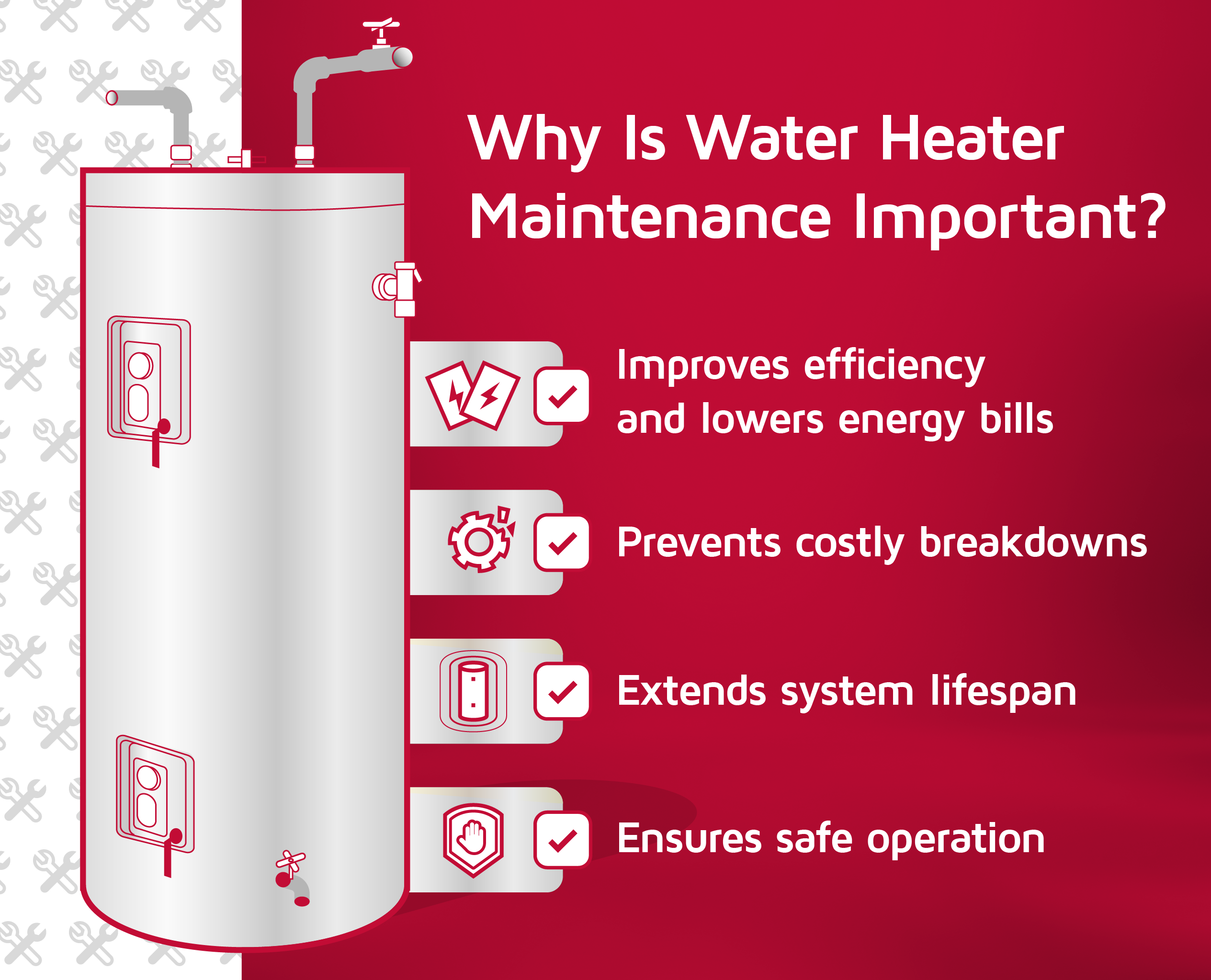
Improves efficiency and lowers energy bills
Over time, minerals naturally present in your water supply collect and harden at the bottom of the tank. That layer of sediment sits between the heating element and the water, forcing your unit to burn more energy just to reach the same temperature. The fix is straightforward: routine flushing clears out the buildup and lets your water heater do its job without working overtime.
Prevents costly breakdowns
Most water heater failures don't happen overnight. They build up slowly from small, overlooked issues that annual service would have caught early. Keeping up with regular maintenance means you're addressing problems while they're still minor — and far less expensive — rather than dealing with a full emergency when the timing is worst.
Extends system lifespan
Most typical tank water heaters last 8 to 12 years, but that range assumes it's been taken care of. Units that receive consistent professional attention routinely outlast those that don't. Every annual visit, every timely repair, and every flushed tank adds up to more years of reliable performance.
Ensures safe operation
A water heater that isn't maintained can become more than just an inconvenience. Pressure buildup, internal corrosion, and gas-related concerns are all issues that routine inspections help catch before they escalate. Staying proactive is the simplest way to keep your home running safely and your family comfortable.
Signs Your Water Heater Needs Service
Your water heater is designed to tell you when something is off. The key is knowing what to listen for. Pay attention to any of these warning signs:
Inconsistent water temperature — One shower it's scalding, the next it's lukewarm. Swings like that typically point to a struggling heating element, a thermostat that's out of calibration, or sediment that's taken over the bottom of the tank.
Unusual noises coming from the tank — Popping, banging, or rumbling sounds are your unit's way of flagging that sediment has hardened and is interfering with the heating process. It's a clear sign that flushing is long overdue.
Rusty or discolored hot water — If the water running from your hot taps looks brown or has a reddish tint, internal corrosion is the likely culprit. Get a licensed plumbing contractor involved quickly before the problem goes further.
Weaker hot water pressure than usual — When scale and sediment accumulate inside the tank, they can restrict how freely water moves through the system and out to your fixtures.
A noticeable jump in your energy bill — An inefficient water heater pulls more power to deliver the same results. If your bill is creeping up without a clear explanation, your water heater may be compensating for neglected maintenance.
How Often Should You Maintain Your Water Heater?
Once a year is the standard recommendation from both manufacturers and licensed plumbing contractors. That annual visit should be thorough: a professional will check the temperature and pressure relief valve, inspect the thermostat, review all connections, and assess the overall condition of the tank. It's also worth noting that many manufacturers tie warranty validity to documented service records, so staying on schedule protects more than just the unit itself.
That said, a once-a-year cadence isn't a one-size-fits-all answer. A couple of factors can call for more attention:
Water quality. Hard water, which carries high concentrations of calcium and magnesium, is one of the biggest threats to your water heater's longevity. Over time, those minerals build up as sediment inside the tank, forcing the unit to work harder and wear out faster. If you live in an area with hard water, your water heater may age more quickly than average.
Usage levels. The more hot water your household goes through on a daily basis, the harder your unit has to work to keep up. Families with higher demand simply put more hours on the system, and more hours means more wear. If your water heater is running hard most of the day, checking in with a licensed plumbing contractor more than once a year is a reasonable step.
Type of heater. Not every water heater follows the same maintenance schedule. A tank-style unit, for example, requires regular flushing to clear out sediment that collects at the base over time. Understanding what your specific unit needs, and how often it needs it, is something a licensed plumbing contractor can walk you through during your annual visit.
Essential Water Heater Maintenance Checklist
Regular maintenance extends the life of your water heater and keeps it running efficiently. Here's what to keep an eye on:
Flush the Tank
Sediment builds up at the bottom of storage tanks over time, reducing efficiency and shortening the unit's lifespan. Draining the tank once a year clears out the buildup and keeps your heater working like new.
Adjust the Thermostat
Take a look to make sure your water heater temperature isn’t set too high. 125°F is hot enough for most households and saves energy. Lower temperatures also reduce the risk of scalding.
Fix Leaks Fast
A leaking water heater can lose gallons of water every day, driving up your utility bills and potentially causing water damage to your home. Check the connections, valves, and tank regularly for signs of moisture or pooling water.
Insulate Older Tanks
If your water heater is more than a few years old, wrapping it in an insulation jacket can cut standby heat loss considerably. This simple upgrade keeps the water hotter for longer, so your heater doesn't have to work as hard.
Homeowner Tasks vs. When to Call a Professional
What you can handle yourself:
Monthly visual inspections — checking for leaks, corrosion, and unusual sounds
Tank flushing, if you're experienced and following manufacturer guidelines closely
Monitoring temperature settings and watching for early warning signs
When to call a licensed plumbing contractor:
Annual inspection — A professional covers every critical component, including the anode rod, connections, and the tank itself, with the thoroughness that manufacturers often require for warranty validity.
Major repairs — Anything beyond a basic visual check should be handled by someone with the right training and tools.
Gas or electrical concerns — Gas line issues, pilot light problems, and electrical component failures carry serious safety risks. If you smell something unusual or notice your water heater is not working properly, contact a qualified technician right away.
Common Water Heater Problems Prevented by Maintenance
Consistent servicing keeps these frequent issues from catching you off guard:
Sediment buildup — Reduces efficiency and strains the heating element
Heating element failure — Often accelerated by neglected sediment and scale
Corrosion and tank leaks — Typically the result of a depleted anode rod left unchecked
Pressure valve issues — A stuck or corroded valve creates a dangerous pressure buildup inside the tank
The Real Cost Argument: Repair vs. Replacement
Skipping routine maintenance is rarely the money-saver it seems to be. When small issues are left unaddressed, they escalate into larger repairs or, eventually, a full system replacement. Understanding when to repair versus when to replace is an important part of managing your home's long-term comfort and budget. A licensed plumbing contractor can walk you through your options based on your unit's age, condition, and efficiency, helping you make the call that actually saves you money over time.
Ready for a Professional Water Heater Inspection?
Most homeowners don't think about their water heater until something goes wrong. But a little routine attention each year goes a long way toward keeping your home comfortable, your energy bills manageable, and your system running well beyond its expected lifespan. Whether you're overdue for a professional service visit or just getting a better handle on what your unit needs, starting with an annual inspection is the right move. Connect with a licensed plumbing contractor in your area to get the process started and keep the hot water flowing.
We’re here to help make home comfort solutions a little clearer and a lot less stressful.
No Worries. It’s a Lennox.