
What It Means When You Have No Hot Water in the Shower
Before touching anything, ask yourself one question: is the whole house affected or just the shower? Turn on the kitchen faucet. If hot water comes through without hesitation, your water heater is not the problem. What you are dealing with is a fixture-level issue, and the shower itself is where the investigation needs to happen. A deteriorating mixing valve, a cartridge that has seen better days, or a clogged anti-scald device can each cut off hot water to a single fixture without affecting anything else in the home.
If the kitchen, the bathroom sink, and every other tap in the house are running cold alongside the shower, the source is almost certainly the water heater. That single check decides everything about how you approach the repair.
If the problem is indeed the water heater, there’s a reason why showers tend to be the first casualty. Showers are usually positioned at the far end of a home's hot water supply lines, which means a depleted tank reveals itself there first. Add in the fact that most modern showers are built with thermostatic mixing valves and anti-scald devices, which are components that regulate temperature as a safety measure, and you have a fixture that has more ways to fail than a basic faucet.
Signs That Indicate the Underlying Problem
Your shower will usually give you a heads-up before a problem becomes a full breakdown. These are the signals worth paying attention to, along with what each one is actually communicating:
Water turning cold partway through a shower. This pattern points to a tank that is being depleted faster than it recovers. The water is hot at the start because some supply remains, but once it is gone, nothing is stepping in to replace it quickly enough.
Temperature shifting on its own without any handle adjustment. If the water fluctuates between hot and warm or hot and cold without you touching anything, the thermostat inside the water heater is likely cycling erratically.
Hot water pressure that is noticeably weaker at the showerhead than at other fixtures. Restricted flow that is isolated to one fixture usually points to a partial blockage somewhere in the line feeding that fixture specifically.
Hot water depleting significantly faster than it used to. When your morning routine has not changed but the hot water gives out sooner than it ever did before, sediment buildup is the likeliest explanation.
Zero temperature change from full cold to full hot on the shower handle. If rotating the handle all the way to hot produces no warmth whatsoever, the hot water channel is likely blocked internally, and the fix lives inside the valve assembly itself.
Common Reasons You Have No Hot Water in the Shower
Faulty Water Heater
When the entire house loses hot water at once, the water heater is almost always behind it. In electric units, a failed heating element is the most typical point of failure. In gas units, a pilot light that has gone out or a burner that will not fire shuts down the heating process entirely. Most tank-style water heaters hold up well for 8 to 12 years, but output quality tends to decline gradually as the unit approaches that window. If yours is getting up there in age, the water heater itself is worth a close look.
Thermostat Issues
The water heater’s thermostat is responsible for keeping stored water at a consistent, usable temperature. When it malfunctions or drifts out of its setting, the tank can hold water that is far too cool to feel hot by the time it reaches your shower. The industry-standard setting sits at 120° Fahrenheit. If the thermostat has slipped below that threshold or stopped regulating accurately, every tap in the house will reflect it, not just the shower.
Broken or Clogged Shower Valve
This is the go-to cause when the sink works fine but the shower runs cold. The internal cartridge of a shower valve handles the blending of hot and cold water. Over time, it can wear down, develop cracks, or accumulate enough mineral scaling that hot water flow becomes blocked entirely. The tell is unmistakable: you turn the handle as far toward hot as it goes, and the temperature does not budge.
Sediment Buildup in the Tank
Tap water carries dissolved minerals, and those minerals settle to the bottom of your water heater tank over time. That accumulated layer puts physical distance between the heating element and the water it’s supposed to heat, dragging down efficiency and shrinking the amount of genuinely hot water the tank can deliver per cycle. If your water heater has started producing deep popping or rumbling sounds, sediment is almost certainly the reason.
Plumbing or Pipe Issues
Older homes built with galvanized steel pipes are especially vulnerable here. Corrosion and mineral buildup inside the supply lines can quietly restrict hot water flow to specific fixtures over years without triggering any obvious alarm. If your shower's hot water pressure has always lagged behind the kitchen sink's, the pipes feeding it deserve a proper inspection.
Mixing Valve Malfunction
Thermostatic mixing valves are designed to automatically balance hot and cold water to deliver a consistent, safe shower temperature. When they fail, they can stick in the cold position, locking out hot water regardless of where the handle is set. This is not a job for a homeowner to sort out with a wrench; it requires professional diagnosis and replacement.
High Hot Water Demand
Sometimes nothing is actually broken. When a household runs the dishwasher, the laundry, and two showers in close succession, a standard tank water heater can run out of heated water faster than it can replenish it. If the cold shower happens consistently during busy periods but not at other times, the problem is demand, not malfunction. That pattern may point toward the need for a larger tank.
Quick Things to Notice Before You Call for Help
Taking a few minutes to observe the right things before calling a licensed plumbing contractor can either solve the problem outright or give the professional a much cleaner starting point.
Whether Hot Water Is Available in Other Taps
Go to the kitchen sink and a bathroom sink, run each one on hot for about 30 seconds, and note the result. Consistent hot water at both fixtures means the water heater is doing its job and the issue is contained to the shower. If those taps also run cold, the water heater has stopped performing and that is where the conversation with a professional needs to begin.
Overall Performance of Your Water Heater
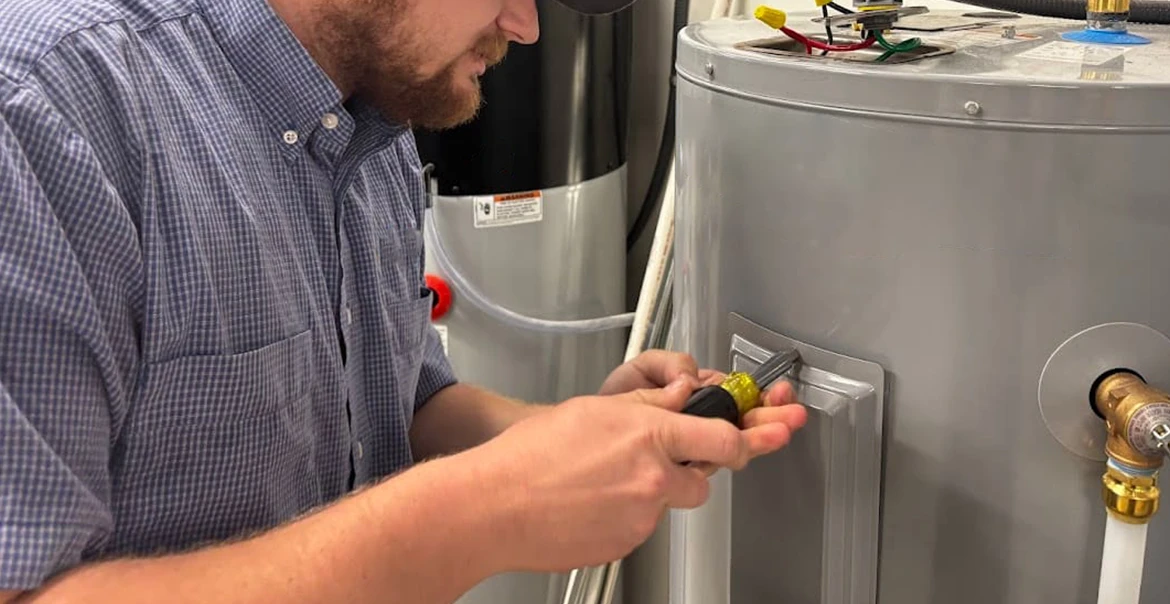
For an electric water heater, head to the breaker panel and check for a tripped circuit. If you find one, switch it all the way off before flipping it back on. Then pull the upper access panel off the water heater, find the red reset button on the thermostat, and press it until you hear or feel it click. For a gas unit, look to see if the pilot light is burning. If it has gone out, follow the relight instructions printed on the unit's label. While you are at it, verify the thermostat is dialed in between 120° and 125° Fahrenheit. Whatever you reset, give the tank 30 to 60 minutes to fully reheat before you test the shower.
Any Unusual Sounds or Leaks
While you are near the water heater, listen for sounds during the heating cycle. A deep popping or low rumbling is almost always sediment at the bottom of the tank being disturbed as water beneath it heats up. On the outside, look at the floor around the base of the unit. Water pooling there or rust-colored staining on the tank surface are signs of a problem that has moved past what a reset button can address. Those findings need a professional on-site.
Changes in Household Water Usage
Think through any shifts in your household's daily pattern over the past month or two. A new appliance pulling from the hot water line, more people sharing the same system, or a change in how showers are staggered throughout the morning can push a standard tank heater past what it was sized to handle. If demand has genuinely outgrown the unit, that is a sizing conversation rather than a repair conversation.
When to Call a Licensed Plumbing Contractor?
If you have run through the troubleshooting steps and still have no hot water, it is time to call a professional. Reach out to a licensed plumbing contractor if:
The problem does not resolve after a reset, and the water heater shows no signs of heating
You detect a gas odor anywhere near the unit; leave the home immediately and call your gas company from outside before doing anything else
The breaker is tripping repeatedly rather than staying on after being reset, which points to an electrical fault in the system
You find active leaks, corrosion on the tank surface, or rust-colored water coming through the taps, all of which indicate damage that goes beyond basic service
The shower valve or water heater needs to be replaced, as both involve pressurized water lines, gas or electrical connections, and code requirements that demand professional handling
How Much It Costs to Fix?
Repair costs vary depending on the specific component that has failed, the age and type of the unit, and what the work actually involves. On the lower end, swapping out a thermostat or a pressure relief valve tends to be a straightforward repair with modest parts and labor costs. Shower cartridge and mixing valve replacements occupy a middle range. A full water heater replacement represents the most significant investment, and the final number depends on the unit type, the tank capacity required for your household, and what installation entails. Get a written, itemized estimate from a licensed plumbing contractor before any work begins, one that separates parts from labor so you understand exactly what you are paying for.
How to Prevent Hot Water Issues?
Schedule Annual Professional Maintenance
Once a year, have a licensed plumbing contractor inspect the anode rod, verify the pressure relief valve is functioning, confirm thermostat calibration, and assess all visible connections and fittings. Consistent preventive maintenance is one of the most reliable investments a homeowner can make in the lifespan of the system.
Flush the Tank Every Year
An annual tank flush removes accumulated sediment and keeps the heating element in contact with the water the way it was designed to be. Homes in hard water areas should plan on flushing twice a year rather than once.
Use a Water Softener in Hard Water Homes
A whole-home water softener reduces the concentration of calcium and magnesium in your supply, which directly slows the rate at which sediment forms inside the tank. It also extends the working life of shower cartridges and mixing valves, which are especially sensitive to mineral scaling over time.
Routinely Check Valves and Components
Every few months, take a few minutes to look over the pressure relief valve, the visible connections at the top of the tank, and the shower valve for any signs of mineral buildup, corrosion, or weeping moisture. Catching early deterioration before it progresses into a full failure is far less disruptive and less expensive than addressing a breakdown after the fact.
FAQ
Why do I have hot water in the sink but not the shower?
When the sink delivers hot water without issue but the shower runs cold, the water heater is off the suspect list entirely. The problem lives in the shower fixture itself. The three most common causes are a shower cartridge that has worn to the point of blocking the hot water channel, a mixing valve that has locked in the cold position, or an anti-scald device that has scaled up with mineral deposits and can no longer allow hot water through. All three are fixture-level repairs that do not require touching the water heater.
How do I reset my water heater?
Electric and gas water heaters follow different reset procedures. For an electric unit, cut power at the breaker panel, remove the upper thermostat access panel, and press the red reset button until it clicks firmly into place. Restore power at the breaker and allow the tank 30 to 60 minutes to fully reheat. For a gas unit, rotate the control knob to the pilot position, hold the igniter button until the flame catches and stabilizes, then move the knob to the on position. If the reset button on an electric unit trips again within a short time of being reset, a deeper electrical issue is present and a technician should be called.
Can a bad shower valve cause no hot water?
Absolutely, and it is one of the more frequently overlooked causes. When the internal cartridge of a shower valve cracks or degrades enough, it can physically block the path hot water takes through the valve. The result is a shower that runs cold at every handle position, even with full hot water pressure available at every other fixture in the home. If adjusting the handle all the way to hot produces no temperature response whatsoever, the valve or cartridge is the first place to look.
Why does hot water run out quickly?
Four things account for most cases of rapidly depleted hot water. Sediment that has built up at the bottom of the tank reduces the actual volume of usable hot water the unit can hold and deliver. A heating element that is starting to fail produces hot water more slowly, shortening recovery time between draws. A thermostat set below the recommended 120 degrees Fahrenheit means the stored water starts at a lower baseline temperature and feels used up sooner. And if the household's hot water demand has grown, whether through additional occupants, new appliances, or changed routines, the existing tank may simply no longer be appropriately sized.
Conclusion
A cold shower rarely means the whole system is beyond repair. Most of the time, the cause is identifiable and the fix is achievable once you know where to look. Check whether the problem lives at the water heater or inside the shower fixture itself, then work through the most likely causes from there. A reset or thermostat adjustment can sometimes restore hot water in under an hour. When the issue runs deeper, a licensed professional can handle it correctly and safely. Staying current with annual maintenance, regular tank flushing, and routine component checks keeps most of these problems from developing in the first place.
Ready to explore your options? Shop Lennox water heaters to find a unit built for your household's needs.
We’re here to help make home comfort solutions a little clearer and a lot less stressful.
No Worries. It’s a Lennox.