
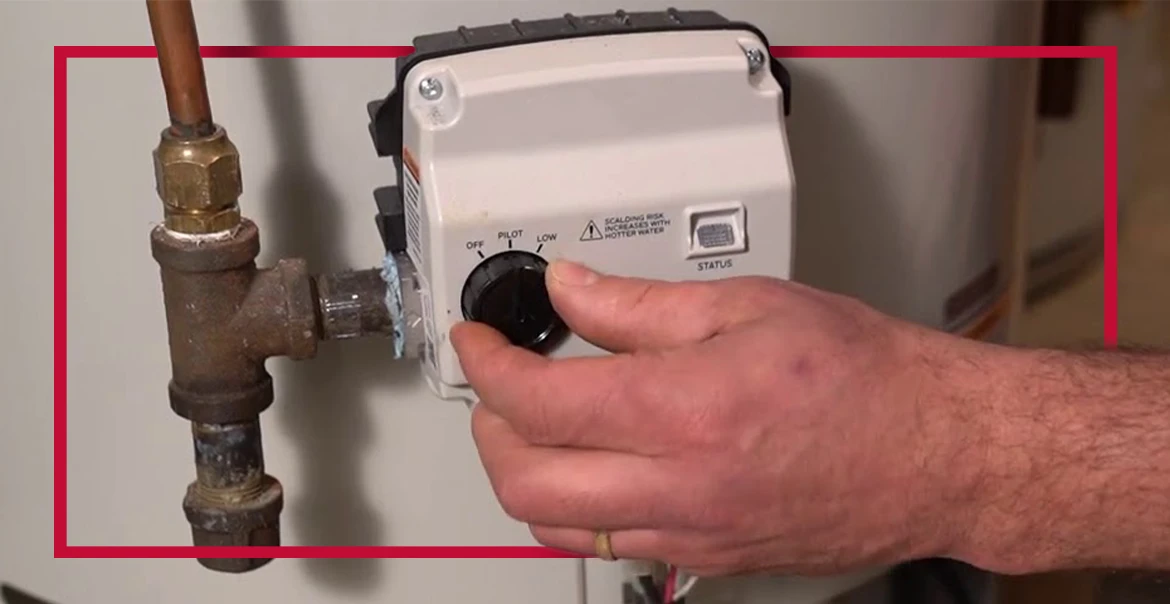
What Is a Water Heater Pilot Light?
That small, steady flame burning inside your gas water heater is doing a big job. The pilot light is a continuously burning flame that serves as the ignition source for the main burner. When your home calls for hot water, the main burner kicks on, and the pilot light is right there to bring it to life. It’s worth noting that pilot lights are exclusive to gas water heaters. Electric water heaters use heating elements powered by electricity to warm the water, so if you have an electric unit, this process will not apply to you.
Unlike electronic ignition systems that only activate on demand, a traditional pilot light stays lit around the clock. That constant readiness is what gives your water heater the ability to respond quickly whenever you need hot water for a shower, dishes, or laundry. Think of it as the always-on spark that keeps comfort flowing through your home.
How Can You Tell If a Pilot Light Is Out?
Before you can fix it, you need to know it is out. Here are the most common signs:
Intermittent or no hot water in the home. When the pilot light goes out, the main burner cannot ignite. That means your water heater stops heating, and cold water is all that comes out of the tap.
The burner is not turning on. If you notice that the familiar hum or click of the burner starting up is missing, there is a good chance the pilot light is no longer burning.
An error indicator on newer water heaters. Many modern units are equipped with a control panel that will display an error code or a flashing status light when the pilot light is out. Check your owner's manual to decode what yours is telling you.
Visual confirmation. Remove the access panel on the front of your water heater and look for the small flame near the base of the unit. If there is no flame, the pilot light is out.
Safety Precautions Before Lighting a Pilot Light
Safety always comes first. Before you attempt to relight the pilot, take a moment to go through these precautions:
Check for the smell of gas. Step close to the water heater and take a careful sniff. A faint gas odor can be normal in the immediate area of the unit, but if you smell strong gas, stop immediately. Turn off the gas supply valve, leave the area, and contact your gas provider or a licensed professional right away. Do not attempt to relight the pilot.
Ventilate the space. Make sure the area around the water heater is well-ventilated. Open a window or door near the unit before you begin.
Have a long-reach lighter and a flashlight ready. A long-reach lighter or extra-long fireplace matches keep your hands away from the ignition area and make the job significantly safer and easier, while a flashlight keeps your workspace illuminated in darker, more cramped areas of your home.
Step-by-Step Guide to Lighting a Water Heater Pilot Light
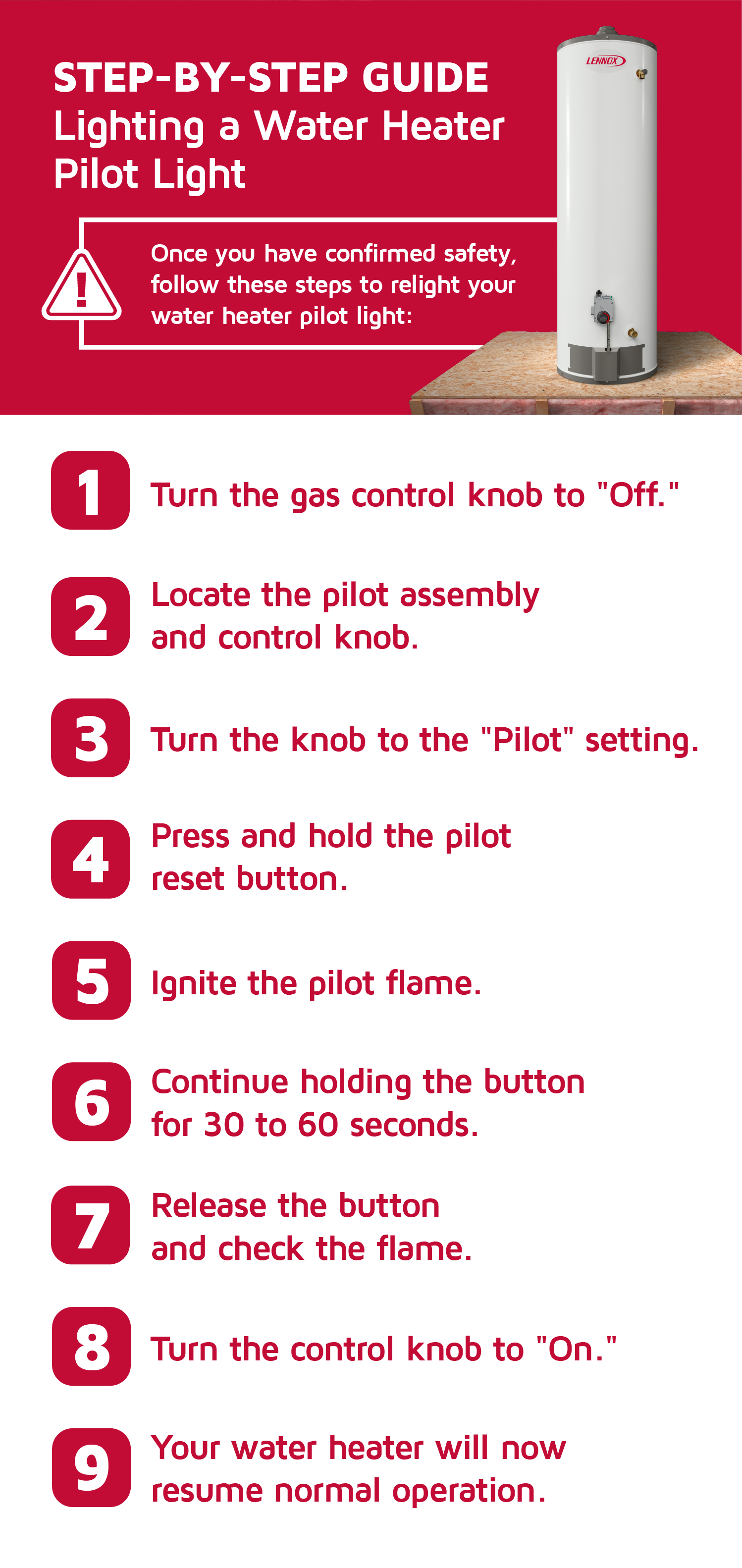
Once you have confirmed safety, follow these steps to relight your water heater pilot light:
Turn the gas control knob to "Off." Locate the gas control valve on the front of your water heater. Turn the knob to the "Off" position and wait five full minutes to allow any residual gas to clear before moving forward.
Locate the pilot assembly and control knob. Remove the access panel at the base of the water heater. Use a flashlight to spot the pilot assembly, which is a small tube that leads to the burner area. The gas control knob is typically mounted on the front of the unit.
Turn the knob to the "Pilot" setting. Rotate the gas control knob from "Off" to "Pilot." This allows a small amount of gas to flow to the pilot assembly so it can be lit.
Press and hold the pilot reset button. Locate the pilot reset button (often the same knob, pressed inward, or a separate red button nearby). Press and hold it down firmly. This opens the valve that supplies gas directly to the pilot tube.
Ignite the pilot flame. While holding the reset button, bring your long-reach lighter or lit match close to the pilot opening and ignite the flame. Continue holding the reset button as the flame catches.
Continue holding the button for 30 to 60 seconds. Keep that reset button pressed for a full 30 to 60 seconds after the flame ignites. This gives the thermocouple, a small safety sensor, enough time to heat up and confirm that the flame is stable. If you release the button too soon, the gas supply will cut off and the flame will go out.
Release the button and check the flame. Slowly release the reset button and watch the pilot flame. It should remain burning steadily. If it goes out, repeat the process. A healthy pilot flame is typically small and blue.
Turn the control knob to "On." Once the pilot is confirmed to be burning, rotate the gas control knob from "Pilot" to "On." Your water heater will now resume normal operation. The main burner should activate within a short time as the unit begins heating the water in the tank.
How to Confirm the Pilot Light Is Working?
After relighting, take a moment to verify that everything is running as it should:
Look for a steady, small blue flame at the pilot assembly.
Listen for the main burner to activate when hot water is called for somewhere in the home.
After 30 to 60 minutes, run a hot water tap to confirm that the water heater is heating normally. Water temperature and recovery times will vary depending on your unit's size and settings.
Common Reasons a Water Heater Pilot Light Will Not Stay Lit
If your pilot light keeps going out after relighting, something else is at work. Here are the most common culprits:
Drafts or airflow near the water heater. A consistent breeze from a nearby vent, window, or door can extinguish the flame repeatedly. Inspect the area for air movement and consider whether the heater is positioned in a particularly drafty spot.
Faulty gas control valve. The gas control valve regulates the flow of gas to both the pilot and the main burner. When it starts to malfunction, the gas supply becomes inconsistent, and the pilot flame pays the price. An unreliable gas control valve usually requires professional replacement.
A dirty pilot tube or burner. Dust, debris, and mineral buildup can partially clog the small orifice that delivers gas to the pilot. A clogged tube restricts gas flow and makes it difficult for the flame to stay lit. Careful cleaning by a qualified technician can resolve this.
Dirty or malfunctioning burner assembly. Blocked or dirty burners disrupt combustion, which can affect the pilot light's ability to stay on consistently. If the burner assembly hasn't been cleaned in a while, that buildup could be contributing to the problem.
A faulty thermocouple. The thermocouple is the small copper sensor that sits in the pilot flame and tells the gas valve to stay open. If it is dirty, bent out of position, or worn out, it will signal the gas valve to shut off, even when the flame is present. The thermocouple should sit directly in the path of the pilot flame. If cleaning does not solve the problem, replacement is the next step.
Gas supply issues. Low gas pressure or a temporary interruption to your gas supply can cause the pilot to go out. Check whether other gas appliances in your home are functioning normally.
Sediment buildup in the tank. Over time, mineral deposits can accumulate at the bottom of the water heater tank, causing the unit to overheat and triggering the safety shutoff, which extinguishes the pilot. Regular maintenance, including periodic tank flushing, helps prevent this issue.
When to Call a Professional?
Relighting a pilot light is something many homeowners can handle on their own, but there are situations where it is best to leave it to a licensed professional:
The pilot light repeatedly goes out despite following all the steps correctly.
You smell a strong or persistent gas odor around the water heater.
The igniter or thermocouple appears damaged or faulty and needs to be replaced.
Your water heater is older or has been experiencing other performance issues, such as inconsistent water temperatures, unusual noises, or visible rust or corrosion.
You are not comfortable performing the steps yourself.
In any of these cases, reach out to a qualified Lennox dealer. Trying to push through a repair you are unsure about can create safety risks that are not worth taking.
Keep the Comfort Coming
A functioning pilot light is the heartbeat of your gas water heater. When it is burning steady and strong, your home stays comfortable and your hot water supply stays reliable. Most of the time, relighting it is a quick and manageable task. But when it keeps going out, or when something just does not feel right, there is no reason to go it alone. The right professional support is just a call away.
For ongoing maintenance, repairs, or guidance on whether your current water heater is still performing at its best, find a Lennox dealer near you and get the expert support your home deserves.
We’re here to help make home comfort solutions a little clearer and a lot less stressful.
No Worries. It’s a Lennox.™