
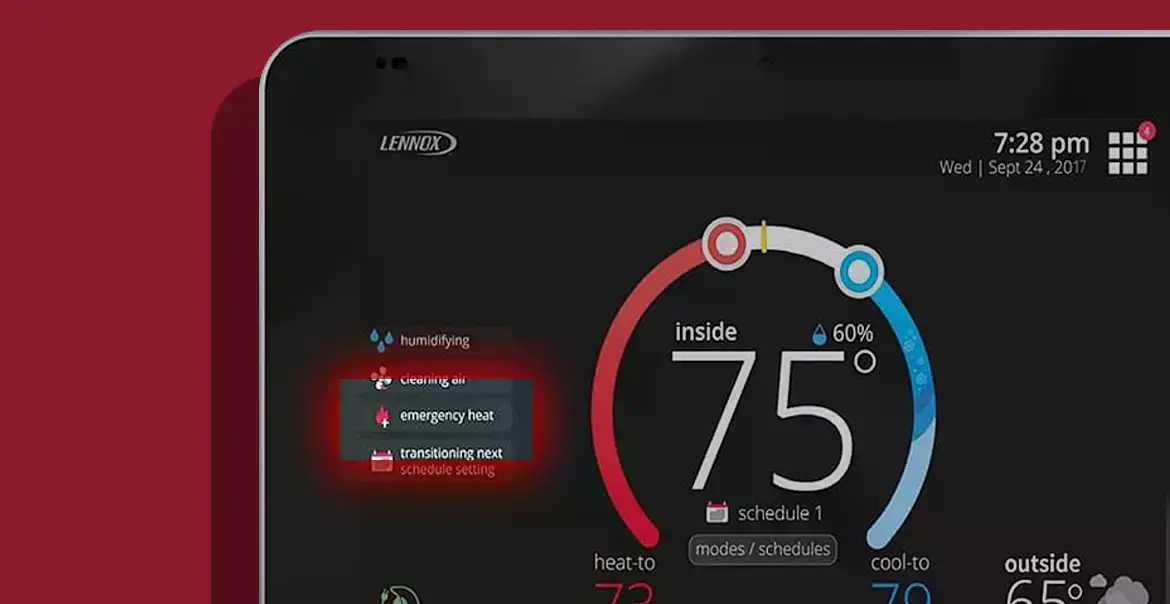
If you've glanced at your thermostat and noticed "Emergency Heat" or "EM Heat" displayed, you're probably curious about what it means. Here's the good news: emergency heat is a built-in safety feature that keeps your home warm and comfortable when your heat pump needs a little help. It's not a malfunction, it's your system doing exactly what it's supposed to do.
Whether it switched on automatically or you're seeing it for the first time, this guide will walk you through what emergency heat means, how it works, and the simple steps you can take to get your system back to normal.
What Does Emergency Heat Mean?
Your heat pump moves heat from outside into your home, even in cold weather. But when temperatures drop too low, your heat pump may use a backup source of auxiliary, or “aux” heat, in the form of electric-resistance coils or a gas furnace to help keep you comfortable.
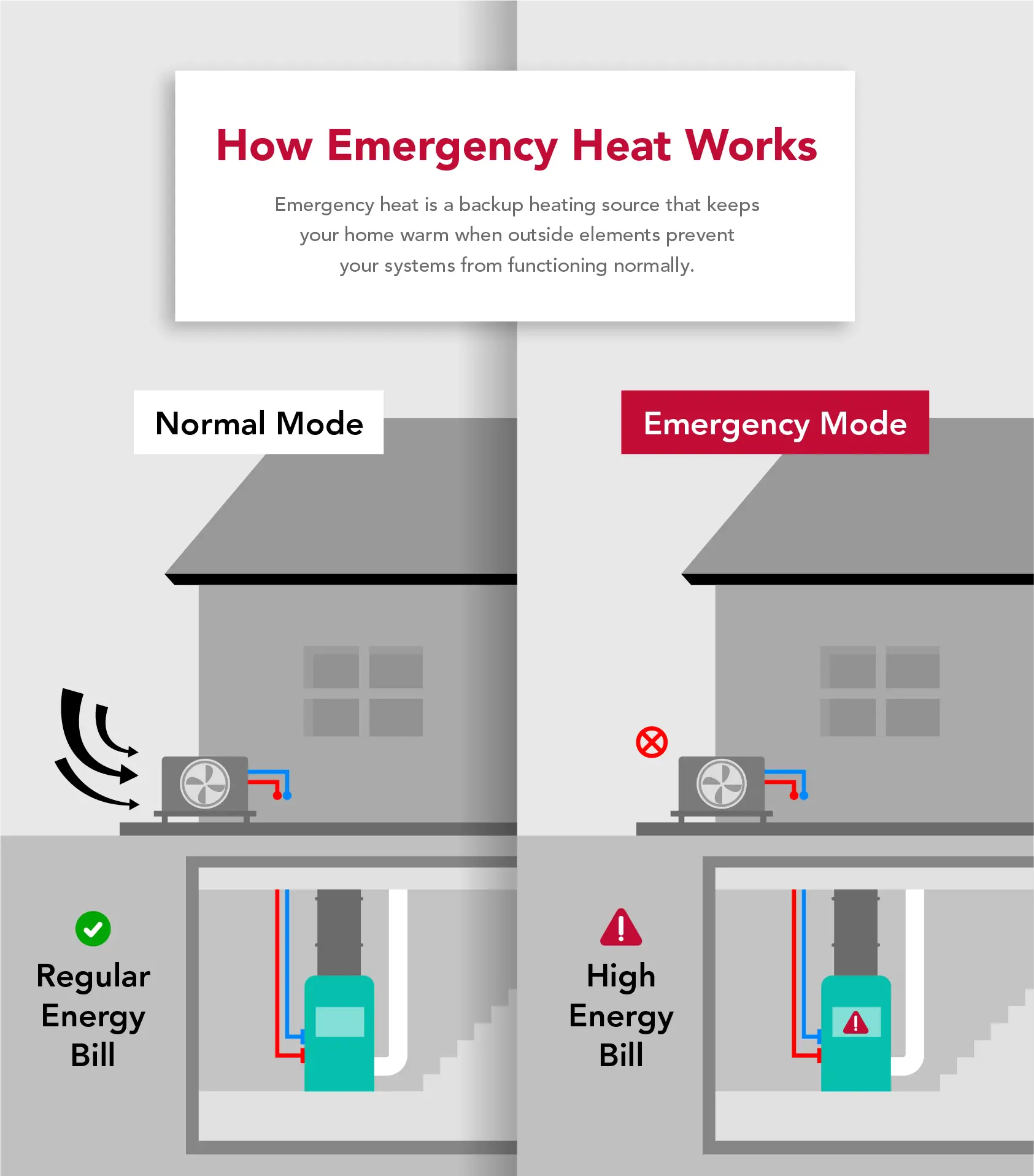
Here's the key difference: while aux heat typically works alongside your heat pump to give it a boost during very cold days, emergency heat completely shuts off the heat pump and runs only off the backup source. This feature is essential when the heat pump is damaged or inoperable; think of it as your system’s safety net.
How Emergency Heat Works?
When emergency heat mode is active, your system stops using the heat pump and switches entirely to the backup heating source. For most homes, that means electric resistance heating, similar to how a space heater or toaster works. Some dual-fuel systems use a gas or oil furnace as the backup instead.
Electric resistance heating generates warmth directly, without transferring it from outside. It's reliable and effective, but it's also less efficient than your heat pump. That means your energy bill can climb quickly if emergency heat runs for days or weeks.
Here's what happens behind the scenes: Your thermostat sends a signal to shut down the outdoor heat pump unit and activate the indoor backup heating elements. These elements heat up and blow warm air through your ducts, keeping your home comfortable while the heat pump stays offline.
The impact on your comfort is usually minimal in the short term. You'll still feel warm air, but over time, you may notice your home takes longer to reach your set temperature, and your utility bill will reflect the higher energy use since you are running on backup heat.
If you have an older heat pump, you might see emergency heat activate more frequently during cold snaps. Today's advanced systems, especially cold climate heat pumps, are engineered to deliver consistent, efficient heat even when outdoor temperatures drop well below freezing. Even with these improvements, occasional emergency heat use can still happen, particularly during extreme weather events, system malfunctions, or when the outdoor unit needs defrosting.
Impacts of Using Emergency Heat
While emergency heat keeps you warm when you need it most, it's important to understand how it affects your system and your home's efficiency.
Effects on System Efficiency and Longevity
Emergency heat components aren't designed to run as the primary heat source for extended periods. Over time, prolonged use can lead to:
- Increased wear on electric resistance coils
- Higher risk of element burnout
- Reduced overall system lifespan
- More frequent repair needs
The occasional use of emergency heat during a repair or extreme cold snap won't harm your system. But if you find yourself relying on it regularly, that's a sign something needs attention.
When Emergency Heat Isn’t An Emergency
Beyond cost and wear, frequent use of emergency heat can mask underlying problems with your heat pump. If your system keeps defaulting to emergency heat, it could indicate:
- Refrigerant leaks that reduce heating capacity
- Faulty sensors or thermostats
- Compressor issues
- Blocked or frozen outdoor coils
- An undersized heat pump
Ignoring these warning signs can turn a minor repair into a major replacement. Regular maintenance and prompt professional attention help you catch issues early and keep your system running efficiently.
When to Use Emergency Heat vs. What to Do If It Appears Unexpectedly?
Knowing when to activate emergency heat is crucial for maintaining home comfort during emergency weather conditions. Depending on the thermostat, emergency heat may activate by itself, but can also be turned on manually. For example, if your heat pump is broken and you're waiting for a repair, it's not cost-effective to use it as a heating source.
When should I activate emergency heat?
- If your HVAC technician specifically instructs you to turn it on while waiting for a repair appointment or parts to arrive.
- If your heat pump has completely failed and you need temporary heat until an HVAC professional can fix or replace it.
- If the outdoor unit is frozen solid or damaged (from storm debris, ice buildup, etc.) and cannot operate safely until inspected.
If emergency heat does appear, here's what to do:
- Check your thermostat settings. Make sure the mode isn't set to "Emergency Heat" or "EM Heat." It should typically be on "Heat" or "Auto." If it's on emergency heat, switch it back and see if the system returns to normal.
- Note any unusual sounds, smells, or error codes. These can all be signs of underlying issues.
- Give it a few minutes. Sometimes the system needs a moment to reset and restart the heat pump.
- Look for error codes or warning lights. Many modern thermostats display error messages that can help a technician diagnose the issue faster.
- Don't keep switching the system on and off. Repeatedly cycling your heat pump or thermostat can cause more damage and won't solve the underlying problem.
- If the issue isn’t resolving, call a professional to accurately diagnose any issues with your heating.
Maintaining Your Heating System
The best way to keep your heating system in top shape and avoid unnecessary emergency heat activation is with regular care and attention. Luckily, you don’t have to be an HVAC expert to keep your heater heating.
Regular Maintenance Tips
- Schedule annual inspections: Don’t try to repair the heat pump yourself. A qualified HVAC professional should check your heat pump at least once a year, ideally before heating season begins. They'll inspect refrigerant levels, test electrical connections, clean coils, and catch small issues before they become big problems.
- Clean and replace filters regularly: Dirty filters restrict airflow, forcing your system to work harder and potentially triggering emergency heat. Check your filter monthly during heavy use and replace it every 1–3 months, depending on your home and filter type.
- Keep the outdoor unit clear: Remove leaves, grass clippings, and debris from around your heat pump. In winter, gently clear snow and ice buildup (never use sharp tools or force). Good airflow around the unit helps it run efficiently.
- Check for refrigerant leaks: If you notice ice buildup on the outdoor unit, reduced heating performance, or hissing sounds, you may have a refrigerant leak. Only a licensed technician should handle refrigerant; it's not a DIY job.
- Test your thermostat: Make sure your thermostat is reading temperatures accurately and responding correctly to your settings. Replace batteries as needed and consider upgrading to a smart thermostat for better control and diagnostics.
How to Optimize Heating Efficiency Year-Round
Maximizing your system's efficiency reduces the chances you'll ever need emergency heat:
- Seal air leaks: Check windows, doors, and ductwork for drafts. Proper insulation and sealing keep warm air in and reduce heating demand.
- Maintain consistent temperatures: Avoid drastic thermostat changes that force your system to work overtime.
- Consider a maintenance plan: Many HVAC companies offer annual service agreements that include priority scheduling, discounts on repairs, and regular tune-ups.
- Upgrade aging equipment: If your heat pump is more than 10–15 years old, newer models offer significantly better efficiency and reliability.
Troubleshooting and When to Call a Professional
Before you pick up the phone, try these simple troubleshooting steps:
- Check the thermostat mode and batteries: Low batteries can cause erratic behavior. Replace them and see if that clears the issue.
- Inspect your circuit breakers: A tripped breaker can shut down the outdoor unit and trigger emergency heat. Reset any tripped breakers and monitor the system.
- Look at the outdoor unit: Is it covered in ice or snow? Clear away any debris, but don't force anything or try to chip away ice.
- Review your thermostat display: Write down any error codes or messages you see.
If your problem isn’t resolved after troubleshooting, a qualified technician can help diagnose any underlying issues to get your heat pump back to efficient operation.
Keep Your Home Comfortable and Your System Running Smoothly
Emergency heat is there to protect you when your heat pump can't keep up. But it's not a long-term solution. If you're seeing emergency heat mode more than once in a while, it's time to have your system checked.
Taking action early can save you money, prevent bigger repairs, and keep your home feeling just right all winter long. Your comfort matters, and a quick call to a trusted professional can make all the difference.
Ready to get your heat pump back on track? Find a Lennox dealer near you and schedule a service visit today.