
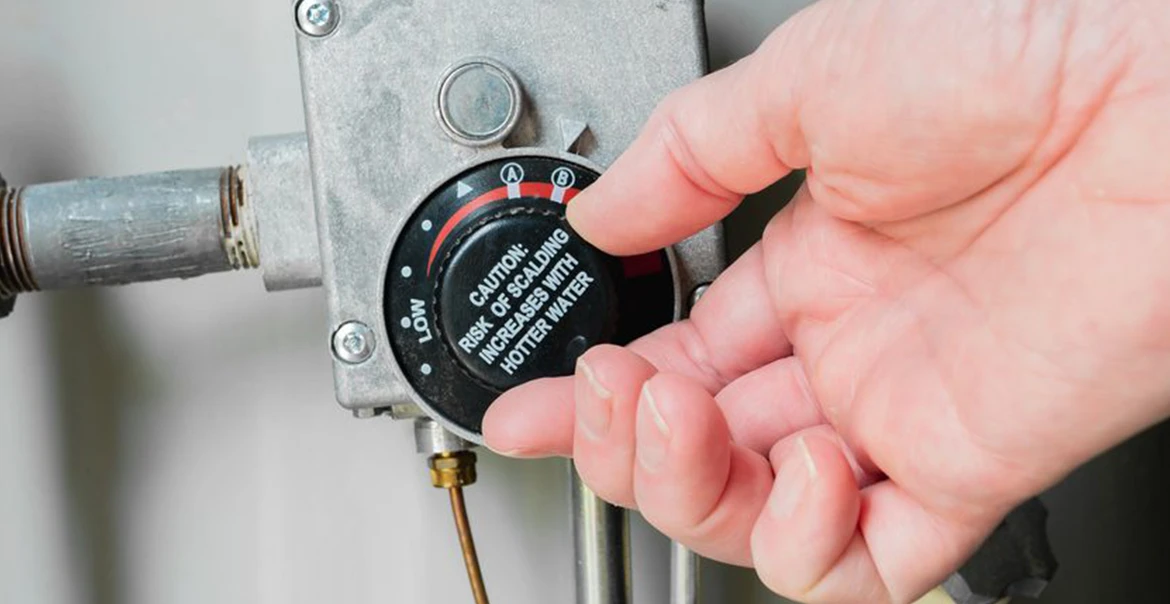
There's a lot happening behind the panels of your water heater, and most of it comes down to one key component: the thermostat. This small device is responsible for keeping your water at the right temperature, not too hot, not too cold, and doing it consistently without you having to think about it.
Whether your home runs on an electric or gas water heater, the thermostat is what makes reliable hot water possible. Understanding how it works puts you in a better position to catch problems early, adjust settings safely, and know when it's time to call in a pro.
What Is a Water Heater Thermostat?
At its core, a water heater thermostat is the temperature control hub of your water heating system. It monitors the water inside your tank and signals the heater to turn on or off based on your preset temperature preferences.
Think of it like a constant guardian for your hot water supply. It keeps the temperature where you want it, steps in when things drift too low, and backs off once the water is back up to your desired level. Beyond comfort, this steady regulation plays a real role in protecting your appliance from overheating and keeping your home safe.
One important note: the thermostat's job is to maintain the temperature you set, so setting it to the right level from the start is what makes the biggest difference in how efficiently your system runs.
How a Water Heater Thermostat Works?
Temperature Sensing
The thermostat uses a sensing element positioned against the outside of the tank to read the water temperature inside. When the reading drops below your preset level, it triggers the heating cycle to begin. When the water reaches your target temperature, the heater shuts off.
Heating Cycle Activation and Shut-Off
This on/off cycle is what keeps your water ready without running the heater constantly. It's a simple but effective system that balances comfort with consistent performance.
Safety High-Limit Cut-Off
Most water heater thermostats also include a high-limit cut-off function. This is a built-in safety feature that stops the heater from operating if the water temperature climbs to a potentially dangerous level. If this function trips, it typically requires a manual reset before the heater will run again.
Types of Water Heater Thermostats
Electric Water Heater Thermostat
Electric water heater thermostats are the more common of the two types. They use an electrical system to control the heating element and regulate water temperature. Many electric water heaters include both an upper and a lower thermostat, each managing its own heating element independently.
Gas Water Heater Thermostat
Gas water heater thermostats work differently. Instead of an electrical control system, they rely on a gas valve located on the front of the unit. A component called a thermocouple, a mercury-based sensor, monitors temperature and controls gas flow to maintain your desired water temperature without any electrical components involved.
How to Adjust Your Water Heater Thermostat?
Adjusting your thermostat is manageable, but it does require care. Here's how to do it safely:
Turn Off the Power. For electric water heaters, flip the appropriate circuit breaker. For gas units, turn the heat control to "pilot."
Access the Thermostat. Remove the access panel and any insulation covering the thermostat.
Adjust the Settings. On an electric heater, use a flat-head screwdriver to turn the temperature dial. On a gas water heater, use the control knob on the front of the unit.
Replace Insulation and Panels. Once your adjustment is made, secure the insulation and cover panel back in place.
Restore Power. Switch your electric heater back on at the breaker, or return your gas heater's control to your desired setting.
Safety Precautions to Follow
Before you begin any adjustment, keep these safety steps in mind:
Always turn off power at the breaker before touching any electrical components.
For gas units, confirm the control is set to "pilot" before accessing the thermostat.
Never work on a water heater with wet hands or in a damp area.
After restoring power, check for any unusual sounds, smells, or leaks before walking away.
If you're unsure at any step, stop and call a licensed professional.
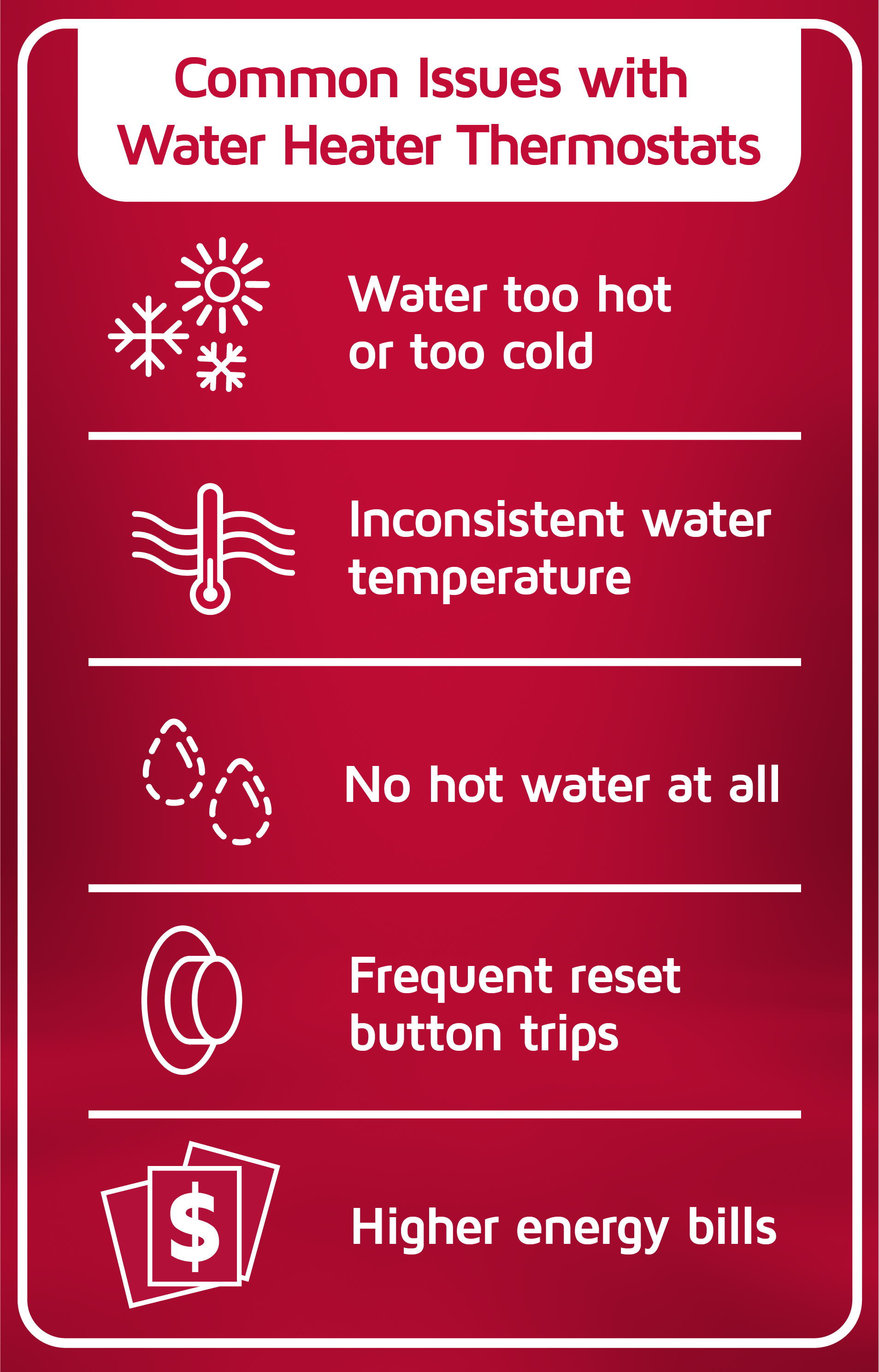
Common Issues with Water Heater Thermostats
A thermostat that's not performing well makes itself known quickly. Here are the most common signs something is off, along with some basic troubleshooting to try first:
Water too hot or too cold. This often points to incorrect thermostat settings. Try adjusting the temperature dial and giving the system time to respond before assuming the thermostat has failed.
Inconsistent water temperature. If your hot water runs warm, then cold, then warm again, sediment buildup or corrosion around the heating element may be interfering with accurate temperature readings. Flushing the tank can sometimes resolve this.
No hot water at all. This could signal a failed heating element or a thermostat that's no longer functioning. Start by checking whether the circuit breaker has tripped or the reset button needs to be pressed.
Frequent reset button trips. If you're hitting the reset button repeatedly, the thermostat may be struggling to regulate temperature correctly, which can lead to overheating. This is a sign to call a professional rather than keep resetting.
Higher energy bills. A thermostat that's miscalibrated or failing can cause your heater to run longer than it should, which shows up on your utility bill. If nothing else has changed in your home and costs are climbing, the thermostat is worth checking.
When to Call a Professional?
Sometimes the right move is knowing when to hand things off. Here are situations where a licensed technician should be involved:
Persistent temperature problems. If you've adjusted the thermostat and the issue keeps coming back, a professional evaluation can pinpoint whether it's the thermostat, the heating element, or something else entirely.
Electrical or gas control issues. Anything involving wiring, gas valves, or control boards requires specialized skills and strict safety protocols. These are not areas to improvise.
Burnt wiring or visible corrosion. If you open the access panel and see discoloration, burnt wires, or corroded connections, that goes beyond a surface fix. A licensed plumbing contractor can assess the full scope of the damage safely.
Repeated high-limit trips. If your high-limit cut-off keeps triggering, it's signaling an underlying issue with temperature regulation that needs professional diagnosis, not just repeated resets.
Maintenance Tips for Thermostat Longevity
Keeping your water heater thermostat in good shape doesn't require a lot of effort, but it does require consistency. These habits go a long way:
Annual professional inspection. Having a technician inspect your system catches small issues before they become costly ones. They can check thermostat calibration, wiring integrity, and overall system health. They can also repair your system if needed.
Flush the tank regularly. Sediment settling at the bottom of your tank can affect how accurately your thermostat reads the water temperature. Flushing the tank once a year helps keep readings reliable and protects your heating element.
Check wiring connections. During any inspection, ensure internal wiring is secure and free of wear, fraying, or corrosion. Loose connections can cause erratic thermostat behavior.
Routine system maintenance. Keeping all components clean and in good working order, from the anode rod to the pressure relief valve, supports the thermostat's ability to do its job accurately.
Staying on top of these steps means fewer surprises and more consistent comfort year-round.
Ready to Upgrade Your Heater?
Your water heater thermostat is one of those components that works quietly in the background, and you tend to notice it most when something goes wrong. Knowing how it works, how to adjust it safely, what warning signs to watch for, and how to maintain it gives you real control over your home's comfort and efficiency.
When it's time for a new water heater, or you're looking to upgrade your home's comfort, explore Lennox water heaters and whole-home solutions to find the right fit for your home.
We’re here to help make home comfort solutions a little clearer and a lot less stressful.
No Worries. It’s a Lennox.™