
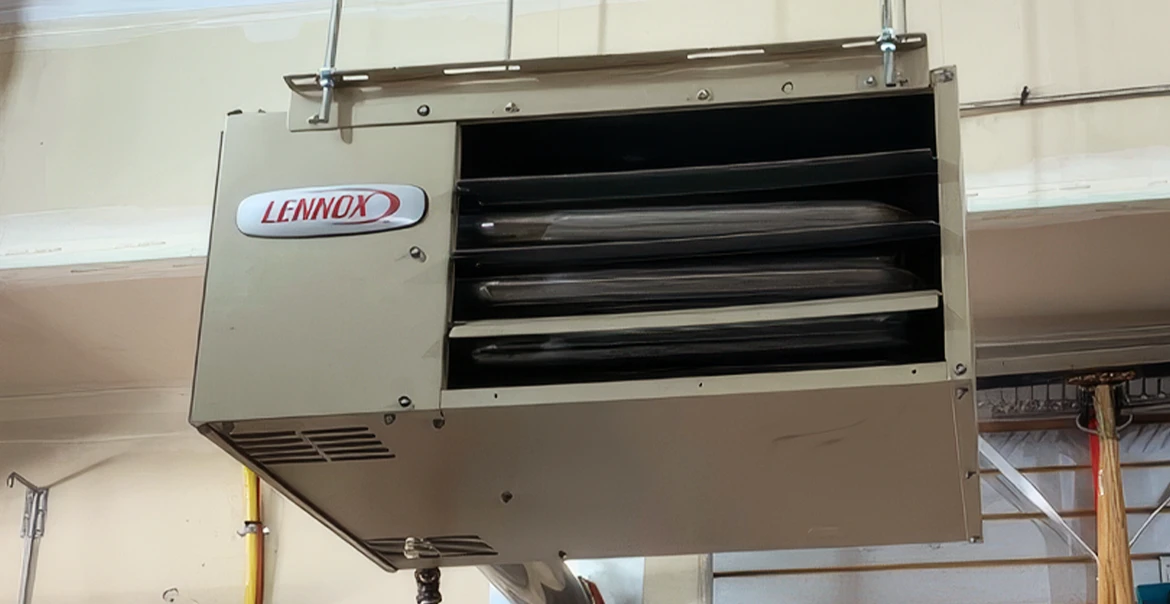
Why Your Garage Needs Real Heat?
More and more homeowners are turning their garages into workshops, home gyms, hobby spaces, and even extra living areas. But when temperatures drop, that space becomes nearly unusable without the right heating setup. A cold garage does not just make you uncomfortable. It can damage tools, freeze pipes, and cut your productivity short.
The good news? There are solid, energy-efficient ways to keep your garage warm year-round. You just need to know where to start.
Assessing Your Garage Heating Needs
Before you pick a garage heater, take a good look at your space. A few key factors will shape the right answer for you.
-
Garage Size and Location
The size of your garage matters a lot. A single-car garage and a three-car detached garage are two completely different heating challenges. Detached garages are exposed to outdoor temperatures on all sides, so they typically need a more powerful system than an attached garage that shares a wall with your heated home.
British Thermal Units (BTUs) are the amount of energy required to raise the temperature of one pound of water by one degree Fahrenheit. As a general rule, plan for about 50 to 60 BTUs of heating capacity per square foot: a 400-square-foot garage would need roughly 20,000 to 24,000 BTUs to stay comfortable. Getting this number right means your system runs efficiently without wasting energy or money.
-
Climate Considerations
Where you live shapes everything. If you live in a colder climate, you need a heating system that can keep up with serious cold, not just take the edge off. In those climates, a high-output natural gas heater is often the most reliable choice. In milder regions like the Southeast, a smaller electric unit might be all you need to stay comfortable through winter.
-
How You Use the Space
A garage you pop into for five minutes to grab a tool is a very different situation from a garage where you spend three hours working on a project. If your garage is a true workspace or hobby room, you need steady, lasting warmth. If it is occasional use only, a portable or on-demand option might do the job just fine.
Insulation: The Key to Efficient Heating
Here is the truth: the best heater in the world cannot do its job well in a garage that leaks heat from every corner. Garage insulation is the single most cost-effective step you can take before buying any heating equipment.
Where Garages Lose the Most Heat?
The biggest culprits are:
- Garage doors (the largest surface area in the space)
- Walls and ceilings that are uninsulated or under-insulated
- Gaps around windows, doors, and utility penetrations
Sealing any gaps and adding insulation to your walls and ceiling stops warm air from escaping. This is also the cheapest way to heat a garage over time, because it reduces how hard your heater has to work every single day.
A well-insulated garage holds heat longer, which means your system runs less often and your energy bills stay lower. To get a read on where your garage stands, start with a simple visual check: look for gaps around door frames and windows, and any spots where pipes or wires pass through the walls. On a cold day, hold your hand near those areas and feel for drafts. You can also run your hand along the interior walls. If they feel ice-cold to the touch, that is a sign that the insulation behind them is thin or missing. Another easy test is the light check: step inside your garage, close everything up, and look for any daylight sneaking through the edges of your garage door or walls. Anywhere light gets in, cold air follows.
Choose the Right Heating Solution
Once your garage is properly sealed and insulated, it’s time to pick your heater. Here are a few of the most common options:
-
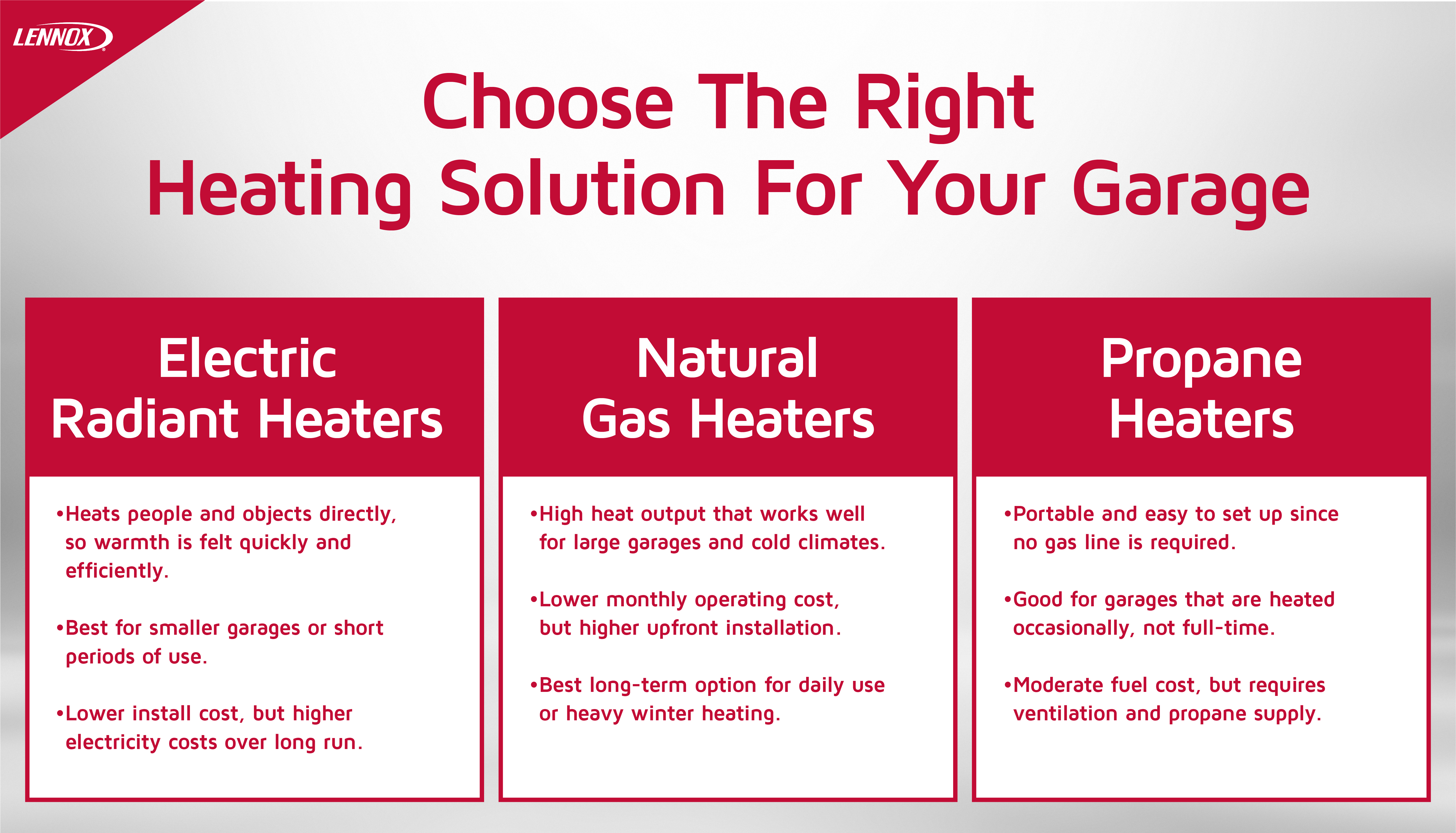
Electric Radiant Heaters
Electric radiant heaters are quiet, mobile, and great for smaller garages or spaces where you need warmth fast. They heat objects and people directly rather than trying to warm the entire air volume, which means you feel the heat quickly. The trade-off is that running them for long stretches can add up on your electric bill, so they work best for shorter sessions or smaller spaces.
-
Natural Gas Heaters
For larger garages, colder climates, or spaces you use every day, natural gas heaters are hard to beat. They deliver the highest, most consistent heating output, provide consistent comfort, and usually offer long-term savings on operating costs compared to electric options. The upfront installation cost is higher, but homeowners who use their garage regularly often find that natural gas pays for itself over time. This is widely considered the most efficient heat source for a garage in cold-weather regions.
-
Propane Heaters
Propane heaters are portable, powerful, and a great fit for garages that are only heated part of the time. They do not require a permanent gas line, which makes them easier to set up. The key requirements are proper ventilation and a steady supply of propane. They are a practical, flexible solution for homeowners who want warmth without a full installation. However, these heaters can get extremely hot during operation, so they should be used with caution and kept safely away from children, pets, and any nearby materials.
Each option has its own trade-offs. Electric radiant heaters are the easiest and cheapest to install, but they cost more to run over time, especially in larger spaces or colder climates. Natural gas heaters carry a higher upfront installation cost, but they make up for it with lower monthly operating costs and consistent output that holds up in serious cold. Propane heaters sit right in the middle: low installation effort, moderate fuel costs depending on propane prices in your area, and solid efficiency for part-time use. If you’re heating a large garage daily through a tough winter, natural gas is the most cost-effective long-term play. If you need something simple and flexible, propane or electric could get the job done without the commitment.
Smart Controls for Better Comfort
Pairing your Lennox garage heater with a smart Lennox thermostat allows you to set your ideal temperature and make adjustments remotely, so your garage is ready when you are.
Once your heating system is in place, the right features can make a real difference in how your garage feels day to day. Lennox garage heaters are built with homeowners in mind, which means you get more than just heat. You get control, efficiency, and peace of mind all in one package.
Keep It Running Right With Regular Maintenance
A great garage heating system stays great when you take care of it. A few simple habits go a long way:
- Change or clean air filters on a regular schedule
- Check for gas leaks if you have a gas or propane unit
- Inspect vents and exhaust pathways to make sure nothing is blocked
- Schedule annual professional check-ups to catch small issues before they become big ones
Lennox factory-trained dealers are available across the country to handle installation, maintenance, and any repairs your system needs. Having a pro involved from the start means your system is set up correctly and running at peak performance from day one.
The Bottom Line
Your garage can be a genuinely comfortable, productive space, even when it’s cold outside. The best way to heat a garage is not a one-size-fits-all answer. It starts with understanding your space, sealing it up tight, picking the right heating option for your climate and usage, and adding smart controls to keep everything dialed in.
Lennox garage heaters provide an easy and energy-efficient solution to make your garage or workspace more comfortable and usable. Available in a range of sizes and fuel options, they bring reliable warmth to utility spaces large or small. Ready to find your perfect setup? Find a Lennox dealer near you and get expert guidance matched to your home.
We’re here to help make home comfort solutions a little clearer and a lot less stressful.
No Worries. It’s a Lennox.™