
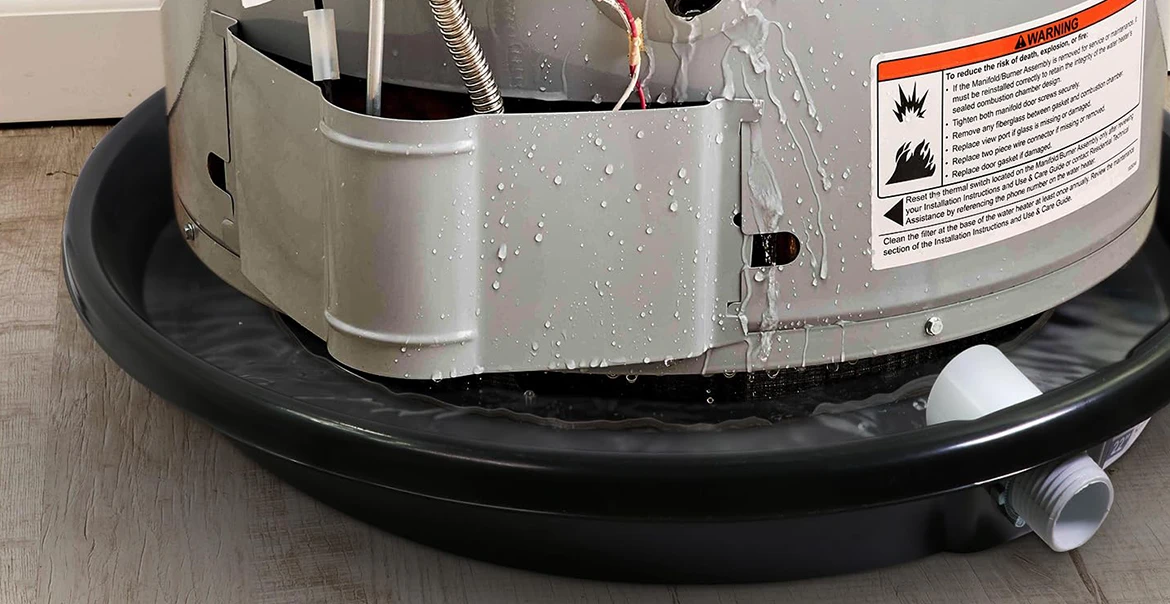
Why Is a Water Heater Drain Pan Important?
Water heaters tend to earn their reputation for reliability over years of quiet, consistent service. That reliability, however, can make it easy to overlook what happens when something does go wrong. Tanks develop pinhole leaks. Fittings loosen over time. Temperature and pressure relief valves occasionally discharge. In every one of these scenarios, water ends up somewhere it should not.
Without containment, that water travels. It seeps into baseboards, wicks up drywall, saturates flooring underlayment, and in some cases works its way into structural framing. The damage compounds quickly because much of it is hidden from plain sight. By the time a homeowner notices discoloration on a ceiling or soft spots underfoot, the problem has typically been building for a while.
The Environmental Protection Agency (EPA) recommends addressing any water-damaged building materials within 24 to 48 hours before mold takes hold. That timeline assumes you know there is a problem. Slow leaks in a closet or utility room often go undetected for days or weeks, making that window nearly impossible to catch without a containment system in place.
The financial reality reinforces the case for prevention. EPA data covering 2019 to 2023 shows that homeowners filing water damage and freezing claims paid an average of $15,400 per incident. A drain pan looks very different when measured against that number.
Installing a drain pain is particularly critical in a few situations:
Upper-floor and attic placements, where a leak above means damage below
Closet installations with limited access and visibility
Any location where leakage could affect adjacent living areas or structural components
Always verify requirements with your local building authority, as code adoption and amendments vary by jurisdiction.
How Does a Water Heater Drain Pan Work?
The concept is straightforward. A drain pan sits on a level surface directly under the water heater and acts as a secondary barrier between the unit and your home. Any water that escapes, whether from a slow tank seam leak, a dripping fitting, or a pressure valve event, falls into the pan rather than spreading across the floor.
From there, a drain line connected to a threaded outlet on the pan carries the water away to a suitable discharge point, typically a floor drain, laundry sink, or an approved exterior location. The key to making that system work is slope. The drain line has to run continuously downhill from the pan to its destination. Any low point or horizontal stretch in the line creates a trap where water sits, eventually backing up into the pan and spilling over.
Heat pump water heater owners have an additional consideration: these models generate condensate as a normal byproduct of operation. The U.S. Department of Energy (DOE) notes that heat pump water heaters placed in or above conditioned space should be installed with a drain pan per International Residential Code (IRC) requirements, with condensate routed accordingly.
Types of Water Heater Drain Pans
Plastic drain pans are the go-to for most residential installations. High-density polyethylene and Acrylonitrile Butadiene Styrene (ABS) are both common materials, offering solid rust resistance and light weight that makes them easy to handle during installation. The main limitation is that sustained heat exposure over many years can cause cracking.
Metal drain pans built from aluminum or galvanized steel bring more structural rigidity and generally perform better in high-heat environments. The trade-off is that if water pools and sits in a metal pan for an extended period, corrosion becomes a concern.
Custom-fit vs. universal options come down to your specific situation. Custom pans are engineered to match a particular water heater model's footprint. Universal pans are sized to accommodate a range of units and are typically the more practical choice when you are replacing an older pan without swapping out the heater itself. Both materials are available in either format.
Signs You Need to Replace Your Drain Pan
Watch for these indicators that your current pan has reached the end of its useful life:
Cracks visible in a plastic pan, even small ones
Rust or corrosion on a metal pan, particularly around the drain outlet
Water found outside the pan's perimeter after any water heater event
A drain line that backs up or drains noticeably slower than it previously did
Water Heater Drain Pan Installation
Three variables determine whether a drain pan installation actually does its job: the pan is the right size, the drain line runs at a consistent downward angle, and the heater sits on a completely level surface.
Getting the size right: Your pan needs to be at least 2 inches larger in diameter than the heater's base, which aligns with DOE installation guidance. Most tank-style residential water heaters fall in the 18 to 24 inch range. Measure your unit's base before purchasing rather than guessing.
Setting up the drain line: Wrap the drain fitting threads with sealant tape before attaching the drain pipe. Run the pipe to a floor drain, utility sink, or approved outdoor termination point. Keep the run free of sags or level segments, and confirm the discharge point is appropriate for your local code.
Knowing when to bring in a professional: Attic and upper-floor installs, situations with complex drain routing, and any job where the pan needs to tie into an existing drain system are good candidates for a licensed plumber. Code-compliant installation also matters for warranty coverage on your equipment, so it is worth getting it done right the first time.
Benefits of Installing a Water Heater Drain Pan
Intercepts water before it reaches floors, walls, and ceilings, preventing structural damage
Reduces hazard risk by keeping standing water away from gas lines and electrical components
Supports compliance with IRC and local plumbing code, which can have implications for homeowner insurance coverage
Creates visible evidence of a leak early, giving you a chance to act before a minor issue escalates
Common Problems with Water Heater Drain Pans
Blocked drain lines: Mineral scale and sediment accumulate in drain pipes over time. Running a small amount of water into the pan periodically confirms the line is clear. If drainage is sluggish, flush the line before it backs up entirely.
Pan degradation: Plastic pans can develop hairline fractures under prolonged heat stress. Metal pans may corrode if water pools and is not removed. In either case, a compromised pan cannot reliably contain a leak.
Installation errors: A pan that is too small, sitting on an uneven surface, or connected to a drain line that lacks proper slope will underperform when you actually need it.
Standing water: Occasional condensation in a humid utility space can be normal, but a pan that consistently holds water points to an active leak, a pressure valve issue, or a drain blockage that needs attention.
Why a Drain Pan is Worth It?
The average water damage claim tracked by the EPA between 2019 and 2023 was $15,400, making a water heater drain pan a relatively inexpensive safeguard. The out-of-pocket costs associated with subfloor replacement, mold remediation, and structural repairs can climb well past that average, particularly in multi-story homes where a leak on one floor cascades to another. Some insurance carriers also scrutinize whether appropriate containment was in place at the time of a water damage event, so checking your policy terms is worth doing before you decide to skip the pan.
Maintenance Tips for Drain Pans
Routine attention twice a year keeps a drain pan functioning the way it should. Each inspection should cover four things: the condition of the pan itself, the drain fitting connection, the state of the drain line, and whether any standing water or sediment has accumulated inside the pan.
Use a wet/dry vacuum to pull out any pooled water or debris. Flush the drain line annually to clear mineral buildup. If you spot any cracking, corrosion, or signs of a slow drip from the tank above, address it before the next inspection rather than waiting.
Tying this into your seasonal water heater maintenance schedule, when you are already checking filters, inspecting equipment, and reviewing your system's overall condition, makes it easy to stay consistent without adding a separate task to your calendar.
FAQ
Is a drain pan required by code?
The IRC calls for a drain pan under water heaters in any location where a leak has the potential to damage the structure or nearby living spaces. Attic, upper-floor, and closet installations are the most common examples. Because code adoption and local amendments vary, confirm current requirements with your local building department.
How often should it be replaced?
Plan on five to ten years as a general guideline, though your specific pan's material and environment will influence that. Inspect annually and replace whenever cracking, corrosion, or drainage problems appear.
What size drain pan do I need?
The pan should be at least 2 inches larger in diameter than the base of your water heater. Most residential tank-style units fall in the 18 to 24 inch range.
Why is there water in my drain pan?
A modest amount of condensation in a humid space is not unusual. If the pan has significant water in it or fills up repeatedly, that points to an active tank leak, a T&P valve releasing pressure, or a drain line that is no longer flowing freely. Have a licensed plumbing contractor assess the situation.
Find the Home Comfort Solution For You
For a relatively small upfront cost, a drain pan can stand between your water heater and the kind of damage that disrupts daily life and drains your savings. Between code compliance, mold-prevention, and the average cost of a water-damage claim, the case for installing and maintaining a drain pan is clear. Whether your water heater sits in a first-floor utility closet or an upper-floor mechanical space, taking the time to get the right pan, install it correctly, and check on it regularly is a straightforward way to protect your home for years to come. If you have questions about your current setup or want help finding the right solution for your home, a licensed plumbing contractor can point you in the right direction.
We’re here to help make home comfort solutions a little clearer and a lot less stressful.
No Worries. It’s a Lennox.