
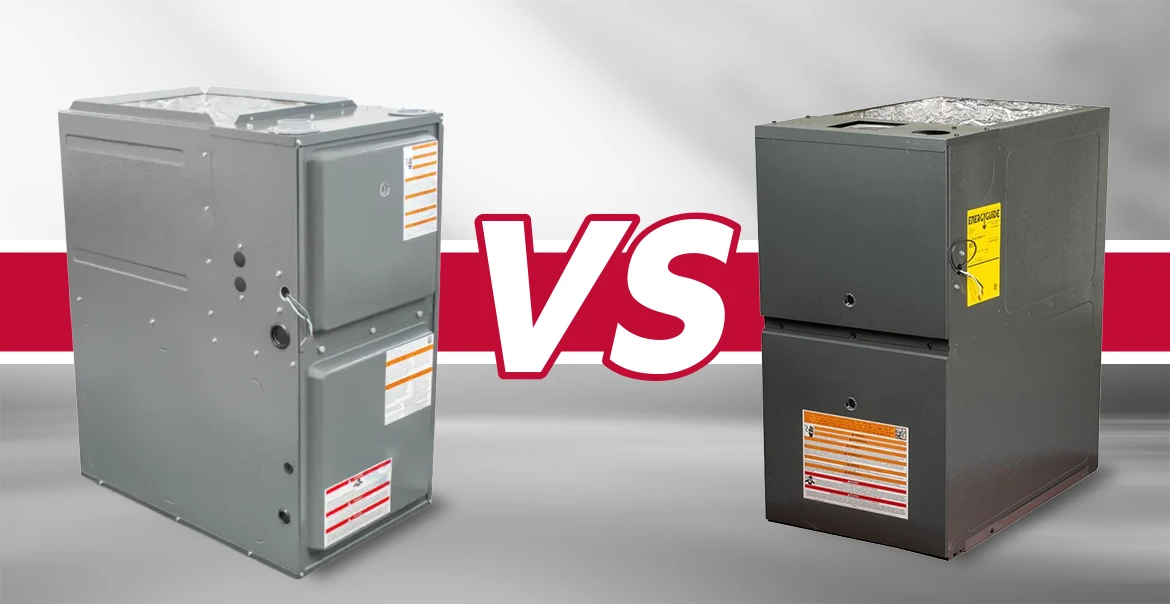
Choosing a furnace is one of the most important comfort decisions you'll make for your home. But before you compare models or efficiency ratings, there's a more fundamental question to answer: which direction should your furnace move air? That single directional difference shapes everything about where your furnace lives and how it fits into your space.
Understanding Furnace Orientation
Your furnace's orientation is not just a technical detail. It directly affects how evenly your home heats, how accessible the unit is for maintenance, and how well it works with your existing ductwork. Before any installation decision is made, it helps to understand what each configuration actually does.
What "upflow" and "downflow" mean in practice
A downflow furnace pulls air in through the top, heats it, and discharges warm air downward through floor-level registers. This setup works especially well when the duct system sits below the living space. An upflow furnace pulls air in from the bottom, heats it, and sends it upward through overhead ductwork. As warm air rises naturally, the upflow design works with physics rather than against it, making it a reliable and efficient choice for a wide range of home layouts.
How orientation shapes comfort
In a downflow setup, heat reaches the lower levels of the home first, which is helpful in spaces that tend to stay cold near the floor. In an upflow setup, warm air rises from below and evenly distributes throughout the upper duct system, keeping the whole home consistently comfortable regardless of the season.
What Is a Downflow Furnace?
A downflow furnace is designed for homes where the ductwork lives beneath the floor. Installed in an attic or upper-level utility space, it moves heated air downward through the duct system and out through floor or low-wall registers.
How it works and where it fits
The furnace sits above the living space. Cool air enters through the top of the unit, passes through the heat exchanger, and warm air exits through the bottom into the supply ducts below. This configuration is a natural fit for homes with slab foundations or without basements, where running ductwork under the floor is the standard approach.
Advantages of a downflow furnace
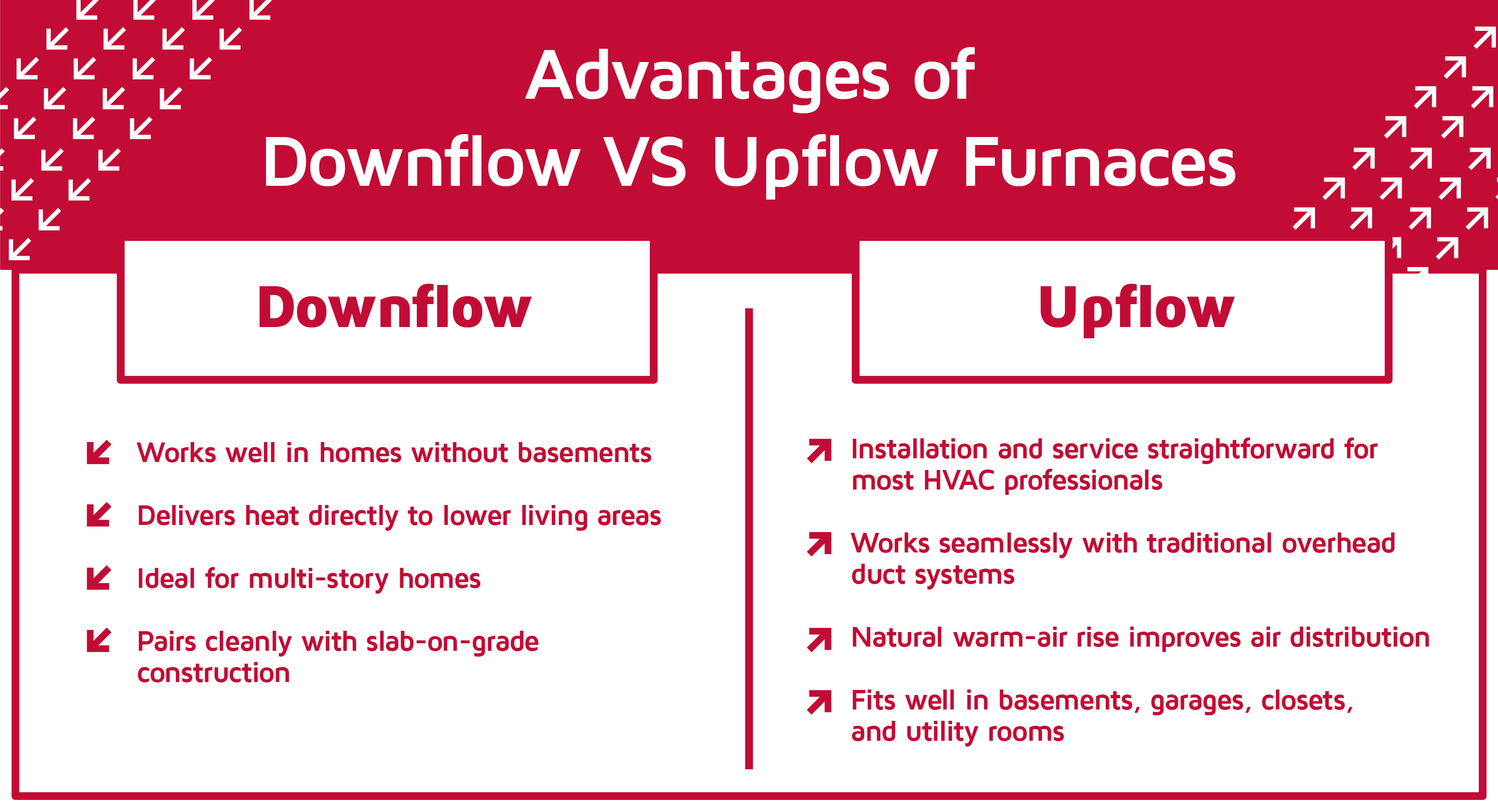
Works well in homes without basements where ductwork is routed beneath the floor
Delivers heat directly to lower living areas, which tend to lose warmth fastest
Ideal for multi-story homes where consistent floor-level heating matters
Pairs cleanly with slab-on-grade construction
Things to keep in mind
Installation in an attic requires confirming that the structure can support the unit's weight
Access for routine maintenance and filter changes may be less convenient, depending on the attic layout
In extremely cold climates, the downflow configuration may need additional insulation around attic-installed components to maintain efficiency
What Is an Upflow Furnace?
An upflow furnace is one of the most widely installed furnace types in modern homes. It sits low, in a basement, garage, or closet, and moves heated air upward into overhead ductwork.
How it works and where it fits
Cool air enters through the bottom of the unit, gets heated, and warm air is pushed upward into the supply ducts above. Because warm air naturally rises, the upflow design capitalizes on that movement to distribute heat efficiently throughout the home. Upflow furnaces also integrate smoothly with central air conditioning systems, since the same ductwork handles both heating and cooling.
Advantages of an upflow furnace
The most common configuration, meaning installation and service are straightforward for most HVAC professionals
Works seamlessly with traditional overhead duct systems
Natural warm-air rise improves distribution efficiency across larger floor plans
Fits well in basements, garages, closets, and utility rooms
Things to keep in mind
Requires adequate space below or within the living area for installation
In homes without a basement or lower utility space, placement options may be limited
Choosing the Right Furnace for Your Home
When it comes to assessing your home’s HVAC needs, there’s almost never a “one size fits all” option. The right choice is the one that fits your home's structure, your existing ductwork, and how your space is used.
Start with your home's layout
If your home is multi-story or sits on a slab, a downflow furnace is likely the right match. If you have a basement or a lower utility space with overhead ducts, an upflow furnace will integrate cleanly and efficiently.
Consider your existing ductwork
Replacing a furnace is a good opportunity to assess whether your current duct system is in good shape. Whichever configuration you choose, the furnace needs to connect properly to the supply and return ducts. A mismatched setup can reduce efficiency and create uneven heating throughout the home.
Think about maintenance access
Filters need to be changed regularly, and the unit needs periodic inspections to stay running at its best. If your furnace is tucked into a tight attic space, factor in how easy it will be to reach for routine service. Accessibility is not a dealbreaker, but it is worth planning for.
Get a professional assessment
The most reliable way to land on the right furnace is to have a qualified HVAC professional evaluate your home. They can assess your ductwork, measure your space, account for your local climate, and recommend the configuration that will keep your home comfortable for years to come. A Lennox dealer can walk you through the options and help you find the system that fits your home perfectly.
Maintenance Considerations
Regardless of which furnace you choose, consistent maintenance keeps it running efficiently and extends its life.
Filter changes: Know where your air filter is located and how often it needs to be replaced. A clogged filter forces the system to work harder and reduces air quality throughout the home.
Airflow inspections: Blocked registers, dirty coils, or obstructed return vents can quietly undermine your system's performance. Regular inspections catch these issues before they become bigger problems.
Long-term reliability: A well-maintained furnace delivers consistent comfort and avoids the kind of unexpected breakdowns that leave your home cold when you need it most.
Make the Right Choice
Downflow and upflow furnaces both do the same job: keep your home warm and comfortable. The difference is in how they do it and where they do it best. Understanding your home's layout, your ductwork configuration, and your installation space makes the decision much clearer. When you're ready to take the next step, a Lennox HVAC professional can help you find the right furnace for your home and make sure it's installed to perform at its best.
We’re here to help make home comfort solutions a little clearer and a lot less stressful.
No Worries. It’s a Lennox.™