
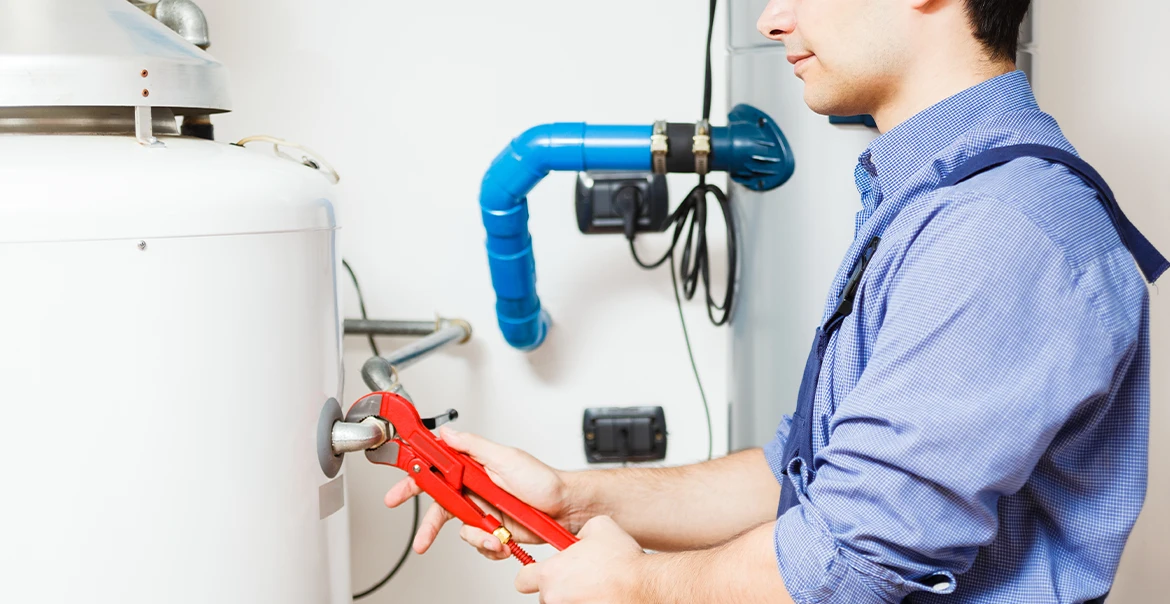
When you're relaxing at home, the last thing you want to hear are strange sounds interrupting your peace. A popping noise from the basement. A loud bang that makes you jump. A hissing sound that has you wondering if something's wrong.
Water heater noises are more common than you think. Some sounds are just your system doing its job. Others? They're warning signs that need your attention. The good news is that once you understand what your water heater is trying to tell you, you can take action to restore the quiet comfort your home deserves.
Common Water Heater Noises and What They Mean
- Popping or Rumbling Sounds
That water heater popping sound you're hearing? It's usually sediment buildup at the bottom of your tank. Here's what happens: minerals in your water settle at the bottom over time. When your water heats up, it gets trapped under those mineral layers. As the water turns to steam, it forces its way through the sediment, creating those popping or rumbling noises.
If you live in an area with hard water, you'll notice these sounds more often, and they'll be louder than average. While popping sounds aren't immediately dangerous, they're telling you something important: your water heater is working harder than it should. That sediment layer acts like a blanket between the heat source and your water, forcing your system to use more energy. Over time, this can shorten your water heater's life and drive up your energy bills.
- Banging or Knocking Sounds
A water heater making a knocking sound or banging loudly demands urgent attention. These noises can come from several sources:
- Loose heating elements can vibrate against the tank walls during operation. This is more common in electric water heaters, but gas units with loose internal parts can create similar sounds.
- Water hammer is a phenomenon that happens when water flow suddenly stops or changes direction. The force causes pipes to bang against walls or other structures. You might notice this water heater hammering noise right after you turn off a faucet.
- Thermal expansion in your pipes can also create banging sounds as metal expands and contracts with temperature changes. Any of these issues can stress your system and your plumbing. Left unchecked, they can lead to leaks or component failure.
- Hissing or Sizzling Sounds
Water heater hissing can range from minor to serious, depending on the source. In electric water heaters, hissing often means water is dripping onto hot heating elements. The water instantly turns to steam, creating that sizzling sound. While this isn't an emergency, it does mean you have a leak that needs fixing.
For gas water heaters, hissing near the gas valve or burner area is a different story. This could signal a gas leak: a serious safety hazard. If you hear hissing and smell gas, turn off your gas supply right away and call a professional immediately.
Sometimes hissing comes from your temperature and pressure relief valve releasing excess pressure. This is actually your safety system working as designed, though frequent activation means your system needs a checkup.
- Whistling or Screeching Sounds
That high-pitched water heater whistling? It usually points to restricted water flow. When water is forced through a tight space, like a partially closed valve or mineral-clogged pipe, it creates turbulence and that characteristic screech.
These sounds often start quietly and get louder over time as mineral deposits build up in valves and connections. If you live in a hard water area, you're more likely to experience this issue.
- Crackling or Ticking Sounds
Light crackling or ticking is often just the sound of metal expanding and contracting as it heats and cools. These are normal operational sounds that don't usually indicate a problem. Think of them like the sounds your car engine makes as it cools down after a drive.
Is a Noisy Water Heater Dangerous?
- Sounds That Are Usually Harmless
Not every noise means trouble. Mild popping from thermal expansion is normal; it's just your water heater's metal components adjusting to temperature changes. Gentle rumbling from sediment buildup, while it signals a need for maintenance, isn't an immediate safety concern. And occasional hissing from your temperature and pressure relief valve? That's actually your safety system doing its job.
- Warning Sounds That Need Immediate Attention
Some sounds require fast action:
- Hissing near gas connections, especially with a gas smell, could mean a leak that poses explosion and carbon monoxide risks
- Loud, continuous banging or hammering might indicate dangerous pressure buildup or component failure
- Any noise accompanied by visible leaks, unusual vibrations, or other signs of distress means you should shut off power and water to the unit and call for help
Your safety and your family's well-being come first. When in doubt, it's better to call a professional than to wait and see.
Troubleshooting Steps You Can Take
- Flush Your Water Heater Tank
Regular tank flushing is one of the best ways to stop water heater noise and boost efficiency. This simple maintenance task removes the sediment causing those popping and rumbling sounds.
Here's how:
- Turn off power to your water heater (electricity or gas)
- Let the unit cool for several hours
- Connect a garden hose to the drain valve at the bottom of the tank
- Open the drain valve and let water flow until it runs clear
- Close the drain valve and refill the tank before turning power back on
Flushing your tank once a year prevents most sediment-related noise issues and helps your water heater run more efficiently.
- Check Visible Valves and Connections
Take a walk around your water heater and look for obvious issues. Check your temperature and pressure relief valve for signs it's been activating frequently. You might see mineral deposits or water stains around the discharge pipe.
Look at inlet and outlet connections for loose fittings, rust, or mineral buildup. If you spot loose connections, tighten them carefully. Just don't overdo it; you can damage threads or gaskets by tightening too much.
- Adjust Temperature Settings
Sometimes your water heater is simply running too hot. Most manufacturers recommend setting your water heater to 125°F. This temperature is hot enough for comfortable showers and clean dishes, but not so hot that it causes excessive pressure buildup or rapid mineral deposit formation.
Lowering an overly high temperature setting can reduce stress on your system and quiet some noises.
- Locate Where the Noise Is Coming From
Is the sound actually coming from your water heater, or is it your pipes? This matters because the solution will be different.
Turn on a hot water tap and listen. If the noise gets louder or changes, it's likely a pipe issue. If the noise stays the same whether water is running or not, the problem is probably inside the tank itself.
How to Prevent Water Heater Noises?
- Regular Maintenance and Annual Flushing
Prevention is always easier than repair. Annual tank flushing is your best defense against sediment buildup and the noises it causes. Regular inspections can catch small issues before they become loud, or expensive.
Professional maintenance goes beyond what you can do yourself. Technicians perform comprehensive system inspections, test components, and optimize performance in ways that extend your water heater's life and keep it running quietly.
- Replace Worn Components Early
Don't wait for parts to fail completely. Components like anode rods, heating elements, and valves have predictable lifespans. Replacing them before they fail prevents noise issues and maintains your system's efficiency.
This is especially important for safety-related parts like temperature and pressure relief valves. These components might operate quietly even when they're no longer protecting you properly. Regular replacement keeps your family safe.
When to Call a Professional?
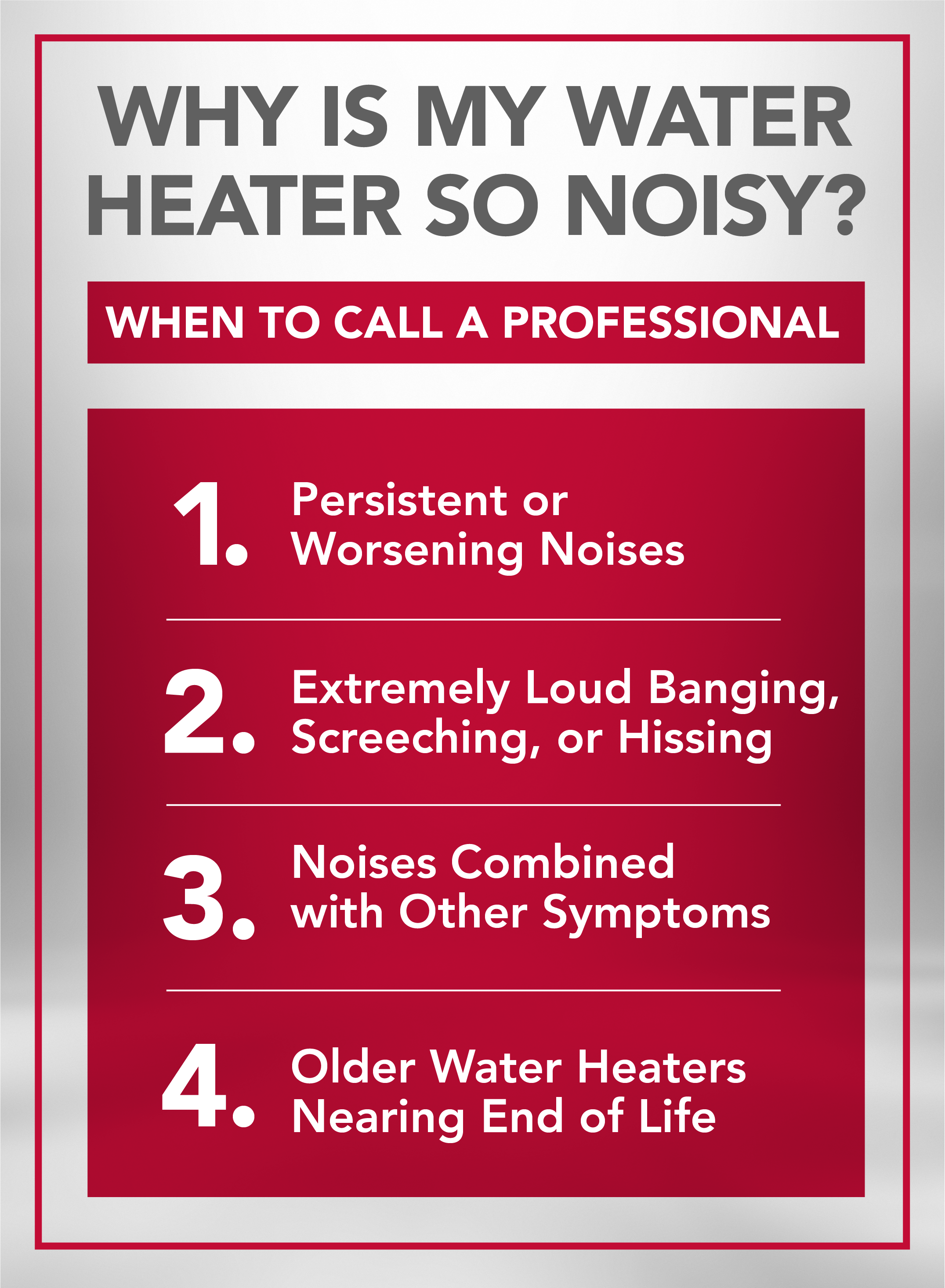
A professional can assess your water heater's overall condition and help you decide whether ongoing repairs make financial sense or if replacement would give you better long-term value and peace of mind. Keep an eye out for any of these issues before calling:
- Persistent or Worsening Noises
If sounds continue or get worse after you've tried basic troubleshooting, it's time to bring in an expert. Persistent noises often point to internal damage or component failure that needs specialized tools and know-how to fix safely.
- Extremely Loud Banging, Screeching, or Hissing
Unusually loud or alarming sounds need immediate professional attention. Loud banging might indicate dangerous pressure conditions or a component that's about to fail, either of which could cause injury or property damage.
- Noises Combined with Other Symptoms
When your water heater is making noise and you're also seeing leaks, discolored water, or a lack of hot water, you're dealing with a more serious system problem. These combined symptoms typically require professional diagnosis and repair.
- Older Water Heaters Nearing End of Life
If your water heater is over 10 years old and starting to make new noises, it might be telling you it's ready to retire. Older systems that develop noise issues often have multiple aging components that will continue to fail one by one.
The Bottom Line
Understanding your water heater’s noise helps you maintain the comfort, safety, and efficiency your home deserves. While some sounds are just part of normal operation, others are your water heater's way of asking for help.
When noises persist despite your best efforts, or when they come with other warning signs, support from a certified Lennox technician ensures your system gets fixed safely and effectively. Your home's comfort is worth protecting, and addressing water heater noises promptly keeps your hot water flowing reliably for years to come.
We’re here to help make home comfort solutions a little clearer and a lot less stressful.
No Worries. It’s a Lennox.™