
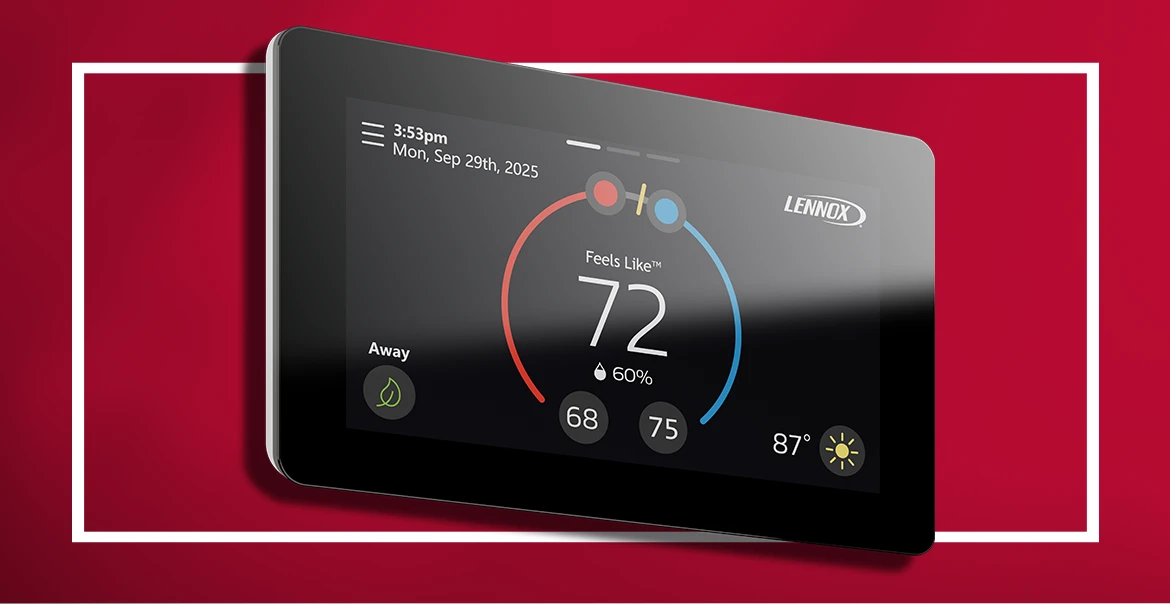
Think about how often you adjust the temperature in your home. Morning, night, before you leave, when you get back. Your thermostat is quietly working behind the scenes every single time, keeping your home exactly where you want it. It is one of the smallest devices in your house, but it carries a big responsibility: keeping your heating and cooling system in sync with how you actually live.
So what happens when it starts to lose its edge? Understanding how long thermostats last and what shortens their life gives you the power to stay ahead of the problem rather than react to it. This guide will cover what every homeowner should know.
Average Lifespan of a Thermostat
The type of thermostat you have will play a significant role in how long it will actually perform well.
Programmable Thermostats have been the standard for decades. With a straightforward design and basic scheduling features, they are reliable workhorses that can last 10 to 15 years with proper care. Routine programming updates and occasional recalibrations go a long way toward keeping them accurate and extending their usefulness.
Smart Thermostats tend to offer a slightly longer effective lifespan, largely because of what they can do. Beyond just holding a temperature, they learn your preferences over time, send reminders, and generate energy reports. By optimizing performance based on these patterns, these thermostats operate more efficiently, ultimately helping extend their overall longevity.
Factors That Affect Thermostat Lifespan
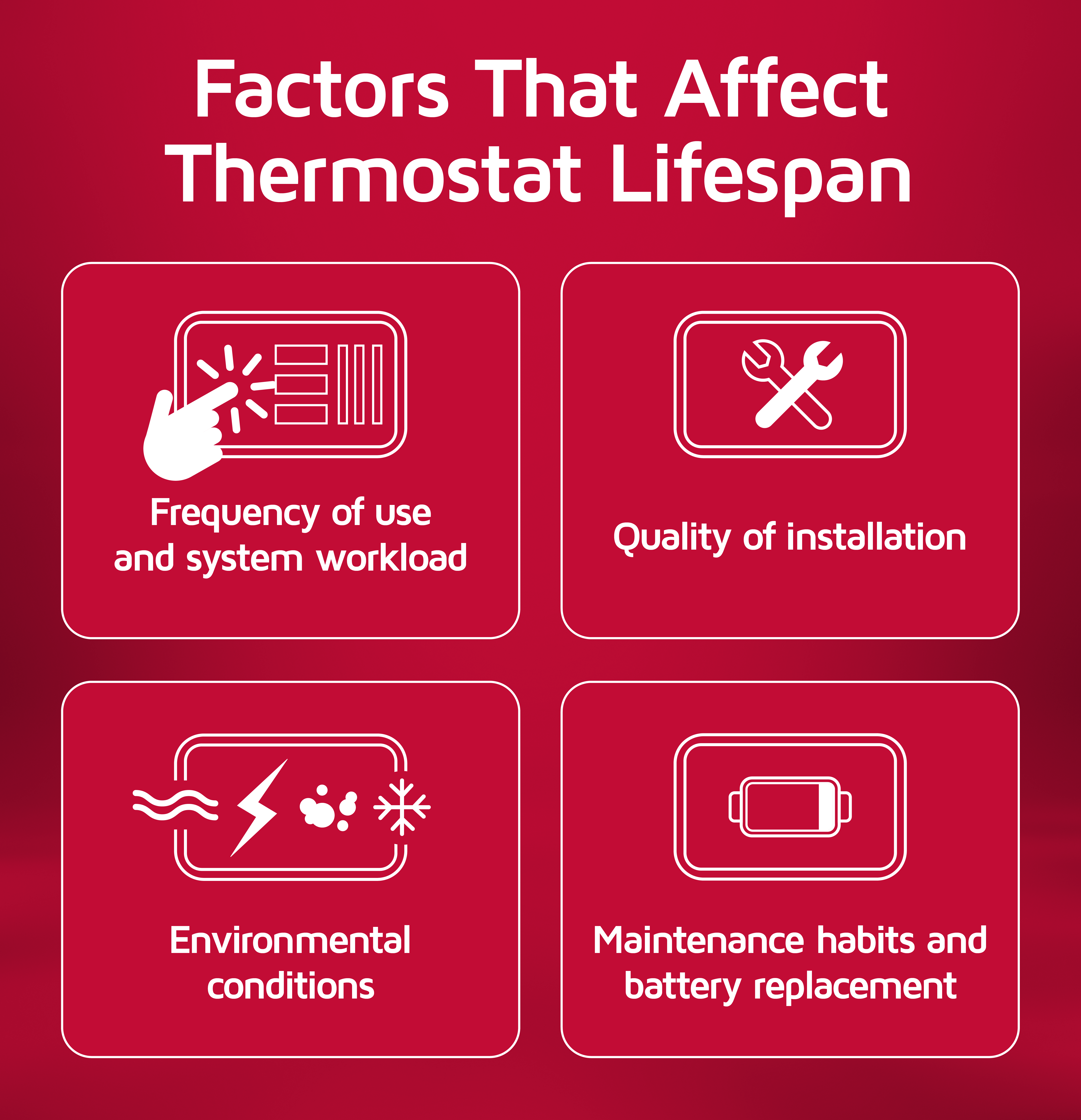
Your thermostat does not wear out on its own timeline. Several factors can speed up or slow down the process.
- Frequency of use and system workload: A home with poor insulation or extreme temperature swings forces your HVAC system to cycle more often, which puts added strain on the thermostat. Keeping your home properly insulated reduces that workload and helps extend the life of both your thermostat and your HVAC equipment overall.
- Quality of installation: A thermostat that is wired incorrectly from the start is already working against itself. Improper connections can cause frequent malfunctions and shorten the device's lifespan considerably. Professional installation removes that risk from the equation.
- Environmental conditions: Dust buildup, high humidity, and power fluctuations are quiet threats to thermostat performance. A unit placed near a heat source or in direct sunlight can give inaccurate readings, causing your system to cycle unnecessarily. Positioning your thermostat in a stable, controlled environment makes a real difference.
- Maintenance habits and battery replacement: Bi-annual checkups on wiring, sensor function, and battery life keep your thermostat in working order. It is a small habit that pays off in consistent, reliable performance year after year.
Signs Your Thermostat May Need Replacement
Even a well-maintained thermostat will eventually show its age. Here is what to watch for:
- Erratic or inaccurate temperature readings: When the temperature in your home does not match what you set, that is a signal worth taking seriously. It often points to a sensor issue or a calibration problem.
- Unexplained spikes in energy bills: A sudden jump in your energy costs can mean your thermostat is struggling to maintain consistent settings, causing your system to work harder than it needs to.
- Physical signs of wear and tear: Cracked casings, discoloration, or visible damage are signs the unit has seen better days.
- HVAC system cycling too frequently or not turning on and off properly: When your system turns on and off at irregular intervals without a clear reason, the thermostat may be sending faulty signals due to internal component failure.
- Unresponsive controls or display issues: If your settings are not registering or the display is glitching, the issue could be faulty wiring, a software problem, or simply a unit that has reached the end of its useful life.
When to Repair vs. Replace?
Not every issue calls for a full replacement. Here is how to think through it:
Simple fixes that often work:
- Fresh batteries resolve a surprising number of performance complaints
- Recalibration can correct minor temperature inaccuracies
- Cleaning dust from internal components can restore responsiveness
- Checking and reseating wiring connections can fix display and control issues
When replacement makes more sense:
If your thermostat is consistently unresponsive, wildly inaccurate, or simply too old to communicate effectively with a modern HVAC system, replacement is the smarter investment. And even if your current thermostat is technically still working, it may be worth upgrading. Older models simply cannot match the precision, efficiency, or convenience that today's technology delivers, and that gap shows up in your comfort and your energy bills.
The Benefits of Replacing an Old Thermostat
Upgrading your thermostat is one of the most straightforward ways to feel the difference in your home right away.
- Improved energy efficiency: Modern thermostats align your heating and cooling with real-time conditions and your actual usage patterns, cutting down on wasted energy.
- Enhanced comfort and precise temperature control: Newer thermostats can offer more precise control and better temperature balance throughout your house.
- Potential savings on energy bills: Smart learning algorithms adjust your system dynamically to your lifestyle, which reflects in lower utility costs over time.
- Compatibility with modern HVAC systems: Today's thermostats are built to work hand-in-hand with high-efficiency equipment, unlocking the full performance potential of your system.
Professional Installation and Maintenance
Getting the most out of your thermostat starts with how it is installed and how consistently it is maintained.
A qualified HVAC technician brings the precision and knowledge needed to ensure your thermostat is properly positioned and calibrated for your system. Routine maintenance reinforces that foundation, keeping your thermostat and your entire system operating at peak performance for the long haul. Well-maintained HVAC equipment also tends to have a longer lifespan, meaning the investment in regular care pays dividends across every component in your home.
Comfort At Your Fingertips
Your thermostat shapes how your home feels every single day. By understanding how long thermostats last, recognizing the early signs of wear, and knowing when a simple fix is enough versus when it is time to upgrade, you stay in control of your comfort and your energy costs.
When it comes to thermostat options, Lennox offers a suite of technologically advanced controls designed to help you customize the air in your home and tune your system to your personal degree of perfection. When you are ready to take the next step, explore Lennox's thermostat options and find the solution that fits your home.
We’re here to help make home comfort solutions a little clearer and a lot less stressful.
No Worries. It’s a Lennox.™