
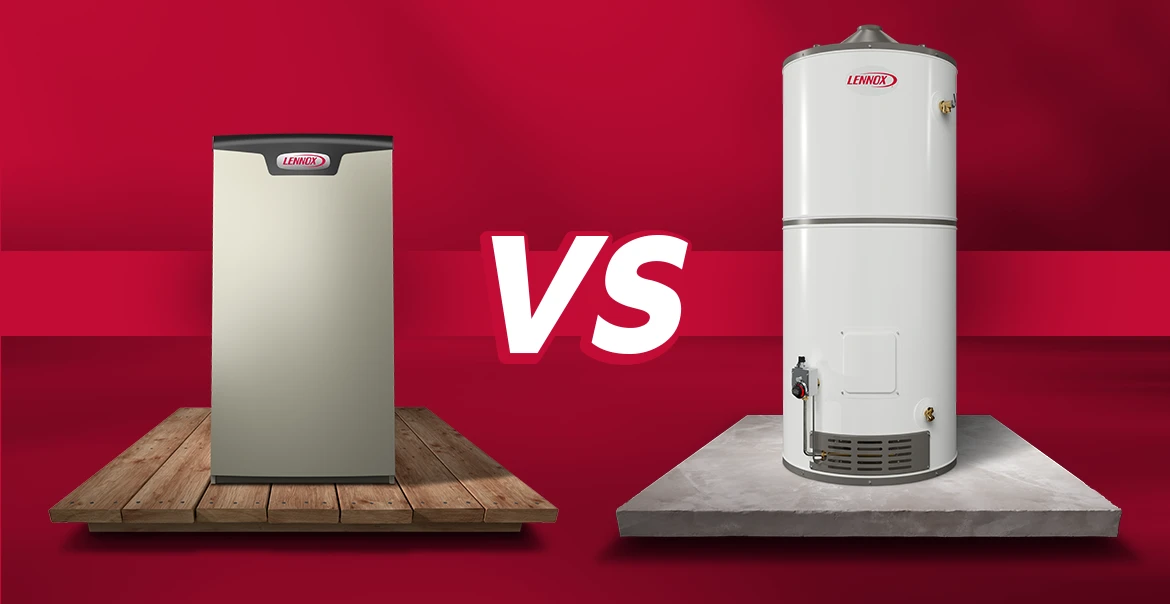
What Is a Furnace?
A furnace heats the air inside your home. As part of a forced-air HVAC system, the process begins when the thermostat calls for heat. Depending on the equipment, burners or electric heating elements generate warmth. The system transfers that heat to the air, and the blower moves the heated air into the ductwork. Air from the home eventually returns to the equipment to repeat the process.
Furnaces can operate on natural gas, propane, heating oil, or electricity. Their efficiency is reported as Annual Fuel Utilization Efficiency, or AFUE. An AFUE rating shows how much of the energy used by the furnace is converted into heat for the home. Some premium furnaces, such as the Lennox SLP99V, offer ratings as high as 99% AFUE.
What Is a Water Heater?
A water heater serves your home’s plumbing rather than its ductwork. It supplies heated water for showers, baths, sinks, washing machines, and dishwashers.
Traditional tank water heaters keep a ready supply of heated water in an insulated container, reheating the tank as hot water is used.
Gas and electricity are the most common energy sources for water heaters. Efficiency is expressed through the Uniform Energy Factor, or UEF. Within this rating system, a higher number indicates more efficient operation.
Furnace vs Water Heater: Key Differences
Purpose: A furnace produces warm air for indoor temperature control. A water heater prepares water for household use.
Output: The furnace delivers its output through vents and ductwork, while the water heater relies on plumbing lines.
Efficiency Metric: Furnaces receive AFUE ratings, while water heaters receive UEF ratings.
Typical Lifespan: A furnace commonly lasts 15 to 20 years, while a tank water heater typically lasts 8 to 12 years. Actual longevity depends on equipment quality, usage, maintenance and operating conditions.
Maintenance: Furnaces require filter changes and annual professional tune-ups. Tank water heaters require flushing and an anode rod inspection.
Common Location: Home placement can make the two systems appear connected. Furnaces are often installed in basements, utility rooms or closets. Water heaters may be found in basements, garages or utility closets. Even when they sit side by side and use the same type of fuel, they remain separate pieces of equipment.
Do You Need Both in Your Home?
Most households need one system for space heating and another for hot water. A furnace keeps rooms comfortable when the temperature drops, while a water heater supports daily routines involving hot water year-round. Since a standard furnace cannot provide hot water, and a standard water heater cannot send warm air through the home, most homes benefit from having both.
However, depending on the climate and property, a heat pump or mini-split system may handle indoor heating instead of a furnace. A combination boiler is another exception, as certain models can support both space heating and domestic hot water.
Signs of Furnace and Water Heater Problems
Furnace Issues
Rooms that never seem to reach the same temperature may indicate a furnace, ductwork, or airflow problem. New rattling, banging or squealing sounds can also signal that a component needs attention. An unexplained increase in energy use may be another reason to schedule an inspection.
Water Heater Issues
A lack of hot water is an obvious sign of trouble, but it is not the only one. Rust-colored water, corrosion on the tank or moisture around the equipment should also be investigated. Because leaking tanks can cause property damage, visible water should be addressed promptly.
Comparing Installation, Operating and Repair Costs
Furnace installation typically ranges anywhere from $2,500 to $7,500+, while a tank water heater installation is much less, around $800 to $2,000+. Repairs for the two systems are more aligned, with furnaces running about $150 to $2,000+ and water heaters around $100 to $1,000+. Equipment efficiency, fuel type, home size, project requirements and local labor rates can all affect the final amount.
Operating costs depend on how often each system runs, the energy source and local utility rates. A furnace may account for more energy use when heating demand is high. A water heater operates in every season, so its usage accumulates throughout the year.
Choosing the Right Systems for Your Home
Start by evaluating each system according to the job it must perform. Furnace selection should account for the home’s size, climate, energy source and budget. Proper sizing matters because undersized equipment may struggle to maintain comfort, while oversized equipment may turn on and off too frequently.
Water heater selection should reflect household demand. A tank that cannot support busy periods may leave family members without enough hot water. Capacity, fuel availability, installation space and budget should all factor into the decision.
When comparing all options, always consider efficiency, maintenance requirements and expected service life rather than focusing only on purchase price.
Furnace vs Water Heater FAQs
Is a furnace the same as a water heater?
No. A furnace heats air for the living space. A water heater prepares hot water for fixtures and appliances.
Can one system replace the other?
Standard furnaces and water heaters are not interchangeable. Some combination boilers can perform both functions, while heat pumps and mini-splits can provide space heating without a furnace.
Which system uses more energy?
There is no universal answer. Furnace energy use changes with heating demand, while a water heater works year-round. Climate, efficiency, fuel choice, household routines and utility rates all influence consumption.
Make Confident Home Comfort Decisions
A furnace manages indoor air temperature, while a water heater supplies heated water. Knowing which system handles each task can help you describe problems accurately, plan maintenance and make more informed replacement decisions. For help evaluating your heating equipment, a local Lennox dealer can help.
We’re here to help make home comfort solutions a little clearer and a lot less stressful.
No Worries. It’s a Lennox.