
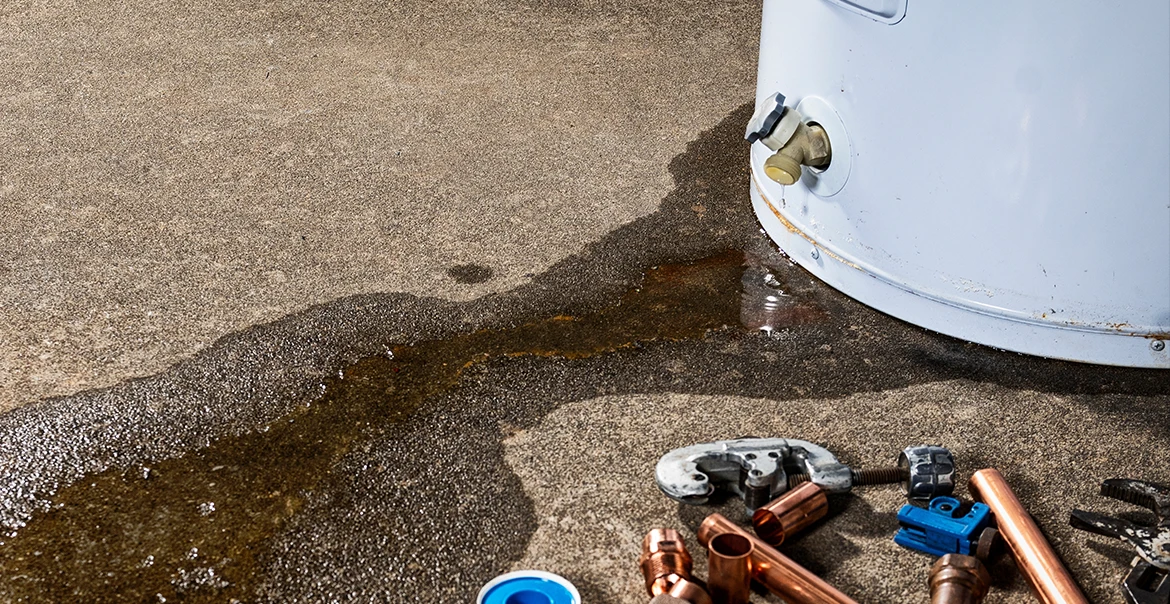
Finding water pooling around your water heater can turn your day upside down fast. Whether it's a small drip or a steady stream, a leaking water heater needs your attention right away. The good news? Understanding what's happening and knowing your next steps can help you protect your home and get back to normal quickly.
Why Water Heaters Leak?
Water heaters work hard every day to keep your showers warm and your dishes clean. Over time, wear and tear can lead to leaks. Here are the most common reasons your water heater might be leaking:
- Age and wear: Most water heaters last 8 to 12 years. As they age, internal components break down, seals weaken, and corrosion sets in. If your unit is approaching or past its expected lifespan, a leak might signal it's time for a replacement.
- High water pressure: When water pressure in your home runs too high, it puts extra stress on your water heater tank and connections. This pressure can force water out through weak spots or safety valves.
- Loose connections: The fittings where pipes connect to your water heater can loosen over time from vibration and temperature changes. These loose connections often create small leaks that are easy to fix.
- Corrosion: Water heaters have an anode rod that protects the tank from rust. Once this rod wears out, the tank itself can start to corrode, leading to leaks that can't be repaired.
- Faulty temperature and pressure relief valve: This safety valve releases water if the pressure or temperature inside the tank rises too high. If it's malfunctioning, you'll see water dripping from the valve or the discharge pipe.
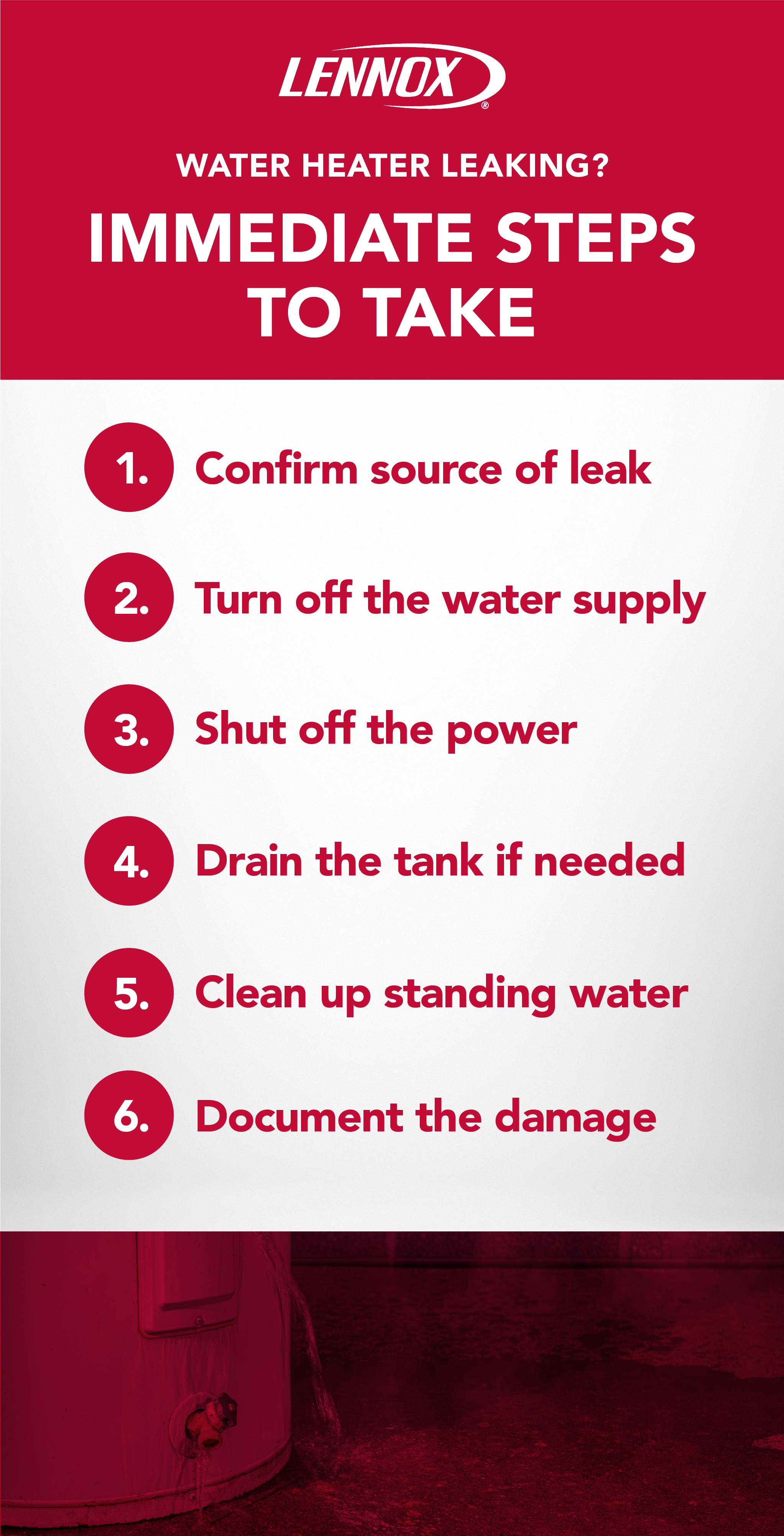
Immediate Steps to Take
When you spot a leak, quick action helps prevent water damage to your home. Here's what to do right away:
- Confirm the source: Before you take action, make sure the water is actually coming from your water heater and not from nearby pipes, fittings, or other plumbing. Dry the area around the tank, then watch closely to see where new water appears. This helps you avoid shutting down your water heater unnecessarily and ensures you're addressing the real problem.
- Turn off the water supply: Locate the cold water shut-off valve on top of your water heater and turn it clockwise to stop water from entering the tank. This simple step stops the leak from getting worse.
- Shut off the power: For electric water heaters, flip the breaker at your electrical panel. For gas units, turn the thermostat to the "off" or "pilot" position. Never work around a water heater that's still powered on.
- Drain the tank if needed: If water is actively leaking and you can't get immediate help, connect a garden hose to the drain valve at the bottom of the tank and run it to a floor drain or outside. This protects your floors and belongings from water damage.
- Clean up standing water: Use towels, a mop, or a wet vacuum to remove water from around the heater. This prevents damage to your flooring and reduces the risk of mold growth.
- Document the damage: Take photos of the leak and any water damage for insurance purposes. This documentation can help if you need to file a claim.
Finding the Source of the Leak
Not all water heater leaks come from the same place. Identifying where the water is coming from helps you understand what's wrong and what it'll take to fix it.
- Check the top of the tank: Look at the cold-water inlet and hot-water outlet connections. If these fittings are loose, you might be able to tighten them with a wrench. Also, inspect the temperature and pressure relief valve on the side or top of the tank.
- Inspect the bottom of the tank: Water pooling at the base could mean the tank itself has corroded through. Unfortunately, this type of leak means you need a new water heater.
- Check the drain valve: Located near the bottom of the tank, it can develop leaks over time due to sediment buildup or a worn washer. The good news is that this is often repairable by tightening the valve or replacing it entirely.
- Look at the tank body: Run your hand carefully along its sides (make sure it's not too hot). If you find moisture on the tank itself, internal corrosion has likely created a hole that can't be fixed.
- Check the discharge pipe: The temperature and pressure relief valve has a discharge pipe that runs down the side of the tank. Water dripping from this pipe could mean the valve is doing its job because pressure is too high, or the valve itself needs replacing.
When A Leaking Water Heater Becomes Serious?
A leaking water heater isn't just an inconvenience; it can pose serious risks to your home and your family's safety if left unchecked. Understanding these dangers helps you appreciate why quick action matters.
- Water damage to your home: Even a slow leak can cause significant damage over time. Water seeping into floors, walls, and subflooring can weaken structural elements, ruin flooring materials, and damage personal belongings stored nearby. What starts as a small puddle can lead to thousands of dollars in repairs if ignored.
- Mold and mildew growth: Moisture creates the perfect environment for them to thrive. These fungi can begin growing within 24 to 48 hours of water exposure and spread quickly through your home. Mold doesn't just damage surfaces - it can trigger allergies, respiratory problems, and other health issues for your family.
- Electrical hazards: Water and electricity don't mix. If your water heater is leaking near electrical outlets, wiring, or your home's electrical panel, the water can pose a dangerous shock hazard. This is especially concerning with electric water heaters, where water can come into contact with electrical components inside the unit itself.
- Gas leaks (for gas water heaters): A severe leak or tank failure can damage gas connections, potentially causing further leaks. Natural gas is highly flammable and can pose an explosion risk if it accumulates in enclosed spaces. If you smell gas near your water heater, leave your home immediately and call your gas company.
- Scalding risks: A malfunctioning water heater with a faulty temperature and pressure relief valve can allow water to reach dangerously high temperatures. If the tank suddenly releases this superheated water, it can cause severe burns.
- Complete system failure: A minor leak can quickly escalate to a catastrophic tank failure, releasing 40 to 80 gallons of water into your home in minutes. This kind of flooding can cause extensive damage to multiple rooms and require emergency water extraction services.
The bottom line? A leaking water heater demands immediate attention. The longer you wait, the greater the risk to your home’s integrity and safety.
Can You Fix It Yourself?
Some water heater leaks are simple fixes, while others require contacting a technician. Here's how to know the difference:
- Fixes to try yourself: Tightening loose pipe connections, replacing a faulty drain valve, or swapping out a temperature and pressure relief valve are tasks many homeowners can handle with basic tools and a little research.
- When to call a pro: If the tank itself is leaking, if you're not comfortable working with gas or electrical connections, or if you can't locate the source of the leak, it's time to bring in a professional. Water heater repairs involve hot water, high pressure, and potentially dangerous utilities, so there's no shame in getting expert help.
Preventing Future Leaks
A little maintenance goes a long way toward keeping your water heater running leak-free for years to come.
- Schedule annual inspections: Have a professional check your water heater once a year. They'll inspect the anode rod, test the pressure relief valve, and look for early signs of trouble.
- Flush the tank regularly: Sediment builds up at the bottom of your tank over time, which can cause corrosion and reduce efficiency. Draining the tank once a year clears out the buildup and keeps your heater working like new.
- Monitor water pressure: Install a pressure gauge on a hose bib to check your home's water pressure. If it's consistently above 80 psi, consider installing a pressure-reducing valve to protect your water heater and other appliances.
- Replace the anode rod: This sacrificial component protects your tank from corrosion. Most anode rods need replacing every 3 to 5 years. A professional can check it during your annual inspection.
- Know when to replace: If your water heater is over 10 years old and starting to show signs of wear, replacing it before it fails completely saves you from emergency repairs and potential water damage.
When Replacement Makes More Sense?
Sometimes fixing a leak isn't the smartest choice. If your water heater is older, has had multiple repairs, or the tank itself is corroded, investing in a new unit often makes more financial sense than pouring money into an aging system.
Modern water heaters are more energy-efficient than older models, which means lower utility bills and better performance. Plus, you'll have peace of mind knowing your new system comes with a warranty and won't leave you without hot water at the worst possible moment.
Get Professional Help You Can Trust
A leaking water heater isn't something to ignore or put off. Whether you need a simple repair or a complete replacement, working with qualified professionals ensures the job gets done safely and correctly.
Remember that some water heater problems, such as a boiler leaking water in combination heating systems, may require specialized expertise beyond standard water heater repair. A certified Lennox professional has expertise with your specific type of system and can safely and effectively address all related components.
Lennox dealers have the training and experience to diagnose water heater problems quickly and recommend the best solution for your home. They can help you choose a new water heater that fits your household's needs, install it properly, and show you how to maintain it for years of reliable service.
Don't let a small leak turn into a big problem. Explore our products and find a certified Lennox dealer near you and take action today. Your comfort is worth it.
We’re here to help make home comfort solutions a little clearer and a lot less stressful.
No Worries. It’s a Lennox.™