
Why Your Water Heater is Tripping Your Breaker?
Hot water is one of those everyday comforts you barely think about until it disappears. When your water heater keeps tripping the breaker, it is not just an inconvenience. It is your home telling you something is off, and it deserves your attention.
Circuit breakers are the unsung guardians of your electrical system. They are designed to interrupt power the moment something draws more electricity than it should, protecting your home from overheating, electrical fires, and serious damage. When your water heater repeatedly trips its breaker, that breaker is doing exactly what it was built to do. The real question is: what is causing the water heater to misbehave in the first place?
Understanding the answer starts with knowing how your system works and what warning signs to watch for.
Understanding Water Heater Breakers
The Importance of Circuit Breakers
A properly functioning circuit breaker is one of the most important safety features in your home. When something goes wrong with your water heater, it is your breaker that stands between a minor electrical fault and a serious hazard. Keeping it in good working order through routine checks is one of the simplest and most effective ways to protect your home, your family, and the systems that keep daily life running comfortably.
Why Breaker Sizing Matters?
Not all breakers are created equal, and size matters more than most homeowners realize. An undersized breaker trips constantly, even when the water heater is functioning normally. An oversized breaker may not trip when it should, leaving your system vulnerable to overheating and electrical hazards. Always reference your water heater's manual for the correct breaker specifications. Mismatched fittings are a surprisingly common source of repeated tripping.
Common Signs Your Water Heater Is Tripping the Breaker
Each of the signs below is worth taking seriously, with immediate steps you can take right now, and clear signals for when it is time to stop and call a professional.
Breaker trips immediately after turning on the water heater:
This is your system pointing directly to a short circuit or ground fault inside the unit.
- What to look for: Visible damage to wiring or connections, including burn marks, fraying, or corrosion near the unit.
- What to do: Cut power at the breaker and inspect the accessible wiring. If anything looks damaged or burned, do not reset the breaker. Call a licensed professional.
Breaker trips during heating cycles:
When the breaker cuts out mid-cycle, the heater is drawing more power than the circuit can safely carry.
- What to look for: Patterns in when the trip happens, specifically whether it consistently occurs while the unit is actively heating water.
- What to do: Note the timing and frequency of the trips. A faulty heating element, a failing thermostat, or a worn thermal cut-off switch are the most likely causes. Have a technician test each component.
No hot water or inconsistent hot water supply:
Unreliable hot water is often the first thing homeowners notice, and a tripped breaker is frequently the reason behind it.
- What to look for: Water that runs warm but not hot, or fluctuates unpredictably throughout the day.
- What to do: Check both single and double-pole breaker settings in your panel to confirm they match your water heater's electrical requirements. If the settings look off, bring in a professional rather than adjusting them yourself.
Burning smell, buzzing sounds, or a warm breaker panel:
These are not warning signs to wait on. They indicate an active electrical risk.
- What to look for: Any unusual odor near the unit or panel, audible buzzing or crackling, or a breaker panel that feels warm to the touch.
- What to do: Turn off the main switch immediately. Do not reset the breaker. Contact a licensed professional before restoring power to the unit.
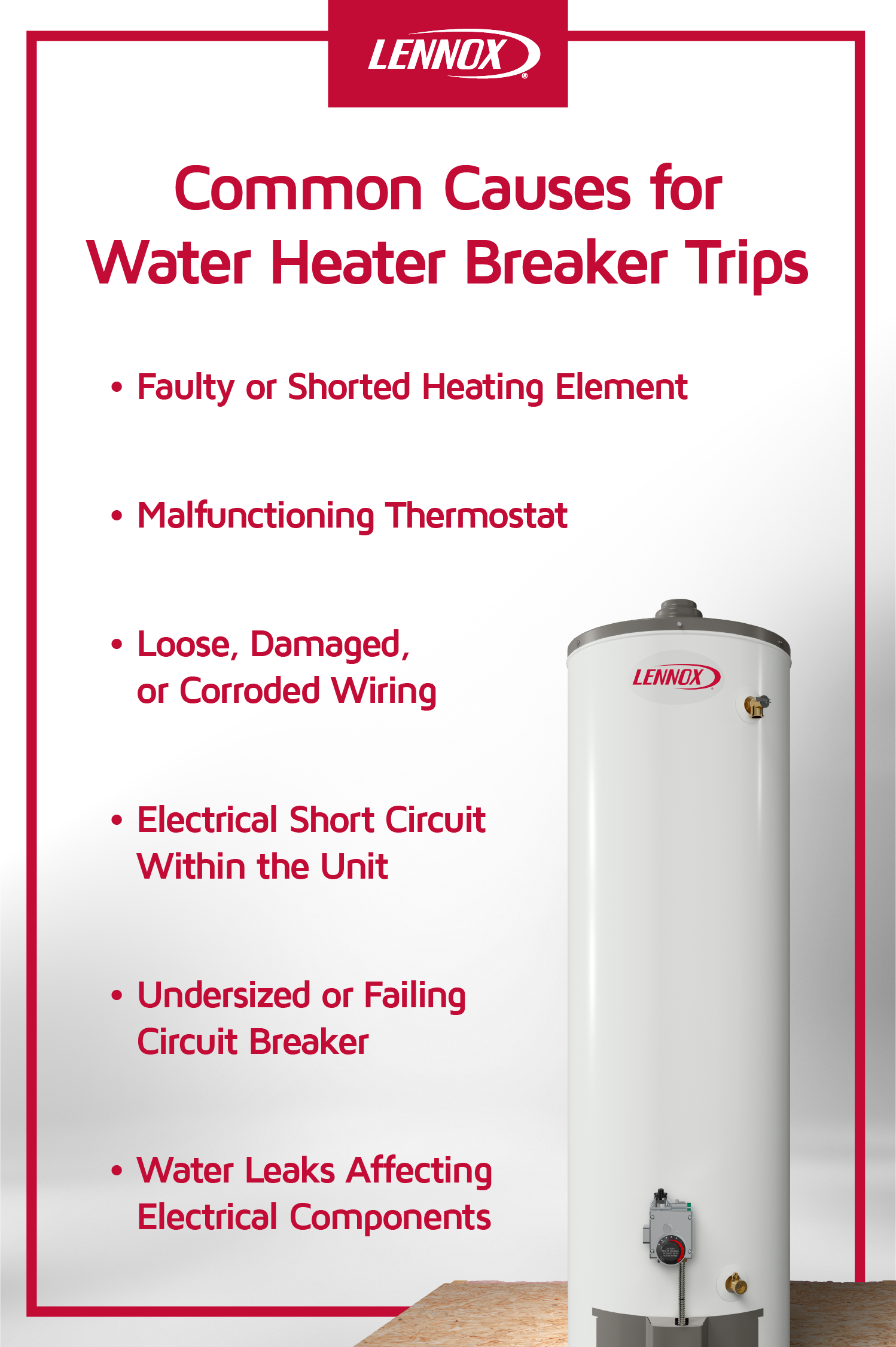
Common Causes for Water Heater Breaker Trips
A breaker tripping is never random. Something inside your water heater or its electrical setup is pushing the system past its limits, and identifying that root cause is the only way to stop the cycle for good. Here are the most common culprits and what to do about each one:
- Faulty or Shorted Heating Element
A damaged heating element is one of the most frequent reasons a water heater keeps tripping the breaker. When the element shorts out, it draws far more power than the circuit is rated for, forcing the breaker to cut power as a safety measure.
What to do: Schedule a water heater inspection. A technician can test the element with a multimeter and replace it before the problem escalates.
- Malfunctioning Thermostat
A thermostat that is stuck or reading temperatures incorrectly can cause the heating element to run continuously, overloading the circuit.
What to do: Have a professional test the thermostat and recalibrate or replace it. This is not an easy repair for most homeowners.
- Loose, Damaged, or Corroded Wiring
Improper or deteriorating wiring creates an unstable electrical environment. Loose connections arc and generate heat, which triggers the breaker repeatedly.
What to do: Inspect conduit connections for visible wear. Employ protective channels where wiring is exposed. If corrosion is present, a licensed electrician should handle the repair.
- Electrical Short Circuit Within the Unit
Internal short circuits happen when wiring inside the water heater makes contact where it should not. This causes an immediate surge that trips the breaker.
What to do: Installing a GFCI (Ground Fault Circuit Interrupter) outlet adds a critical layer of protection by cutting power the instant a discrepancy is detected. If shorts are recurring, the unit may need to be replaced.
- Undersized or Failing Circuit Breaker
Sometimes the breaker itself is the problem. An aging breaker loses its ability to hold a proper load, or the breaker was never sized correctly for the water heater in the first place.
What to do: Have a licensed electrician evaluate the breaker and replace it with one that matches your water heater's electrical requirements.
- Water Leaks Affecting Electrical Components
Water and electricity are a dangerous combination. Even a minor leak near electrical components can cause ground faults and short circuits that destabilize the breaker.
What to do: Inspect the area around your water heater for moisture, rust stains, or pooling water. Address any leaks immediately and have the electrical components inspected before restoring power.
When to Replace the Water Heater or Call a Professional?
Some situations go beyond basic troubleshooting. Call a licensed professional if you experience any of the following:
- The breaker continues tripping after you have completed basic checks
- You notice signs of internal electrical failure, such as burn marks or melted wiring
- There is evidence of water damage near or inside the unit
- Your water heater is aging and has a history of repeated electrical issues
A professional can assess whether repair or full replacement is the right call. Over time, mineral deposits and component wear reduce a water heater's efficiency and reliability, making replacement the smarter long-term investment. Licensed technicians also ensure that all work meets local building codes and electrical standards, giving you peace of mind alongside restored comfort.
Maintaining Your Water Heater to Prevent Future Issues
Staying ahead of problems is always easier than reacting to them. Here are just a few ways you can keep your water heater in top shape:
- Inspect for rust and corrosion regularly, particularly around connections and the tank itself.
- Check thermostat settings seasonally to ensure they are calibrated correctly.
- Flush the tank annually to remove sediment buildup. Sediment accumulation forces the heating element to work harder, shortening its lifespan and increasing the risk of overloading the circuit.
- Clean the tank interior as part of your annual maintenance routine to prevent mineral deposits from reducing efficiency.
- Safely check electrical connections by visually inspecting wiring and terminals for signs of wear or corrosion. If anything looks off, have a professional take a closer look before it becomes a bigger issue.
A seasonal maintenance checklist goes a long way toward keeping your water heater running safely and efficiently for years to come.
Keep Your Home Comfortable
A water heater that keeps tripping the breaker is not a problem to reset and ignore. It is a signal worth taking seriously. From a faulty heating element to corroded wiring to an aging unit that has simply reached the end of its run, the causes are fixable when caught early. Know the signs, follow safe troubleshooting steps, and do not hesitate to bring in a licensed professional when the situation calls for it. Your comfort and your home's safety are worth it.
We’re here to help make home comfort solutions a little clearer and a lot less stressful.
No Worries. It’s a Lennox.™