
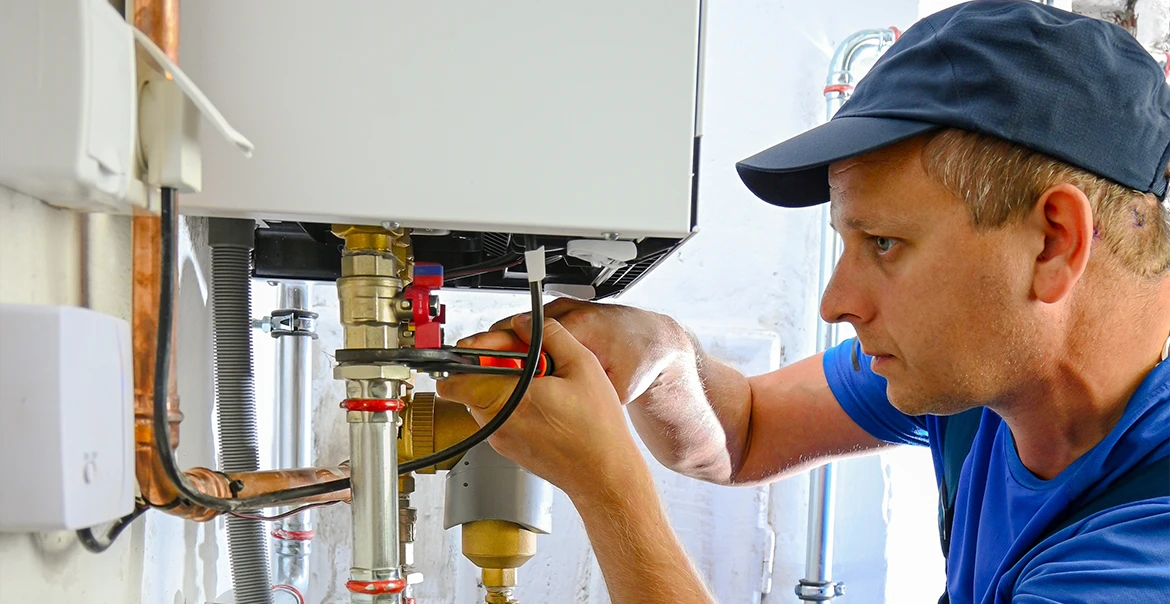
Types of Boilers
Not all boilers are built the same, and the right one for your home depends on your space, your hot water needs, and how your home is set up. Here's a breakdown of what's out there.
- Combi Boilers (available in gas or electric) combine heating and hot water into one compact unit, so there's no need for a separate water tank. They're a great fit for smaller homes and apartments where space is tight. The upside: instant hot water and a smaller footprint. The downside: they can struggle to keep up when multiple taps or showers are running at the same time.
- System Boilers (available in gas or electric) heat water stored in a dedicated cylinder, which means hot water is always ready, even when demand is high. They work well for larger households with multiple bathrooms. The upside: consistent hot water for the whole family. The downside: they do require space for that cylinder.
- Regular Boilers (also called conventional or traditional boilers, available in gas) are best suited for older homes that already have a cylinder and a tank in place. They're built to handle big heating demands reliably. The upside: dependable performance for high-demand homes. The downside: they take up the most space of the three.
- Gas vs. Electric: Gas boilers heat up fast and tend to cost less to run day-to-day. Electric boilers, on the other hand, are quieter, easier to install, and a solid option for eco-minded homeowners in areas powered by renewable energy. They may cost a bit more to operate, but they come with lower upfront setup costs.
Signs It's Time to Replace Your Boiler
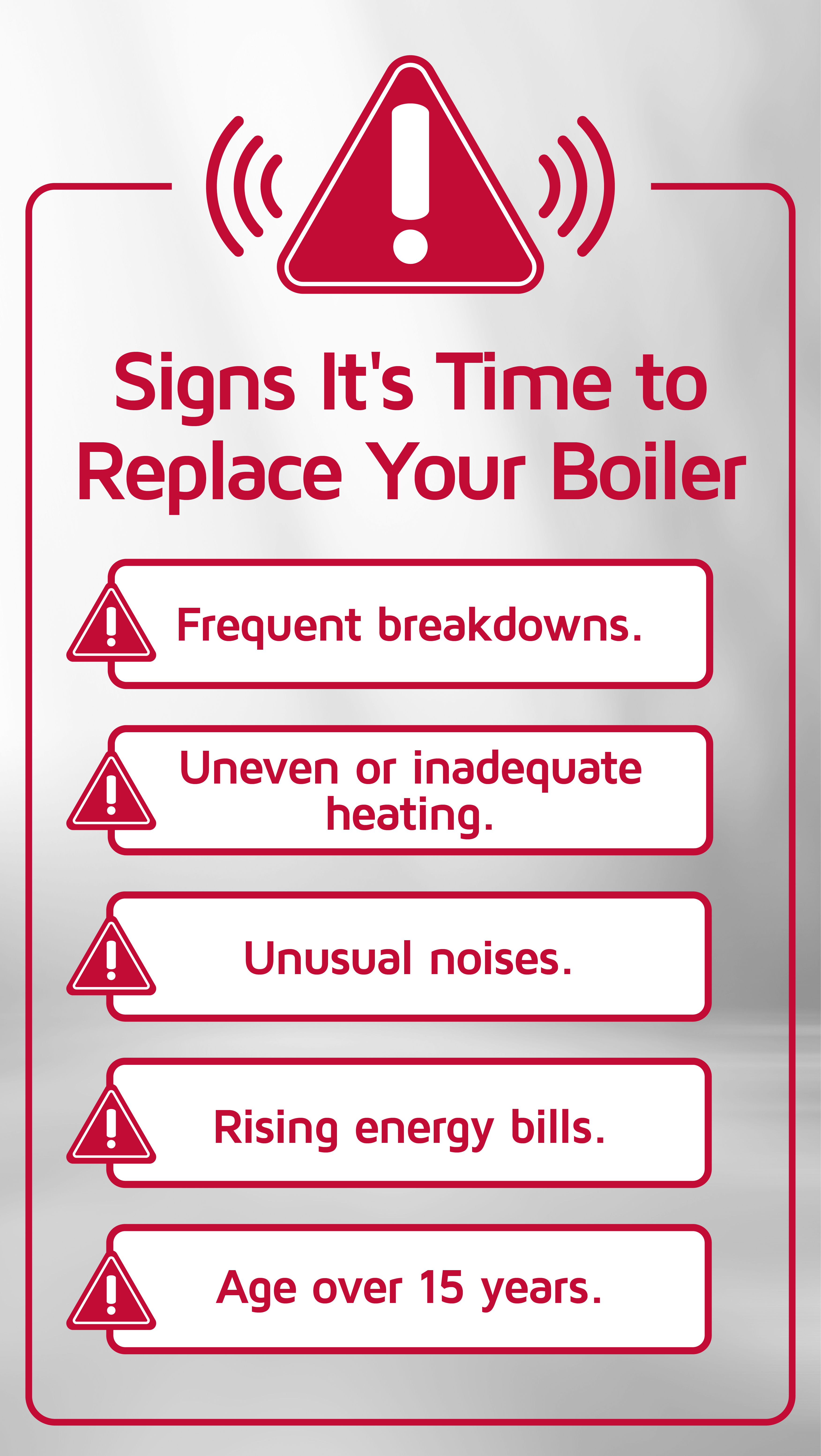
Your boiler works hard every day. Here are five signs it may be telling you it's done.
- Frequent breakdowns. If your boiler keeps needing repairs, those costs add up fast. When the repair bills start rivaling the cost of a boiler replacement, replacement is the smarter call.
- Uneven or inadequate heating. Some rooms feel warm while others stay cold? That's your boiler struggling to do its job.
- Unusual noises. Banging, clanking, or whistling sounds are not normal. These noises often point to internal issues that only get worse over time.
- Rising energy bills. If your heating costs keep climbing but your usage hasn't changed, your boiler is likely working harder than it should to produce the same amount of heat. That's wasted energy and wasted money.
- Age over 15 years. Most boilers have a service life of 10 to 15 years. Once yours crosses that line, it's likely running on borrowed time and burning more energy than a newer model would.
Choosing the Right Boiler for Your Home
Once you've determined you need to replace your boiler, the next step is finding the right fit. This is where size, efficiency, and your home's specific setup all come into play.
Size matters. A boiler that's too small will struggle to heat your home. One that's too big wastes energy. The right size is based on your home's square footage, insulation quality, window placement, and how many people live there. A qualified technician can assess all of this and point you to the right unit.
Know your efficiency rating. Look for the Annual Fuel Utilization Efficiency (AFUE) rating when comparing boilers. This number tells you how much of the energy your boiler uses actually goes toward heating your home. The higher the AFUE, the less energy is wasted, and the more you save over time.
The Boiler Replacement Process
Replacing a boiler is a straightforward process when handled by a licensed professional. Here's what to expect from start to finish.
- Pre-installation assessment. A technician evaluates your home's heating needs, checks existing piping, and identifies any specific requirements before any work begins. This includes a look at your home's layout, insulation, and window placement to make sure the new system is sized and set up just right.
- Permits and local regulations. Before any work kicks off, your installer will pull the necessary permits and make sure everything lines up with local codes. This step protects you, your home, and your investment.
- Removing the old unit. The old boiler is disconnected from your water and energy supply, then safely removed and disposed of in line with local regulations. This is not a DIY job, and a licensed pro will handle it the right way.
- Installing the new boiler. The new unit is positioned and connected through a precise network of piping. Proper placement is everything here. A well-installed boiler runs more efficiently, lasts longer, and keeps your home feeling exactly the way you want it.
- Safety measures during installation. Every step of the installation follows strict safety standards. From securing gas or electrical connections to checking for leaks and pressure levels, nothing gets signed off on until it's confirmed safe.
- Testing and commissioning. Once the system is in, it gets tested thoroughly. Your technician will confirm that everything is running safely and efficiently, and that your home is heating the way it should before they wrap up.
A note on professional installation vs. DIY: Boiler installation is not a project for the weekend warrior. Between permits, gas or electrical connections, and local code requirements, this is a job that needs a licensed professional. The good news? When it's done right, you get a system built to perform for years to come.
Benefits of Replacing Your Boiler
A new boiler replacement does more than just heat your home. It changes how your home feels.
- More consistent comfort. No more cold spots or waiting for the heat to kick in. A new boiler delivers steady, reliable warmth throughout your home.
- Quieter operation. Modern boilers run quietly in the background, so you get all the comfort without the noise.
- Lower energy bills. Today's high-efficiency boilers use less energy to produce more heat, which means real savings on your monthly bills.
- Better for the environment. A more efficient system means a smaller carbon footprint, which is a win for your home and the planet.
- Increased home value. An upgraded heating system is a selling point that adds real value to your property.
Replacing your boiler isn't just a mechanical upgrade. It's giving yourself permission to feel comfortable again, every single day, no matter what the weather is doing outside.
Maintaining Your New Boiler for Longevity
Getting a new boiler is just the start. Keeping it in great shape is how you protect that investment.
- Schedule annual tune-ups. Have a licensed technician inspect and service your boiler every year. This keeps it running at peak efficiency and catches small issues before they become big ones.
- Watch for warning signs. Unusual sounds, inconsistent heat, or a spike in your energy bill are all reasons to call a pro sooner rather than later.
- Keep the area around your boiler clear. Good airflow around the unit helps it run efficiently and safely.
- Don't skip repairs. Small fixes handled early are almost always cheaper than waiting until something fails completely.
The Bottom Line
Your home should feel like a refuge, and the right boiler makes that possible. Whether you're dealing with an aging system, climbing energy costs, or just ready for something better, a boiler replacement is one of the most impactful upgrades you can make. Work with a trusted Lennox dealer to find the right system for your home and get it installed the right way.
We’re here to help make home comfort solutions a little clearer and a lot less stressful.
No Worries. It’s a Lennox.™