
What is Water Heater Temperature?
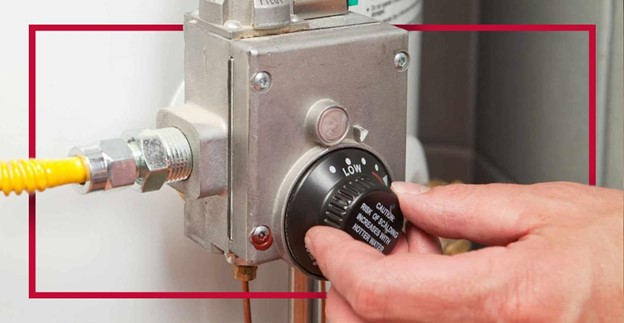
Your water heater works quietly in the background, but the temperature it's set to has a bigger impact on your daily life than you might think. Water heater temperature refers to the heat level at which water is stored and maintained inside the unit, keeping it ready for everyday activities like showering, washing dishes, and doing laundry.
Both gas and electric water heaters rely on internal thermostats to regulate the temperature. While the mechanics differ slightly between the two, the core function is the same: a thermostat signals the heating source to cycle on or off to maintain your target setting. One thing worth knowing: the temperature you dial in on the thermostat doesn't always match what actually comes out of your faucet. Sediment buildup on the bottom of the tank, wiring issues, or a thermostat that's gone slightly off-calibration can all create a gap between your setting and your actual output. That gap matters, which is why testing your water directly is always a smart move.
Recommended Temperature Settings for Water Heaters
The standard recommendation, backed by studies from organizations like the U.S. Environmental Protection Agency, is to set your water heater thermostat to 120°F. At that level, you're hitting the right balance between safety and efficiency. It's hot enough to kill bacteria and deliver genuinely comfortable hot water throughout the home, but not so hot that it creates a scalding hazard the moment someone turns on a tap.
Why Water Heater Temperature Matters?
Getting your water heater temperature right touches four key areas of your home life.
Safety: Keeping your setting around 120°F significantly reduces scalding risk, especially in homes with young children or elderly family members. Water above 140°F can cause serious burns in seconds.
Comfort and performance: The right temperature means consistent, satisfying hot water every time, whether that's the first shower of the morning or the last load of dishes at night.
Appliance lifespan: Running your water heater at an unnecessarily high temperature adds stress to the tank, heating elements, and internal components. Dialing it in to the correct setting reduces wear and can extend your unit's life.
Higher energy efficiency: An overheated tank is an expensive one. Maintaining a calibrated temperature setting keeps your unit from working harder than it needs to, which translates directly to lower monthly bills.
When a Higher Water Heater Temperature Setting Makes Sense?
For most households, 120°F is the sweet spot. But certain situations call for a bump above that baseline. If any of the following applies to your home, a slightly higher setting may be worth considering, ideally with guidance from a qualified professional before making the change.
Large households with high hot water demand: When multiple people are showering, running the dishwasher, and doing laundry at the same time, a 120°F tank can struggle to keep up. A higher setting may be needed to maintain consistent comfort across every fixture without running cold midway through.
Homes with immunocompromised individuals: For households where someone is living with a weakened immune system, the bacterial risk of lower water temperatures becomes a more serious concern. Certain bacteria can live in water stored below 120°F, and in these cases, a healthcare provider may recommend maintaining a higher temperature to reduce that risk.
Older water heater units: As a water heater ages, sediment accumulates at the bottom of the tank and acts as an insulating barrier between the heating element and the stored water. That buildup can cause the actual output temperature to fall below the thermostat setting, meaning your unit may need a slightly higher dial position just to deliver the same results it once did at 120°F.
Homes with long pipe runs: If your water heater is located far from the fixtures you use most, hot water loses heat as it travels through the pipes. A modest increase in your thermostat setting can help compensate for that temperature drop by the time the water reaches the tap.
Households using a dishwasher without an internal heater: Some older dishwasher models don't have a built-in water heating function and rely entirely on the home's supply to deliver water hot enough for effective cleaning and sanitization. In these cases, a higher setting may be necessary.
Even when a higher setting is warranted, it's worth pairing any increase with anti-scald devices or mixing valves at key fixtures to protect children, elderly family members, and anyone else in the home who could be at risk.
How to Check Your Water Heater Temperature?
Testing your water temperature is straightforward and takes just a few minutes. Start by running your hot water faucet at full blast for at least 2 minutes to flush out any cooled water sitting in the pipes. Then, hold a kitchen thermometer directly under the stream and take a reading.
If the output temperature differs significantly from your water heater thermostat's setting, your unit may be due for recalibration. A gap of more than 10°F in either direction warrants attention and may indicate sediment buildup or a thermostat in need of service.
How to Adjust Your Water Heater Temperature?
Before touching anything, safety first. Put on gloves, use the correct tools for your unit, and never skip the step of cutting power or gas before making adjustments. The process varies by brand and model, so referencing your specific unit's guide is always a good call.
Once you’re ready, here’s how to adjust your temperature:
Turn Off the Power: For electric water heaters, flip the appropriate circuit breaker. For gas units, turn the heat control to "pilot."
Access the Thermostat: Remove the access panel and any insulation covering the thermostat.
Adjust the Settings: On an electric heater, use a flat-head screwdriver to turn the temperature dial. On a gas water heater, use the control knob on the front of the unit.
Replace Insulation and Panels: Once your adjustment is made, secure the insulation and cover panel back in place.
Restore Power: Switch your electric heater back on at the breaker, or return your gas heater's control to your desired setting.
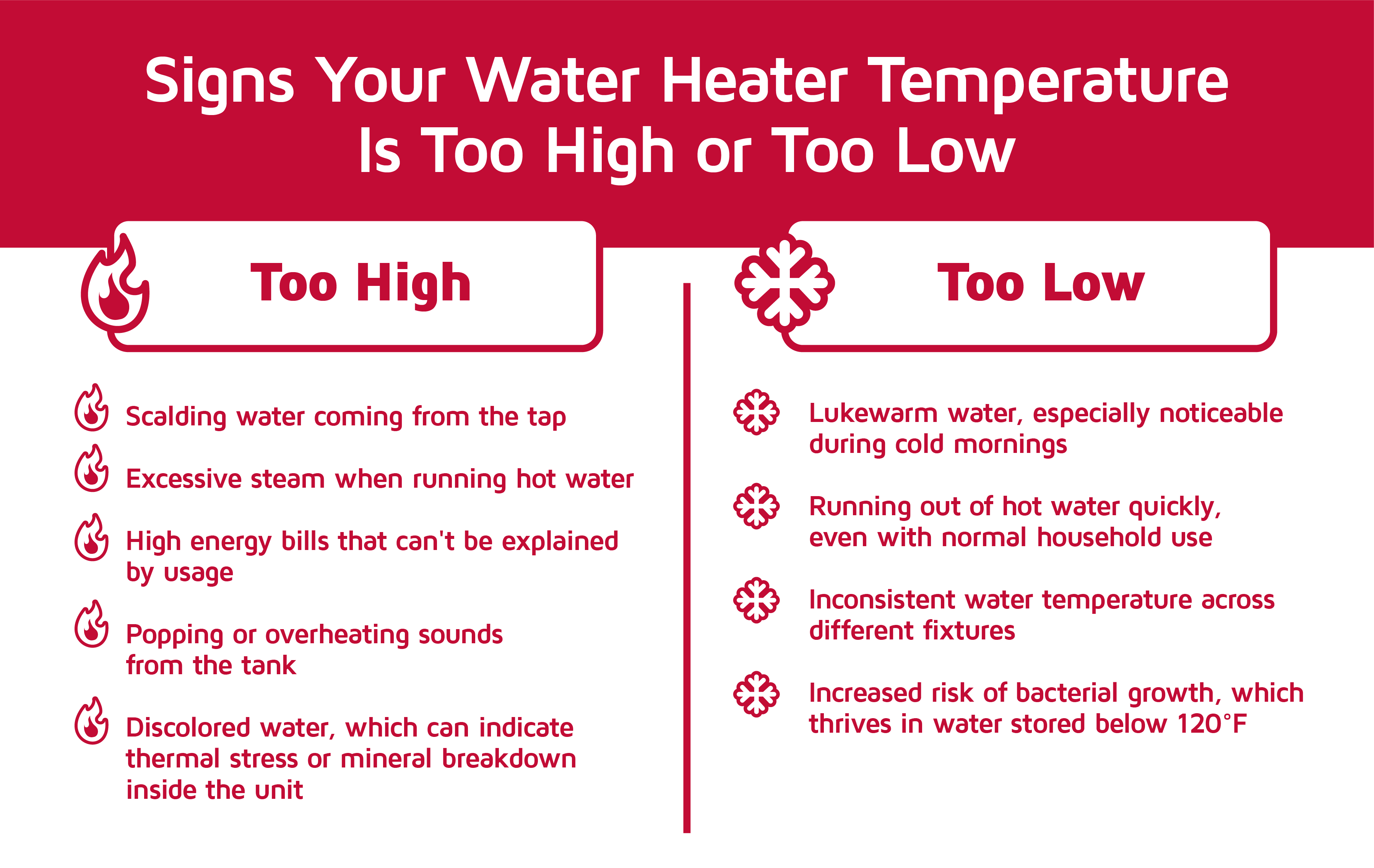
Signs Your Water Heater Temperature Is Too High
Your water heater will let you know when something's off. Watch for these warning signs that your temperature is set too high:
Scalding water coming from the tap
Excessive steam when running hot water
High energy bills that can't be explained by usage
Popping or overheating sounds from the tank
Discolored water, which can indicate thermal stress or mineral breakdown inside the unit
Signs Your Water Heater Temperature Is Too Low
On the flip side, a temperature set too low creates its own problems:
Lukewarm water, especially noticeable during cold mornings
Running out of hot water quickly, even with normal household use
Inconsistent water temperature across different fixtures
Increased risk of bacterial growth, which thrives in water stored below 120°F
Common Causes of Water Heater Temperature Problems
If your water heater isn't holding the right temperature, one of these culprits is likely behind it:
Faulty thermostat causing unreliable output
Sediment buildup at the bottom of the tank insulates water from the heating source
Heating element failure in electric units
Gas control valve issues affecting gas-powered models
An aging or undersized water heater that can no longer keep up with household demand
When to Call a Professional?
Some water heater issues are quick fixes that don’t require outside service. Others are a sign it's time to bring in a professional. If you're dealing with persistent temperature fluctuations, no hot water at all, burning smells, unusual noises, or a thermostat that simply won't respond to adjustments, those are clear signals to call in a qualified technician. A trained professional can diagnose the root cause quickly, make the necessary repairs safely, and ensure your system is running the way it should. Don't wait for a small issue to become a costly one.
The Bottom Line
Your water heater temperature isn't just a number on a dial. It's a direct line to how safe, comfortable, and efficient your home runs every day. Aim for 120°F, test your output regularly, and don't ignore the warning signs when something's off.
We’re here to help make home comfort solutions a little clearer and a lot less stressful.
No Worries. It’s a Lennox.