
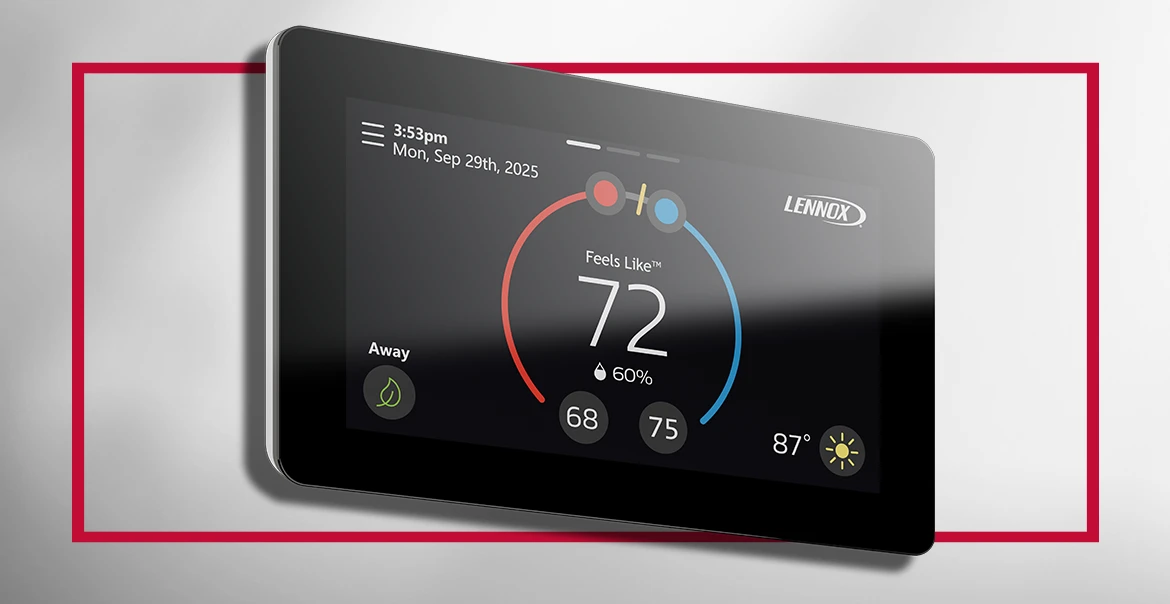
A thermostat does two things at a fundamental level: it reads the temperature in your home, and it tells your HVAC system when to turn on or off based on the setpoint you choose. When the gap between your target and the actual indoor temperature grows large enough, the system kicks in to close it. Simple in concept, but the way you manage that setpoint throughout the day determines whether your system is running efficiently or burning through energy without much benefit to show for it.
The homeowners who get the most out of their thermostat treat it as an active energy management tool rather than a passive one. The right settings, a consistent schedule, and the right equipment all work together to reduce how often your system runs unnecessarily, and that reduction is where real savings live.
How Do Thermostats Save Energy?
Cutting Out Unnecessary Run Time
Every time your HVAC system runs to maintain a temperature that nobody in the home is actually benefiting from, that's wasted energy. A thermostat that is set thoughtfully limits those cycles by giving your system clear, realistic targets to hit rather than keeping it in a constant state of effort. Less run time in low-occupancy situations translates directly into lower energy consumption over a billing cycle.
Scheduling and Automation Do the Heavy Lifting
Manual adjustments are easy to skip, especially during a busy morning or when you're heading to bed. That's exactly where programmable and smart thermostats outperform basic models. They automate the adjustments your routine calls for, shifting temperatures before you wake up, pulling back while the house is empty, and returning to your comfort zone before you walk in the door.
What It Means for Your Whole System
There is a broader benefit beyond the monthly bill. When your HVAC is not being pushed to maintain an aggressive setpoint around the clock, it runs closer to its designed efficiency rating. That means less wear per cycle, a longer equipment lifespan, and fewer service calls over time. Smart temperature management is equally relevant in heating and cooling seasons, and the cumulative effect on system health is just as meaningful as the monthly utility savings.
Best Thermostat Settings for Energy Savings
The U.S. Department of Energy provides specific setpoint guidance that serves as a strong baseline for most homes. Keep in mind that these are averages, and variables like your local climate, your home's size and layout, insulation levels, and how your household actually moves through the day will all influence what optimal looks like for you specifically.
Active hours in summer: 78°F is the recommended setpoint while you're home and awake.
Active hours in winter: 68°F is the starting point for comfort during waking hours at home.
While sleeping or overnight: A shift of 7 to 10°F in the appropriate direction for 8 hours can contribute up to 10% in annual savings.
While away from home: Setting your system to 85°F in summer or 60°F in winter during periods of absence prevents your equipment from conditioning a home that doesn't need it.
The logic behind these numbers is straightforward: modern HVAC equipment recovers from a temperature drift efficiently. The energy needed to bring your home back to a comfortable setpoint is consistently less than what gets spent holding an unnecessary temperature steady for hours at a time.
Types of Thermostats and Their Efficiency
Choosing the right thermostat type is one of the most impactful decisions you can make for long-term energy efficiency.
Manual Thermostats
These are the most basic devices available. Every adjustment requires you to physically interact with the thermostat, and there is no automation of any kind. The result is that savings depend entirely on the homeowner's consistency, which is a variable that tends to work against efficiency over time.
Programmable Thermostats
Programmable models allow you to build a temperature schedule tailored to your household's weekly routine. You set the times and temperatures once, and the thermostat handles the rest. A home that holds 72°F during the day can drop automatically to 65°F every night without any further input.
Smart Thermostats
Smart thermostats go a layer deeper by combining schedule-based automation with connected features, learning capabilities, and real-time system data. Lennox smart thermostats, like the S40, E40, M40, and L40, include a Smart Away mode that learns your routine and adjusts heating and cooling automatically to keep you comfortable while minimizing unnecessary energy use.
Key Thermostat Features Explained
Six features separate thermostat types from each other in meaningful ways. Here is what each one does and which thermostat categories deliver it.
Scheduling is the ability to program different temperature targets for different times of day and days of the week. Programmable and smart thermostats both offer this. Manual thermostats do not.
Remote Access lets you view and change your thermostat settings from outside the home using a smartphone, tablet, or voice command. This capability exists only in smart thermostat models.
Learning Capabilities allow a thermostat to observe your patterns over time and build a schedule that reflects how you actually live, without requiring you to manually program every detail. This is exclusive to smart thermostats.
Energy Reports give you visibility into how long your system runs each day and what temperature ranges your home moves through. Smart thermostats provide this data actively. Programmable models offer limited to no reporting.
Geo-Fencing uses your phone's GPS to detect your proximity to home. When you leave, the thermostat shifts to an energy-saving setpoint automatically. When you're on your way back, it begins restoring your preferred comfort level before you arrive. This feature is available only on smart thermostats.
ENERGY STAR Certified Options exist across both programmable and smart thermostat categories, confirming those models meet federal standards for energy efficiency. Manual thermostats are not available with this certification.
Benefits of Using a Smart or Programmable Thermostat
Set-and-Forget Temperature Management
The appeal of automation is that it removes the burden of remembering. Lennox's Schedule IQ Technology takes homeowner inputs and combines them with Smart Away geo-fencing to build a schedule that keeps the home comfortable when it's occupied and conserves energy when it's not. No manual adjustments needed.
Full Control from Anywhere
For smart thermostats like the Lennox S40, remote control of your home environment is just one touch or voice command away. Monitor temperatures and schedules from anywhere in the world using the Lennox Home app on your smartphone or tablet.
Data That Helps You Improve
Performance reports generated by smart thermostats track daily system runtime and temperature trends across your home. Having that information on hand makes it easier to spot inefficiencies, adjust your schedule, and confirm whether the changes you're making are actually working.
Tips to Maximize Thermostat Energy Savings
Build a Schedule That Matches Your Real Routine
The most effective temperature schedule is one that reflects how your household genuinely operates day to day, not an idealized version of it. A schedule built around your actual wake time, departure time, and return time will require fewer overrides and run more consistently, which is where the efficiency gains come from.
Understand Holds and Overrides Before Using Them
When a temporary temperature change is necessary, use your thermostat's built-in hold or override function rather than making a manual adjustment. A hold locks the thermostat at a specific temperature indefinitely, bypassing your programmed schedule until you release it. An override, by contrast, applies a temporary change for a single scheduled period only, after which the regular program resumes.
Resist Frequent Manual Changes
Each manual adjustment that falls outside your programmed schedule adds inconsistency and reduces the efficiency gains your programming was built to deliver. The goal is a schedule precise enough that overrides are rare, not routine. If you find yourself adjusting manually on a daily basis, it's a signal that your schedule needs to be updated to match your actual habits.
Activate Eco or Energy-Saving Modes
Many smart thermostats include dedicated modes that shift automatically to conservative setpoints whenever the home is unoccupied. Turning this feature on requires minimal effort and produces consistent savings without any ongoing management from you.
Pair Your Thermostat with Good Insulation
A thermostat can only manage what enters and exits your system through the HVAC. It cannot compensate for heat gain or loss caused by poor insulation or inadequate sealing. A properly insulated home holds its temperature longer, which means fewer HVAC cycles and more efficient use of every setpoint adjustment you make.
Keep Up with HVAC Maintenance
Your system has to be in good working order for your thermostat settings to actually mean anything. A unit that's dirty, improperly calibrated, or past due for service will not respond to setpoint commands at its rated efficiency. Regular preventive maintenance and seasonal tune-ups keep your equipment performing the way your thermostat expects it to.
Common Thermostat Mistakes That Waste Energy
1. Pushing Setpoints to Extremes
Setting your heat to 80°F or your AC to 65°F to speed up temperature recovery is a common misconception. Your HVAC system reaches your target temperature at the same rate regardless of how far you push the setpoint, so the only outcome of extreme settings is an overshooting of your actual comfort range and unnecessary energy spent getting there.
2. Shutting the System Off Entirely
Turning your system completely off while you're away might feel like a savings move, but it often backfires. Returning to a home that has reached extreme temperatures means your HVAC has to work significantly harder to recover, frequently consuming more energy in that recovery period than it would have spent maintaining a moderate setpoint throughout the day.
3. Placing the Thermostat in the Wrong Spot
A thermostat positioned near a vent, in direct sun exposure, or next to a drafty exterior wall will register temperatures that do not reflect actual conditions in the rest of the home. That inaccurate reading causes your system to cycle at the wrong times. Mounting the thermostat on a central interior wall away from heat sources and drafts gives it the most accurate environment to work from.
4. Skipping Calibration and Maintenance
A thermostat that has drifted out of calibration or has not been checked in years may no longer be reading temperatures accurately. When the reading is off, your system compensates by running longer or cycling more frequently than necessary. Routine maintenance keeps your full system, including the thermostat, dialed in correctly.
How Much Can You Save with a Thermostat?
The potential is real, but the actual savings figure will vary from household to household. The U.S. Department of Energy points to up to 10% annually in heating and cooling costs as a realistic target for homeowners who manage their thermostat settings deliberately. Your specific outcome depends on factors like where you live, how large your home is, how well it is insulated, and how your family uses the space throughout the day and across seasons.
It is also worth thinking beyond the monthly bill. A system that runs fewer unnecessary cycles experiences less mechanical wear over time. That reduced strain translates into a longer equipment lifespan, lower repair frequency, and delayed replacement costs. The financial benefit of smarter thermostat use builds from two directions simultaneously, and both are worth accounting for when evaluating whether an upgrade makes sense.
When to Upgrade Your Thermostat?
Signs Your Current Thermostat Is Outdated
A thermostat that is more than a decade old, that frequently loses its programmed schedule, or that requires manual adjustment every time you want a change is not serving your efficiency goals. Technology in this category has advanced substantially, and the gap between what an outdated thermostat delivers and what a current smart model can do is significant.
What a Modern Thermostat Adds
Beyond the core energy savings, today's smart thermostats bring features that a manual or basic programmable model simply cannot offer: adaptive learning, geo-fencing automation, remote monitoring, air quality awareness, and integration with the broader home comfort system. These capabilities translate to both immediate and long-term returns, especially when paired with an efficient HVAC system.
Confirm Compatibility First
Before committing to a specific model, verify that it is compatible with your existing HVAC equipment. A local Lennox dealer can assess what you currently have, confirm which thermostat models will work seamlessly with your system, walk you through your repair vs. replace options if relevant, and handle the installation to ensure everything communicates correctly from the start. That guidance takes the guesswork out of the decision and makes sure the investment performs the way it should
Frequently Asked Questions
How much can a thermostat realistically save on energy bills?
The U.S. Department of Energy cites up to 10% per year in heating and cooling costs with proper thermostat use. The actual figure for your home will depend on your climate zone, the age and efficiency of your HVAC equipment, your home's insulation, and how consistently you apply efficient settings.
Are smart thermostats worth the investment?
For most households, yes. The combination of automated scheduling, remote access, and usage reporting tends to produce savings that offset the upfront cost over time.
Does adjusting the thermostat actually lower utility bills?
Yes, consistent setpoint adjustments, especially during sleeping hours and periods when the home is unoccupied, add up meaningfully over the course of a full year. Pairing those adjustments with good insulation and a well-maintained HVAC system amplifies the results further.
Ready to Get More from Your Thermostat?
Your thermostat is far more than a temperature dial. It is the command center for your home's comfort and energy efficiency. Whether you are fine-tuning your current settings, upgrading to a programmable model, or investing in a smart thermostat with learning capabilities, every step toward smarter thermostat use translates directly into lower utility bills and a more comfortable home.
A local Lennox dealer can help you choose the best thermostat for your home, confirm compatibility with your existing HVAC equipment, and ensure a seamless installation. Get in touch with a Lennox dealer near you to start saving.
We’re here to help make home comfort solutions a little clearer and a lot less stressful.
No Worries. It’s a Lennox.