
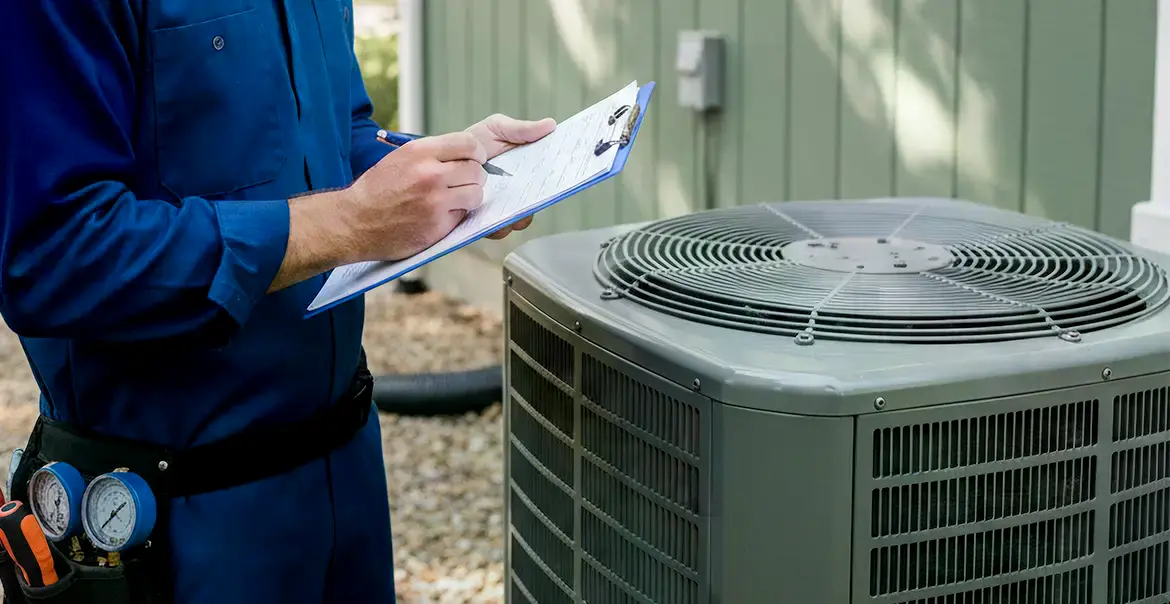
Your home's comfort depends on one thing: the air around you. When your HVAC system works the way it should, you barely notice it. But when something's off, you feel it immediately. That's where regular HVAC inspections come in. A professional inspection helps you stay ahead of problems, keeps your system running efficiently, and protects your investment. Whether you're hearing strange sounds, noticing uneven temperatures, or just want peace of mind, understanding what an HVAC inspection covers can help you make smarter decisions about your home's comfort.
What Is an HVAC Inspection?
An HVAC inspection is a thorough checkup of your heating and cooling system performed by a certified technician. The goal is simple: ensure everything works safely and efficiently. During the inspection, your technician examines critical components, from your thermostat and filters to electrical connections and refrigerant levels, to spot potential issues before they turn into costly repairs.
HVAC inspections cover all types of systems, including:
- Central air conditioners
- Heat pumps
- Furnaces (gas, electric, or oil)
- Ductless mini-split systems
- Boilers
Each system has unique parts that need attention. For example, a heating inspection focuses on burner flames and heat exchangers, while an air conditioner inspection checks refrigerant levels and condenser coils. No matter what type of system you have, a professional inspection ensures it's ready to keep you comfortable.
Signs Your HVAC System Needs an Inspection
Your HVAC system often gives you clues when something's wrong. Watch for these warning signs:
- Unusual noises: Banging, rattling, or squealing sounds can signal loose parts, motor issues, or airflow problems.
- Strange odors: Musty smells may indicate mold in your ducts, while burning odors could point to electrical issues.
- Uneven heating or cooling: If some rooms are too hot or too cold, your system may have airflow or ductwork problems.
- Higher energy bills: A sudden spike in your utility costs often means your system is working harder than it should.
- Frequent cycling: If your system turns on and off constantly, it's struggling to maintain the right temperature.
- Poor airflow: Weak airflow from your vents can indicate clogged filters, duct leaks, or blower issues.
If you notice any of these signs, don't wait. Schedule an HVAC inspection right away to prevent further damage and restore your comfort.
Why Regular HVAC Inspections Are Essential?
Skipping HVAC maintenance might save you a few bucks today, but it can cost you big down the road. Here's why regular inspections matter:
- Catch problems early: Small issues, like a loose wire or a clogged drain, can snowball into major breakdowns if left unchecked. Regular inspections identify these problems before they disrupt your comfort or drain your wallet.
- Boost energy efficiency: A dirty filter or leaky ductwork forces your system to work harder, using more energy and driving up your bills. An inspection tunes up your system so it runs at peak efficiency, keeping your home comfortable without wasting energy.
- Extend your system's lifespan: HVAC systems are built to last, but only with proper care. Routine inspections reduce wear and tear, helping your equipment last longer and perform better.
- Improve indoor air quality: Your HVAC system doesn't just heat and cool, it also filters the air you breathe. Inspections ensure filters and ducts are clean, reducing dust, allergens, and pollutants in your home.
- Stay safe: For gas furnaces and boilers, safety is critical. Inspections check for carbon monoxide leaks, gas line issues, and other hazards that could put your family at risk.
Tip: Schedule inspections twice a year: once in spring for your air conditioner and once in fall for your heating system, to stay ahead of seasonal demands.
What to Expect During an HVAC Inspection?
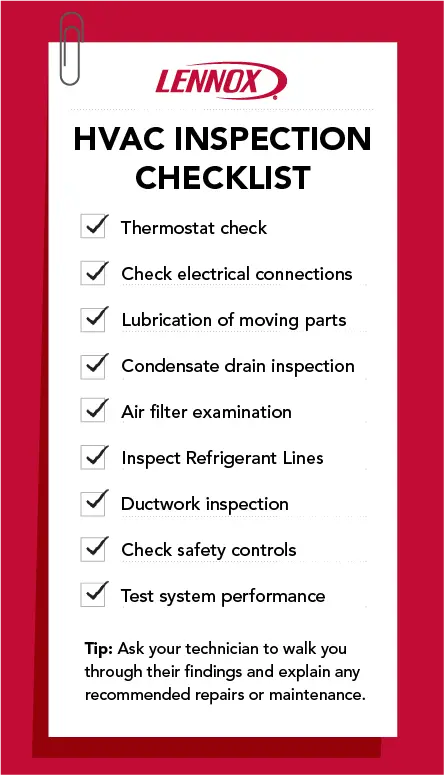
A professional HVAC inspection typically takes 60 to 90 minutes, depending on your system's size and condition. Here's what your technician will do:
- Thermostat check: Your technician tests your thermostat to ensure it reads temperatures accurately and communicates properly with your system.
- Electrical connections: Loose or corroded wires can cause system failures or safety hazards. Your technician tightens connections and checks voltage levels.
- Lubrication of moving parts: Motors, fans, and bearings need lubrication to reduce friction and prevent premature wear.
- Condensate drain inspection: A clogged drain can cause water damage or system shutdowns. Your technician clears blockages and ensures proper drainage.
- Air filter examination: Dirty filters restrict airflow and reduce efficiency. Your technician checks the filter and replaces it if needed.
- Refrigerant levels (for cooling systems): Low refrigerant can reduce cooling power and damage your compressor. Your technician checks for leaks and adjusts levels as needed.
- Ductwork inspection: Leaky or damaged ducts waste energy and reduce comfort. Your technician examines accessible ductwork for gaps, tears, or blockages.
- Safety controls: Your technician tests safety switches, gas valves, and other controls to ensure your system operates safely.
- System performance test: Finally, your technician runs your system to check airflow, temperature output, and overall performance.
Tip: Ask your technician to walk you through their findings and explain any recommended repairs or maintenance.
HVAC Inspection Checklist: How to Prepare
Make your inspection go smoothly by taking a few simple steps beforehand:
- Clear the area: Move furniture, boxes, or clutter away from your indoor and outdoor units so your technician can access them easily.
- Make a list: Write down any issues you've noticed: strange sounds, temperature problems, or high bills, so you can discuss them with your technician.
- Gather documentation: If you have previous inspection reports, warranties, or maintenance records, have them handy.
- Check your thermostat: Set it to the appropriate mode (heating or cooling) so your technician can test your system.
- Replace your filter (optional): If you know your filter is dirty, swap it out before the inspection to help your technician get a clearer picture of your system's performance.
How Often Should You Schedule an HVAC Inspection?
For most homeowners, twice-yearly inspections are the sweet spot. Here's the ideal schedule:
- Spring: Inspect your air conditioner before the heat arrives.
- Fall: Inspect your furnace or heat pump before winter sets in.
If your system is older, heavily used, or showing signs of wear, you may benefit from more frequent checkups. Your technician can recommend a schedule based on your system's age and condition.
How Much Does an HVAC Inspection Cost?
HVAC inspection costs typically range from $100-300 on average, depending on your location, system type, and the scope of the inspection. Many HVAC companies offer maintenance plans that include annual or semi-annual inspections at a discounted rate, along with perks like priority service and repair discounts.
While there's an upfront cost, regular inspections save you money by preventing costly repairs, reducing energy bills, and extending your system's lifespan. Think of it as an investment in your home's comfort and your peace of mind.
Protect Your Comfort with Professional HVAC Inspections
Your HVAC system works hard to keep your home comfortable, safe, and efficient. Regular inspections ensure it can do that job year after year without surprises. By catching small issues early, improving energy efficiency, and extending your equipment's lifespan, professional inspections deliver real value and real peace of mind.
Don't wait for a breakdown to take action. Find a certified Lennox dealer near you and schedule your HVAC inspection today. Your comfort is worth it.