
You turn on the tap. Cold water. More cold water. Then, finally, a slow trickle of warmth. Sound familiar?
Whether you've just installed a new water heater, bounced back from a power outage, or simply run through your hot water supply during a busy morning, the wait can feel longer than it should. The good news? Once you understand what drives your water heater's heating time, you can set realistic expectations, spot problems early, and make smarter decisions about your home's comfort.
So, how long does a water heater take to heat up? The honest answer: it depends. Your heater type, tank size, and fuel source all play a role. Here's what you need to know.
Understanding Different Types of Water Heaters
Not all water heaters work the same way, and that difference shows up directly in how fast you get hot water.
- Gas water heaters are the speed leaders among traditional tank-style units. The powerful gas burner transfers heat quickly, which is why gas models remain a go-to choice for families with high hot water demand.
- Electric water heaters take a bit more patience. Electric heating elements are reliable and long-lasting, but they transfer heat more slowly than a gas burner.
- Hybrid heat pump water heaters pull heat from the surrounding air to warm your water, making them significantly more energy-efficient than standard electric models. They do take longer to recover between high-demand periods, but their efficiency gains often make the trade-off worthwhile for the right household.
Factors Influencing Water Heating Time
Several factors work together to determine your actual wait time.
Tank size is the most straightforward variable. More water simply requires more time and energy to heat. Here's an estimated breakdown by tank size:
- 30-gallon tanks (ideal for 1 to 2 people): Gas heats in 20 to 30 minutes; electric takes 45 to 60 minutes.
- 40-gallon tanks (the most common residential size, suited for 2 to 3 people): Gas heats in 30 to 40 minutes; electric takes 60 to 80 minutes.
- 50-gallon tanks (great for families of 3 to 4): Gas heats in 40 to 50 minutes; electric takes 80 to 120 minutes.
- 80-gallon tanks (built for large households with heavy demand): Gas heats in 60 to 70 minutes; electric can take 2 to 3 hours.
Fuel source matters just as much as tank size. Gas water heaters operate at BTU ratings between 30,000 and 50,000, giving them a significant speed advantage over electric units, which typically run at 4,500 to 5,500 watts.
Incoming water temperature is something most homeowners overlook. In northern climates during winter, incoming water can arrive as cold as 40 to 50 degrees Fahrenheit. That's a much longer climb to the target temperature of 125 degrees compared to summer months, when incoming water may already be 70 to 80 degrees.
Sediment buildup is a silent performance killer. Over time, minerals from hard water settle at the bottom of your tank and form an insulating layer between the heating element and the water. The result is slower heating, higher energy use, and more wear on your system.
Tank insulation quality also plays a role. A well-insulated tank retains heat longer, which means your heater doesn't have to work as hard to maintain the temperature between uses.
How Long Should Your Hot Water Last?
Knowing your heater's heating time is only half the picture. Understanding how long your water supply should last helps you figure out whether your system is truly keeping up with your household's needs.
A standard 10-minute shower uses roughly 20 to 30 gallons of water. A dishwasher cycle uses 4 to 6 gallons, and a full load of laundry can consume 15 to 25 gallons. When multiple demands hit at once, your tank's First Hour Rating (FHR) becomes the most important number. FHR measures how many gallons of hot water your heater can deliver in the first hour of use, starting with a full tank. A 40-gallon gas water heater may carry an FHR of 60 to 70 gallons, while a comparable electric unit typically rates 45 to 55 gallons.
Recovery time after the tank runs out follows a similar pattern. Gas heaters recover at roughly 20 to 25 gallons per hour, while electric units recover at 15 to 20 gallons per hour. If your household consistently outpaces those numbers, it may be time to consider a larger tank.
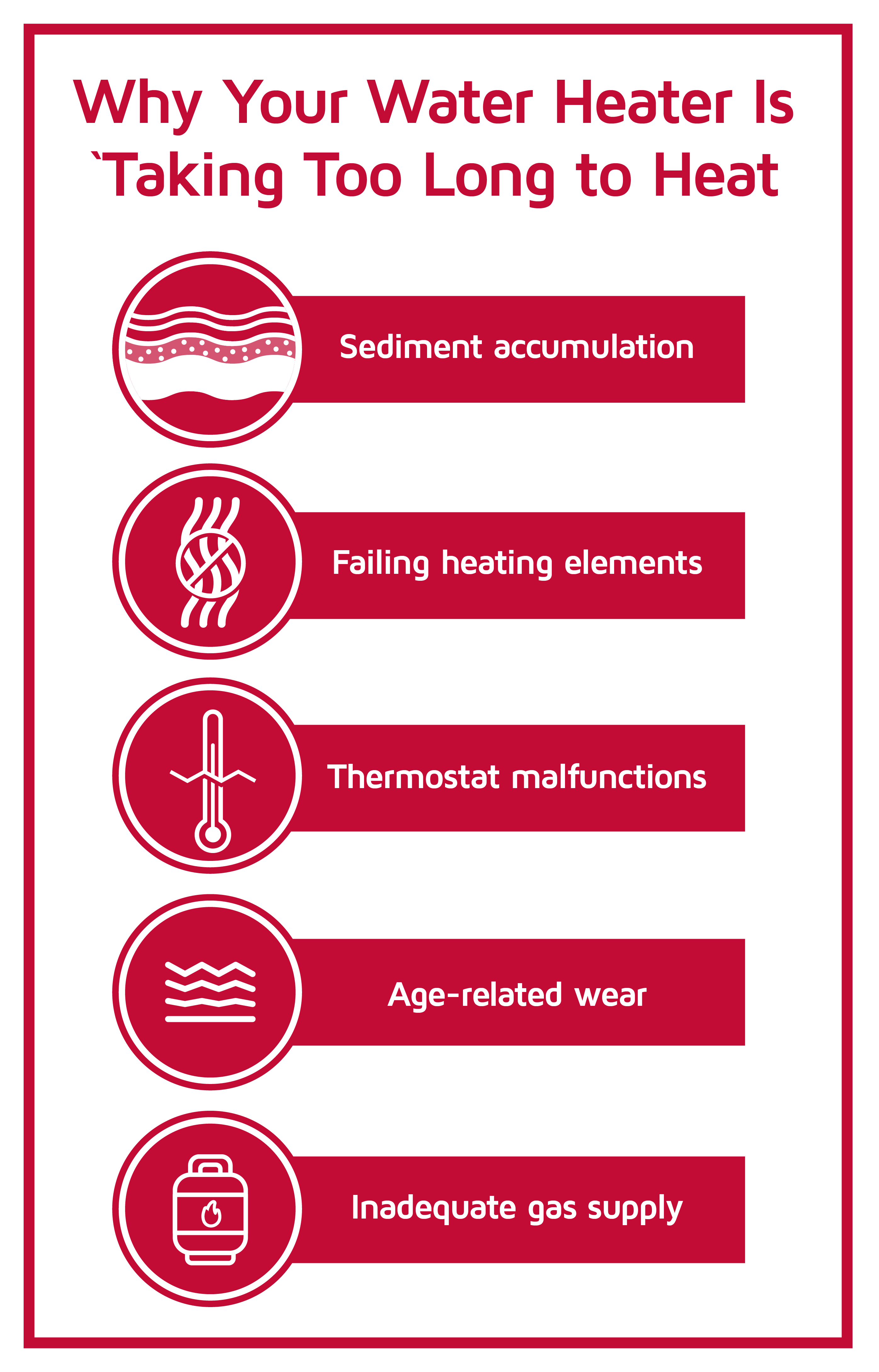
Why Your Water Heater Is Taking Too Long to Heat?
If your hot water feels like it’s heating slower than it used to, one of these common culprits is likely to blame.
Sediment accumulation is the most frequent offender, especially in areas with hard water. A layer of mineral deposits at the tank bottom acts like insulation in the wrong place, blocking heat from reaching the water efficiently.
Failing heating elements are another common issue in electric water heaters. Most electric units have two elements that work in sequence. When one fails, the remaining element has to carry the full load, and heating time can double.
Thermostat malfunctions can cause your unit to shut off too early or fail to activate heating when it should. If your water is consistently lukewarm rather than hot, the thermostat is worth checking.
Age-related wear is simply part of the lifecycle. As a water heater approaches the end of its useful life, typically 8 to 12 years for most units, components degrade, insulation breaks down, and overall efficiency drops. Longer heating times and higher energy bills often signal that a replacement conversation is worth having.
An inadequate gas supply can slow gas water heaters when supply lines are undersized or partially blocked. If your gas appliances seem sluggish across the board, an inspection of your gas line by a professional is the right call.
Tips to Get the Most Out of Your Water Heater
A few straightforward habits go a long way toward keeping your system running at its best.
- Flush your tank annually. Draining and flushing your tank once a year removes sediment before it builds up and slows your heating time.
- Set your thermostat to 125 degrees Fahrenheit. This temperature hits the sweet spot between safety, efficiency, and comfort. Going higher wastes energy; going lower can create conditions that allow bacteria to thrive.
- Inspect the anode rod every 3 to 5 years. This component protects your tank from corrosion. Replacing it on schedule significantly extends your unit's life.
- Check your power supply. If you have an electric unit, a loose connection, a tripped breaker, or a failing heating element can quietly drag down your system's performance. A quick inspection of your electrical panel and connections can save you from a cold surprise.
- Add insulation where it counts. Wrapping older tanks with an insulation blanket and insulating your hot water pipes reduces standby heat loss and helps your heater maintain temperature more efficiently between cycles.
If you've worked through the basics and your water still isn't heating properly, it's time to bring in a professional. Issues such as internal tank damage, gas line problems, or complex electrical faults require the right tools and trained hands to diagnose and fix them safely.
The Bottom Line
How long a water heater takes to heat up depends on a combination of factors: the type of heater you have, the size of the tank, your fuel source, the temperature of your incoming water, and the overall condition of your system. Gas heaters heat faster than electric ones. Larger tanks take longer than smaller ones. And a well-maintained system always outperforms a neglected one.
If your hot water isn't keeping up with your household needs, or if you're considering upgrading to a more efficient system, a Lennox dealer can help you find the right fit. Hot water should be something you never have to think twice about.
We’re here to help make home comfort solutions a little clearer and a lot less stressful.
No Worries. It’s a Lennox.™