
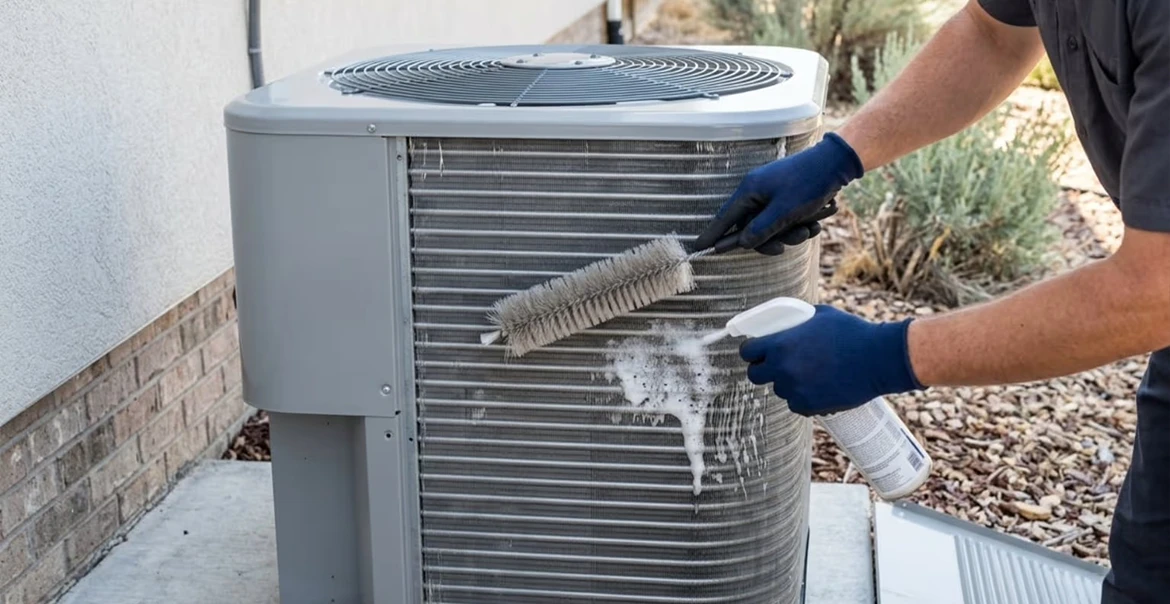
There is a small but mighty component on your air conditioning system that most homeowners never think about until something goes wrong: the fins. These thin aluminum blades sit on both your indoor and outdoor units, and they do a tremendous amount of work every time your system runs. When they get packed with dirt, dust, or debris, the ripple effect touches everything from how cool your home feels to how much you are spending on energy every month. Knowing how to clean air conditioner fins is one of the most practical maintenance skills a homeowner can have.
What Are Air Conditioner Fins?
Air conditioner (AC) fins are the tightly packed aluminum blades wrapped around your system's coils. You will find two sets: one on the evaporator coil inside your home, and one on the condenser coil in your outdoor unit.
The evaporator coil fins live inside your indoor air handler. Their job is to pull heat out of the warm air circulating through your home and send cool, refreshed air back into your living spaces. The condenser coil fins are outside, and they do the opposite: they push that captured heat out of the refrigerant and release it into the outdoor air.
Your air conditioner's fins exist to maximize the surface area available for heat transfer. Every blade that air flows across is a chance for your system to work efficiently. Fewer clean blades means more work for the compressor to deliver the same results.
Both sets are critical to how well your system performs. When either set gets bent, blocked, or coated in grime, the entire heat exchange process slows down, and your home pays the price in comfort and cost.
Why Cleaning AC Fins Is Important?
Keeping your air conditioner fins clean is not just a nice-to-have maintenance habit. It is a foundational step in protecting your home comfort investment.
Improves Cooling Efficiency
When fins are open and clean, air moves freely across the coil and heat transfer happens the way it should. The moment buildup starts to accumulate, that airflow gets restricted. Your system compensates by running longer, working harder, and losing efficiency. Over time, that constant strain pushes the compressor toward failure. Clean fins let your system breathe and perform the way it was designed to.
Prevents System Overheating
Your outdoor unit relies on airflow to dump heat from the refrigerant into the surrounding air. When condenser fins are packed with leaves, dirt, or debris, that heat has nowhere to go. It builds up around the unit, and the compressor begins running hotter than it should. Compressor failure can be a significant repair, and staying on top of fin cleaning is one of the simplest ways to avoid it.
Reduces Energy Consumption
A system fighting against restricted airflow burns more energy to reach the same outcome. That shows up in your utility bills, month after month, season after season. Staying current on fin maintenance helps your system operate at the performance level it was built for. Reviewing your home's energy usage over time is a smart way to spot when something is quietly working against your comfort.
Extends the Lifespan of the Air Conditioner Unit
The single biggest factor in how long an air conditioner lasts is how well it is maintained. Fin cleaning is one of the easiest and most impactful pieces of that puzzle. A system that is not constantly straining against dirty coils simply lasts longer, and that means more seasons of reliable comfort before a replacement conversation even needs to happen.
Maintains Indoor Air Quality
The evaporator fins inside your home are a breeding ground for mold, bacteria, and allergens when they go uncleaned. Every time your system runs, that contaminated air circulates through every room in your house. Clean fins support cleaner air, and that matters most for families with allergies, asthma, or young children who spend a lot of time indoors.
Signs Your AC Fins Need Cleaning
Not sure where your system stands? Here are the red flags that tell you it is time to grab a fin comb:
Your home takes forever to cool down: When the thermostat says one thing and your living room says another, restricted airflow through dirty fins is a likely culprit. The system is running, but it’s just not delivering the way it should.
Your energy bills are creeping up: If your usage habits have not changed but your monthly bill has, something is making your system work harder than it needs to.
You can see the buildup: If you look at the fins and visible dirt, dust, or debris is caked on the surface, that buildup is already affecting performance. Trust what you see.
Airflow from your vents feels weak: Restricted fins choke airflow at the source, and that low-pressure output travels all the way to your vents. Rooms that feel stuffy or uneven are a signal worth investigating.
Your system runs constantly without cycling off: A well-maintained unit reaches your set temperature and kicks off. One that runs endlessly is struggling, and dirty fins are worth checking before you call for service.
The unit will not shut off at all: If your air conditioner is running without stopping regardless of the indoor temperature, fin restriction can be a contributing factor on top of other issues.
If your home has a smart thermostat, use it. Many smart thermostats can alert you when your home is staying warmer or cooler than expected, giving you an early heads-up that your system needs attention before the problem compounds.
Tools and Materials You Will Need
Before you get started, gather the following:
Soft brush or fin comb
Spray bottle or garden hose
Mild detergent or coil cleaner (check your system’s compatibility with using coil cleaner; some systems recommend just using water)
Protective gloves
Vacuum cleaner (optional)
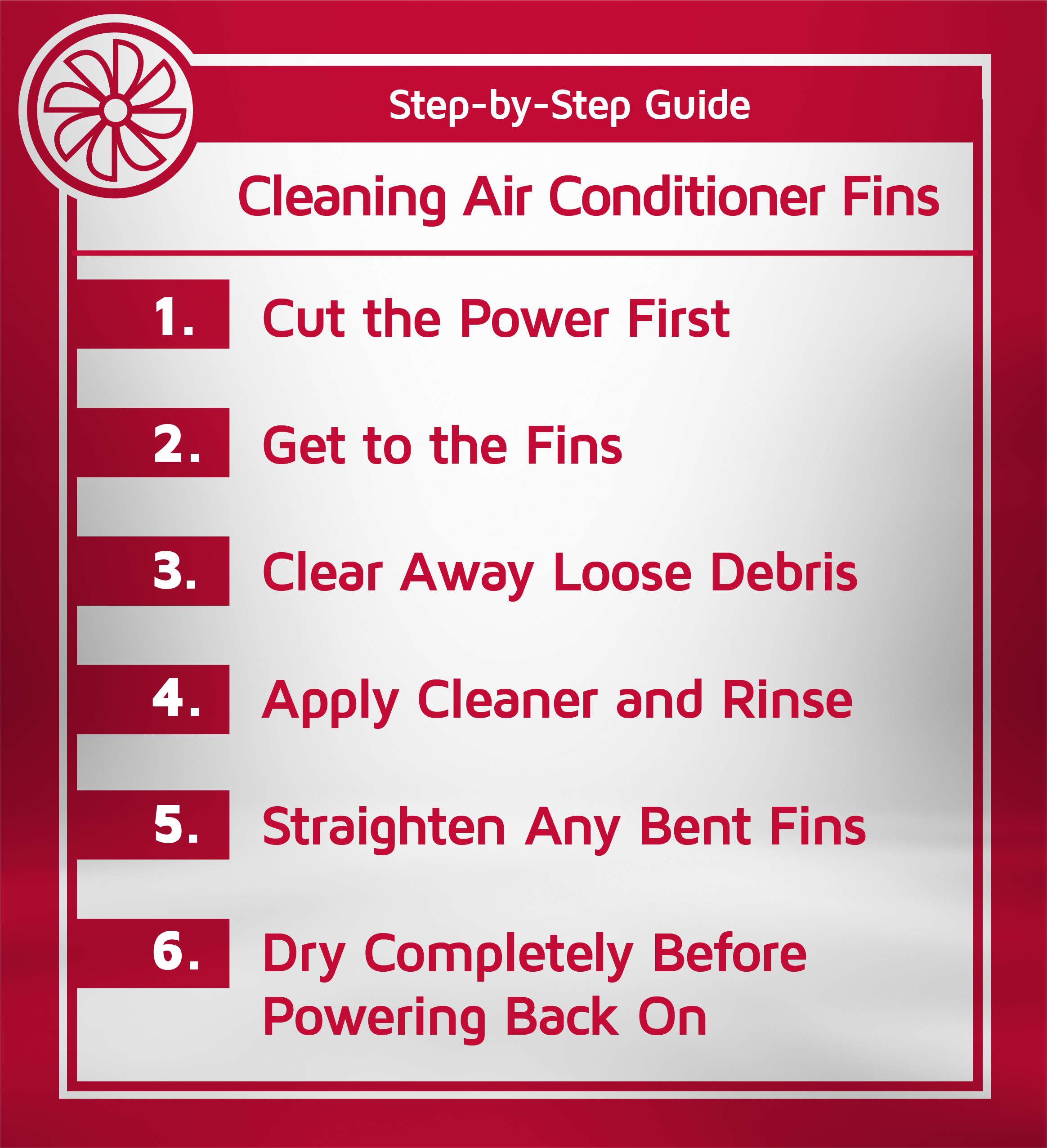
Step-by-Step Guide to Cleaning Air Conditioner Fins
1. Cut the Power First
No exceptions here. Before touching anything, shut off power to your unit at the electrical disconnect switch. This one step protects both you and your equipment.
2. Get to the Fins
On the outdoor unit, remove the top grille or access panel to expose the condenser coil fins. For the indoor evaporator coil, open the air handler access panel carefully. Take your time here and avoid applying pressure directly to the fins while you work your way in.
3. Clear Away Loose Debris
A soft brush or a vacuum with a brush attachment is your best friend for this step. For the outdoor unit, check for and remove grass clippings, leaves, or papers that have been pulled against or into the cooling fins. Light, gentle passes are all you need to lift the surface layer before applying any liquid.
4. Apply Cleaner and Rinse
Confirm your system is compatible with a mild coil cleaner or diluted detergent, then spray it across the fins and give it a few minutes to break down the embedded grime. Then rinse with a garden hose set to a gentle stream, always working from the inside of the coil outward. Pushing water from the outside in drives debris deeper into the coil and does more harm than good.
5. Straighten Any Bent Fins
Grab your fin comb and work slowly along any sections where fins have bent or collapsed. Even a small patch of bent fins creates a measurable restriction in airflow. Follow the natural direction of the fins and use light, steady pressure to avoid snapping the aluminum.
6. Dry Completely Before Powering Back On
Let everything air out fully before restoring power and reassembling the unit. The filter and all access panels must be in place before you flip the switch back on.
Indoor vs. Outdoor AC Fins: Key Differences
Evaporator Coil Fins (Indoor Unit)
The indoor fins operate in a humid environment because the evaporator coil naturally produces condensation as it cools your air. That moisture makes these fins more vulnerable to mold, mildew, and microbial buildup. If you are noticing musty or unusual smells coming from your vents, the evaporator fins are the first place to look, and that particular situation is usually better handled by a licensed technician than a garden hose.
Condenser Coil Fins (Outdoor Unit)
Your outdoor fins take a beating from pollen, grass, dirt, and whatever storms blow through. They typically need more frequent attention than the indoor set, especially during spring when pollen counts are high or after periods of heavy wind. Avoid setting up sprinklers or soaker hoses in ways that direct continuous water toward the outdoor unit, since treated water can corrode aluminum fins over time and create a different kind of damage.
Common Mistakes to Avoid
High-pressure water: High-pressure water bends fins instantly and can push debris so far into the coil that no amount of rinsing will clear it. A gentle garden hose setting is the right call every time.
Using a stiff wire brush: The aluminum in these fins is thin and easy to damage. A soft brush or a proper fin comb protects the blades while still getting the job done.
Letting bent fins slide: It is easy to overlook a few crooked blades, but those small restrictions compound quickly. Making fin straightening a regular part of your cleaning routine prevents a manageable issue from turning into a bigger one.
Pushing cleaning to the back burner: Debris that sits for months bakes on and becomes much harder to remove than fresh buildup. A consistent schedule keeps each cleaning session short and effective.
How Often Should You Clean Air Conditioner Fins?
For the average home, cleaning air conditioner fins every three to six months or at the beginning of each major season is a solid starting point. It is good practice to have a licensed HVAC technician inspect and service your system twice per year, which covers a professional-level assessment of the fins along with everything else.
Homes in dusty environments, near active construction, or surrounded by heavy tree cover may need to check the outdoor fins monthly to stay ahead of buildup. Your local climate and landscaping are the best guides to the right frequency for your home.
When to Call a Professional?
Some situations call for more than a quick cleaning session. Reach out to a trusted Lennox dealer when you run into any of the following:
Severe dirt buildup that will not budge: If a standard cleaning does not move the grime, or you notice your air conditioner freezing up, a professional has the tools and solutions to handle it without damaging the fins.
Mold growth or unusual odors from your vents: Biological buildup on the evaporator coil requires professional remediation, not a rinse with a garden hose.
Fins that are too damaged to straighten: When a fin comb cannot restore proper shape, a technician can assess whether the coil needs professional repair or if a deeper look at the system is warranted.
Your annual maintenance visit: Even when everything looks fine from the outside, a Lennox-certified technician checks wiring, refrigerant levels, the condensate drain, and the full system- things no homeowner checklist can fully cover.
And if you simply do not feel comfortable performing any part of the cleaning yourself, that is completely fine. You can always call a Lennox dealer to handle it. That is exactly what they are there for.
Pro Tips to Keep AC Fins Clean Longer
Stay on top of your air filters: A clean filter captures dust and debris before it ever reaches the evaporator coil. The fewer particles that make it through, the slower your fins accumulate buildup between cleanings.
Create a clear zone around your outdoor unit: Trim back shrubs, rake away leaf litter, and maintain at least two feet of clear space on all sides of the condenser. Good airflow around the unit means less debris pulled into the fins.
Consider a breathable cover in the off-season: If your system is not running through winter months, a cover designed for outdoor HVAC units can protect the condenser fins from debris without trapping moisture against the equipment.
Frequently Asked Questions
Can I clean air conditioner fins myself?
Yes, and for most homeowners the outdoor condenser fins are a manageable task with the right tools. Indoor evaporator fins or anything involving mold, strong odors, or significant fin damage is better left to a professional.
What happens if air conditioner fins are dirty?
Dirty fins block the airflow your system depends on, forcing it into longer run cycles, consuming more energy, and putting added stress on the compressor. Left unchecked, the result is higher bills and a shorter system life.
Are bent fins a serious problem?
Yes, even a small section of bent fins can noticeably cut airflow and efficiency. A fin comb handles minor bending well, but significant structural damage to the coil should be evaluated by a technician.
How long does it take to clean air conditioner fins?
A well-maintained outdoor unit typically takes 20 to 30 minutes to clean thoroughly. Indoor evaporator fins take more care and a bit more time. A full professional tune-up covers both and goes several steps deeper than a homeowner cleaning session can.
Keep Your System Running at Its Best
Cleaning your air conditioner fins is one of the simplest and most effective ways to protect your system, lower your energy bills, and keep your home comfortable all season long. By recognizing the signs of buildup and following a consistent cleaning routine, you are investing in the long-term health of your home comfort system. When in doubt, reach out to a trusted Lennox dealer. Professional maintenance twice a year is the best insurance against unexpected breakdowns and costly repairs.
We’re here to help make home comfort solutions a little clearer and a lot less stressful.
No Worries. It’s a Lennox.™