
A thermostat may be small, but it plays a major role in the comfort of your home and the efficiency of your HVAC system. Accurate temperature control, smooth communication with your equipment, and reliable performance all depend on proper installation. Whether you are upgrading to a smart thermostat or simply replacing an older model, understanding how installation works helps ensure that your system runs safely and efficiently.
Types of Thermostats and Choosing the Right One
Modern thermostats vary widely in features, controls, and compatibility. Selecting the right model is the first step toward a successful installation.
There are three types of residential thermostats:
Smart Thermostats offer remote control, energy-use insights, learning capabilities, and integration with smart home assistants. They are ideal for homeowners who want automated comfort and real-time monitoring.
Programmable Thermostats allow you to set daily or weekly schedules so your HVAC system runs only when needed. They support energy savings for households with consistent routines.
Manual Thermostats provide simple, straightforward temperature adjustment. They are reliable for homeowners who prefer basic operation without automation.
Key Considerations When Selecting a Thermostat
Before purchasing a thermostat, there are a few key things you should consider.
- System compatibility: Not all thermostats work with every HVAC system. Compatibility with heating type, cooling type, and wiring is essential.
- Wiring requirements: Smart thermostats often need a C wire for continuous power.
- Preferred features: Think about scheduling, energy reports, smart home integration, or simplicity.
Choosing the right thermostat for your system and your needs reduces installation challenges and ensures efficient operation from the start.
Why Professional Thermostat Installation Matters?
You may wonder whether thermostat installation is a task you can handle on your own. While installing a thermostat may appear simple, incorrect wiring or improper placement can lead to poor temperature control, higher energy use, or HVAC malfunctions.
Benefits of Professional Installation:
A trained HVAC professional provides:
- Accurate wiring and calibration: Proper installation ensures your thermostat sends the right signals to the furnace, heat pump, or air conditioner.
- Safety: Thermostats connect to low-voltage wiring that ties into your HVAC system. Incorrect connections can cause equipment damage or electrical hazards.
- System compatibility verification: A professional can identify whether your system requires specific wiring, accessories, or configuration settings.
Improper installation may lead to:
- Incorrect wiring that damages your HVAC components
- Thermostat misplacement that prevents accurate temperature readings
- Short cycling or irregular heating and cooling
- Connection issues with heat pumps or multi-stage systems
- Loss of warranty coverage on certain components
While handling installation may be successful for some homeowners, it’s important to recognize that even minor errors may can affect long-term system performance and may even cause damage.
What to Expect During a Professional Installation?
Knowing the steps involved can help you understand the process and evaluate whether professional help is the best option.
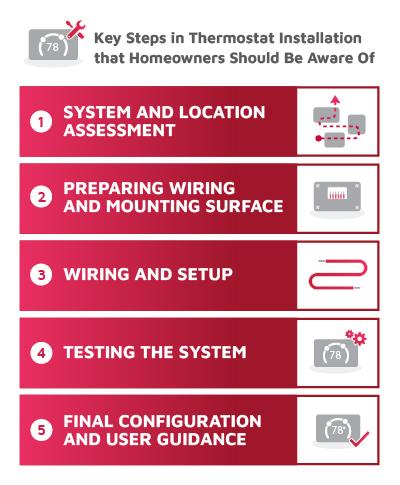
1.System and Location Assessment
The technician evaluates your HVAC equipment, existing wiring, and the current thermostat location. Ideal thermostat placement avoids direct sunlight, drafts, and heat sources that interfere with accurate readings.
2.Preparing Wiring and Mounting Surface
The technician confirms that the wiring matches your thermostat’s requirements and identifies whether a C wire or adapter is needed. They prepare the wall, mount the thermostat base, and secure the wires.
3.Wiring and Setup
The thermostat is connected according to manufacturer specifications. This includes identifying heating stages, cooling stages, heat pump modes, auxiliary heat, and fan control.
4.Testing the System
The installer powers the system back on and tests heating, cooling, fan operation, and communication between the thermostat and equipment. They verify that the thermostat responds correctly and adjusts settings for optimal function.
5.Final Configuration and User Guidance
Smart thermostats may require software updates or Wi-Fi pairing. The installer can review the controls with the homeowner, ensuring all features are accessible and working properly.
Post-Installation Care and Maintenance
Regular maintenance helps your thermostat perform accurately. Here are a few things you can do to ensure your thermostat performs at its best:
- Check batteries annually for thermostats that are battery powered.
- Review scheduling settings seasonally to match your household routine.
- Clean the thermostat exterior gently to prevent dust from interfering with sensors.
- Update software for smart thermostats to maintain compatibility and performance.
- Schedule annual HVAC maintenance, which includes verifying thermostat communication and operation.
Performing these small steps will help prevent comfort issues and maintain your thermostat’s efficiency over time.
Moving Forward with Confidence
A well-installed thermostat supports your home’s comfort, reduces energy waste, and ensures your HVAC system works the way it was designed. Whether you are upgrading to a smart thermostat or replacing a malfunctioning or aging model, professional installation provides peace of mind and helps avoid common wiring or compatibility problems.
If you are unsure which thermostat works best with your system or how to install it safely, connecting with a qualified HVAC professional is the most reliable way to get accurate guidance. A properly installed thermostat sets the foundation for better comfort, dependable performance, and long-term energy savings.