
Hot water is one of those things you only notice when it's gone. Your water heater runs in the background every single day, delivering comfort you count on for showers, laundry, and cooking. But like every hardworking appliance in your home, it has a lifespan. Knowing when to replace a water heater before it fails is one of the smartest moves a homeowner can make.
The good news? Your water heater usually gives you plenty of warning signs before it completely gives out. You just need to know what to look for.
Lifespan of a Water Heater
Understanding your water heater's lifespan is the first step toward making a confident replacement decision. A typical tank water heater lasts between 8-12 years, but lifespan is not just about the type of unit you have. Several factors shape how long your water heater will actually last:
- Water quality. Hard water, which carries high concentrations of calcium and magnesium, is one of the biggest threats to your water heater's longevity. Over time, those minerals build up as sediment inside the tank, forcing the unit to work harder and wear out faster. If you live in an area with hard water, your water heater may age more quickly than average.
- Installation and maintenance. A properly installed water heater, sized correctly for your home and connected with the right electrical or gas setup, will always outperform one that was rushed or improperly fitted. Routine maintenance, including annual inspections, flushing the tank to clear sediment, and replacing the anode rod, can meaningfully extend your unit's life.
- How to find your water heater's age. Not sure how old yours is? Check the serial number on the label near the top of the unit. Most manufacturers encode the manufacture date within the first few characters. Your owner's manual or the manufacturer's website can help you decode it. If the unit is over 10 years old, it's time to start planning.
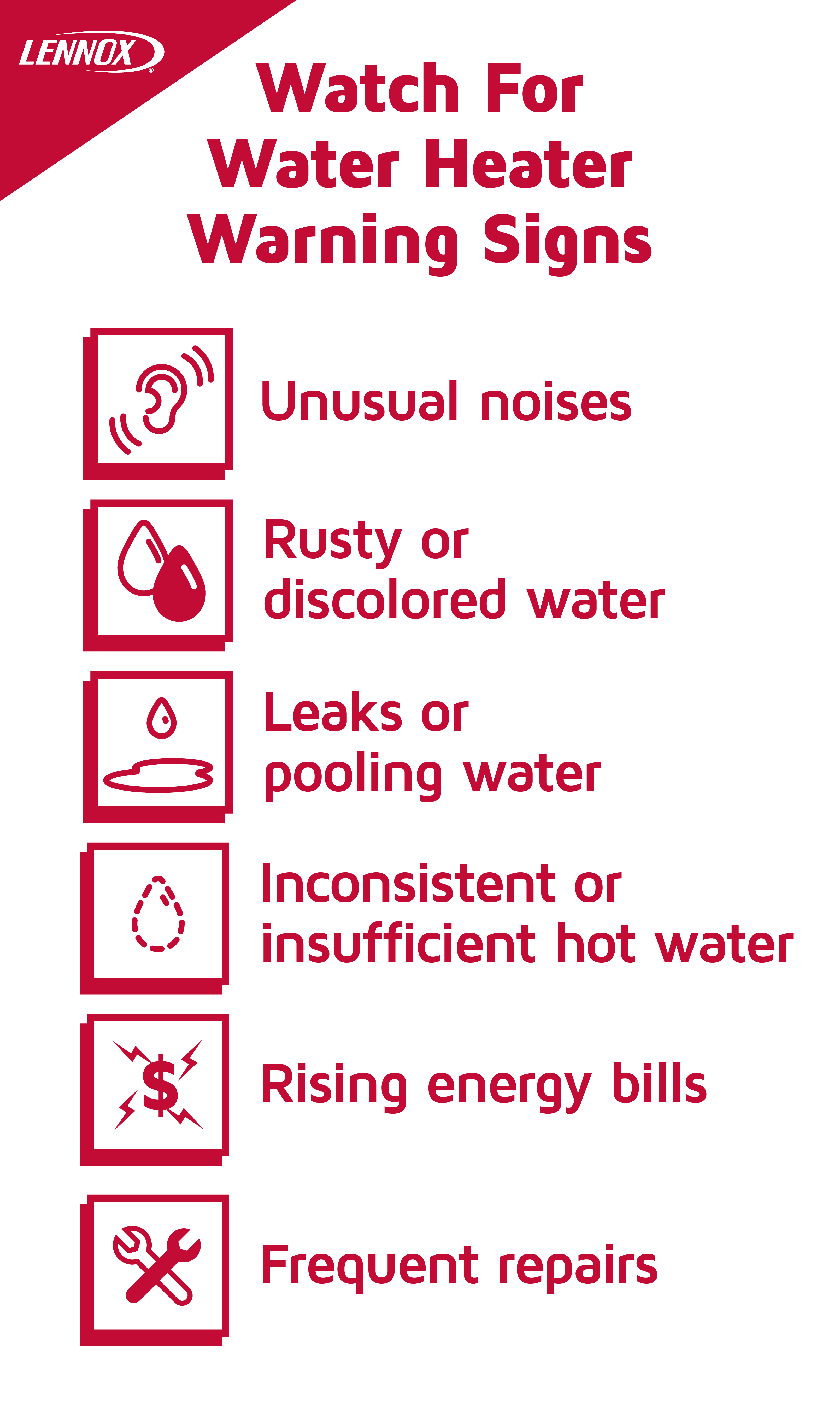
Watch For Water Heater Warning Signs
Age alone does not always tell the whole story. These are the warning signs that tell you a water heater replacement is no longer just a future consideration.
- Unusual noises. A water heater should run quietly. If yours is rumbling, popping, or crackling, that's the sound of hardened sediment at the bottom of the tank being heated over and over again. Those sounds mean your unit is working overtime just to do its job, and that kind of strain shortens its remaining life significantly.
- Rusty or discolored water. If the hot water coming from your taps looks brown or reddish, corrosion may be happening inside the tank. Rust in your water is a serious sign that the tank walls are breaking down. Once corrosion takes hold on the inside of a tank, replacement is typically the only real solution.
- Leaks or pooling water. Water collecting around the base of your water heater is never something to ignore. As metal tanks age and go through thousands of heating and cooling cycles, small cracks and fractures can form. Even a slow, minor leak can escalate quickly and cause significant water damage to your home.
- Inconsistent or insufficient hot water. Running out of hot water faster than you used to, or noticing that your water never quite gets as warm as it should, point to a unit that is losing its ability to do the job. A failing heating element or heavy sediment buildup are common culprits, and in older units, neither is worth the cost of repair.
- Rising energy bills. If your energy costs have been creeping up without a clear explanation, your water heater could be the reason. An aging unit loses efficiency over time, consuming more energy to produce the same amount of hot water it once delivered easily. Replacing it with a newer, more efficient model can bring those bills back down.
- Frequent repairs. One-off repairs happen, but when they start stacking up, the cost and inconvenience add up fast. An aging unit that keeps breaking down is not a unit that's going to turn a corner. At a certain point, putting more money into a failing system is simply throwing good money after bad.
Choosing the Right Water Heater for Your Home
When it's time to replace your water heater, one of the first decisions you'll face is choosing between a gas-powered unit and an electric one. Both get the job done, but the right choice depends on your home's setup, your household's hot water demands, and what matters most to you in terms of cost and efficiency.
- Gas water heaters heat water faster and tend to cost less to operate month to month, especially in areas where natural gas rates are lower than electricity rates. They're a strong fit for larger households that put serious demand on hot water throughout the day. The tradeoff is that gas units typically require proper venting, and installation can be more involved if your home needs any gas line adjustments.
- Electric water heaters are generally less expensive upfront and simpler to install since they don't require a gas line or venting system. They're a practical, reliable option for smaller households or homes where natural gas isn't available. The downside is that electricity costs in many regions can make them more expensive to run over time compared to gas models.
A few key factors worth considering as you weigh your options:
- Your home's existing infrastructure. If your home already has a gas line running to your current water heater, staying with gas is usually the path of least resistance. Switching fuel types means additional installation work and cost.
- Household size and hot water demand. Larger families with back-to-back showers and high daily usage often benefit from the faster recovery rate that gas units offer.
- Energy costs in your area. Utility rates vary significantly by region. Checking your local gas and electricity rates can help you estimate which option will cost less to run over the long haul.
- Energy efficiency ratings. Regardless of fuel type, look for units with a strong Uniform Energy Factor (UEF) A higher UEF means the unit converts more of its energy into hot water and less into waste, resulting in real savings on your monthly bill.
Not sure which direction makes the most sense for your home? A Lennox certified technician can walk you through the options based on your specific setup and help you land on a solution that fits your comfort needs and your budget.
When to Repair vs. When to Replace?
Not every issue calls for a full replacement. A minor repair, like replacing a heating element or a pressure relief valve, can make sense on a younger unit. But once your water heater is past the 8 to 10-year mark, the math often shifts. Repair costs on an aging unit tend to add up fast, and you may find yourself paying for fixes on a system that is still going to fail within a few years anyway.
A good rule of thumb: if the repair cost exceeds 50% of the price of a new unit, and your water heater is already in its later years, replacement is the smarter investment. You will get better efficiency, a fresh warranty, and the peace of mind that comes with a system you can count on.
Extending the Life of Your New Water Heater
Replacing your water heater is a real investment, and a little routine care goes a long way toward protecting it. The good news is that most of what keeps a water heater running strong is simple, predictable, and well worth the effort.
- Flush the tank once a year. Sediment is the quiet enemy of a long-lasting water heater. Minerals from your water supply settle at the bottom of the tank over time, creating a layer of buildup that forces your unit to work harder to heat the water above it. An annual flush clears that buildup out, keeps heat transfer efficient, and helps prevent the kind of corrosion that shortens a tank's life, especially in homes with hard water.
- Check and replace the anode rod. The anode rod is a sacrificial metal rod inside your tank that attracts corrosive elements in the water before they can attack the tank walls. Most anode rods need to be inspected every two to three years and replaced when they've worn down significantly. Staying on top of this one task alone can add years to your water heater's life.
- Set your temperature to 125°F. Running your unit hotter than necessary does not just waste energy, it also accelerates wear on internal components and increases the risk of mineral buildup. Dialing it to 125°F is a small adjustment that pays off over time.
- Schedule annual professional inspections. A yearly checkup from a certified technician does more than confirm your unit is running. It catches small problems before they become expensive ones. A qualified technician will test the pressure relief valve, inspect connections for early signs of corrosion or leaking, assess the anode rod, and make sure your unit is operating safely and efficiently.
- Know what to watch for between visits. Even with regular maintenance, your water heater will occasionally give you signals worth paying attention to. Keep an eye out for any new noises, changes in water color or temperature, moisture around the base of the unit, or a noticeable uptick in your energy bills. Catching these signs early means a faster, less costly fix and a longer life for your system overall.
The homeowners who get the most out of their water heaters are the ones who treat maintenance as a habit rather than a reaction. A little consistency now means fewer surprises down the road and more years of reliable comfort from the investment you just made.
Make the Move Before It Makes the Decision for You
Waiting for a complete breakdown is the most expensive and disruptive way to handle a water heater replacement. A little awareness now goes a long way. If your unit is aging, showing warning signs, or quietly draining your energy budget, it's worth having a professional take a look.
A Lennox certified technician can assess your water heater's condition, walk you through your replacement options, and help you find the right fit for your home.
We’re here to help make home comfort solutions a little clearer and a lot less stressful.
No Worries. It’s a Lennox.™