
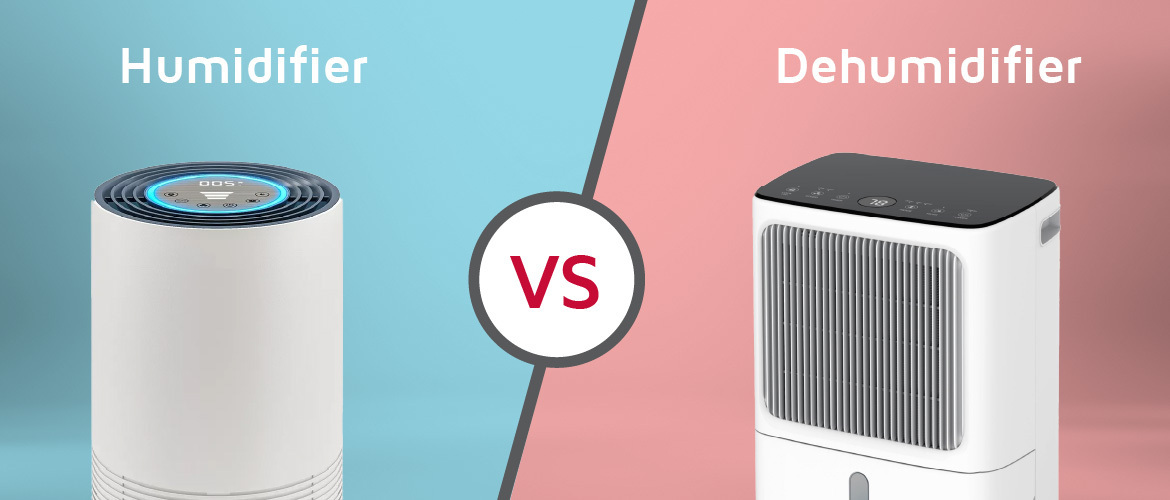
Indoor comfort depends on more than temperature alone. Humidity plays a major role in how air feels, how healthy it is to breathe, and how well your home itself holds up over time. When humidity levels fall outside a comfortable range, you often turn to either a humidifier or a dehumidifier. Understanding how each device works, when it is needed, and how it affects indoor air quality can help you make the right choice for your home.
Understanding Humidity and Why It Matters
Humidity refers to the amount of moisture in the air. When humidity is too low, the air can feel dry and irritating. When it is too high, the air may feel heavy or damp and create conditions that support mold and allergens. Most experts recommend keeping indoor humidity between 30% and 50% to support comfort, health, and home durability.
Humidifiers and dehumidifiers are designed to manage opposite ends of this spectrum. Choosing the right one depends on whether your home air is too dry or too moist.
What Does a Humidifier Do?
A humidifier adds moisture to the air. These devices are commonly used during colder months when heating systems dry out indoor air. As moisture levels drop, you may notice dry skin, irritated sinuses, sore throats, or static electricity. Wood furniture and flooring may also crack or shrink in very dry conditions.
By releasing water vapor into the air, a humidifier helps restore balance. Proper humidity can make indoor spaces feel warmer, reduce dryness-related discomfort, and support healthier breathing. Maintaining adequate moisture levels may also help reduce irritation caused by dry air in the nose and throat.
However, humidifiers must be used carefully. Adding too much moisture can create new problems, including condensation and mold growth. Regular cleaning is also important, since standing water inside a humidifier can harbor bacteria or mineral buildup if not maintained.
What Does a Dehumidifier Do?
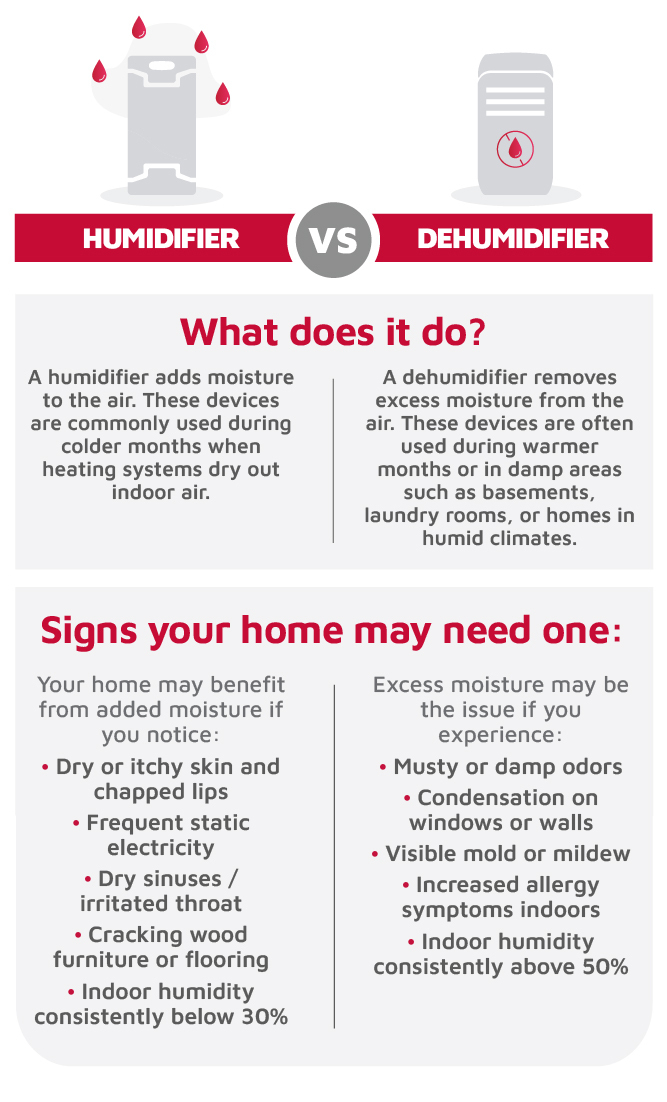
A dehumidifier removes excess moisture from the air. These devices are often used during warmer months or in damp areas such as basements, laundry rooms, or homes in humid climates. High humidity can lead to musty odors, condensation on windows, and visible mold growth on walls or ceilings.
Excess moisture also supports dust mites and mold spores, which can worsen allergies and respiratory symptoms. By pulling moisture out of the air, a dehumidifier helps create a drier, more comfortable indoor environment and reduces the risk of moisture-related damage to the home.
In humid conditions, removing moisture can make rooms feel cooler even without changing the temperature. This can reduce the strain on cooling systems and improve overall comfort.
Signs Your Home May Need a Humidifier
Your home may benefit from added moisture if you notice:
- Dry or itchy skin and chapped lips
- Frequent static electricity
- Dry sinuses or an irritated throat
- Cracking wood furniture or flooring
- Indoor humidity consistently below 30%
These symptoms often appear during winter when heating systems run frequently and outdoor air holds less moisture.
Signs Your Home May Need a Dehumidifier
Excess moisture may be the issue if you experience:
- Musty or damp odors
- Condensation on windows or walls
- Visible mold or mildew
- Increased allergy symptoms indoors
- Indoor humidity consistently above 50%
These conditions are common during summer months or in poorly ventilated areas.
Seasonal and Climate Considerations
Humidity needs often change throughout the year. Many homes require added moisture in winter and moisture removal in summer. In regions with large seasonal swings, you may benefit from different solutions at different times rather than relying on a single approach year-round.
Local climate, home insulation, ventilation, and HVAC system performance all influence how humidity behaves indoors. Measuring indoor humidity with a digital hygrometer can provide valuable insight into what your home actually needs.
Maintaining Healthy Indoor Humidity
Maintaining balanced humidity involves more than adding or removing moisture. Regular IAQ maintenance is essential to keep these devices operating efficiently. Good airflow, proper ventilation, and a well-maintained HVAC system all support consistent indoor air quality. Sealing air leaks, using exhaust fans in kitchens and bathrooms, and keeping HVAC components clean can help stabilize humidity naturally.
In some homes, whole-home humidity control systems integrated with HVAC equipment provide more consistent results than portable units. A professional evaluation can help determine what level of control is appropriate based on the home’s size, layout, and climate.
Choosing What Works Best for Your Home
There is no universal answer to whether a humidifier or dehumidifier is better. The right choice depends on your home’s current humidity levels, your climate, and how indoor air affects your comfort and health.
Some homes may even benefit from both solutions at different times of the year. Understanding the signs of dry versus humid air, monitoring indoor conditions, and addressing humidity alongside temperature helps create a healthier and more comfortable living space.
When moisture levels are balanced, indoor air feels better, systems operate more efficiently, and homes are better protected against long-term damage. Taking the time to understand humidity is an important step toward creating a more comfortable and resilient home environment year-round.