
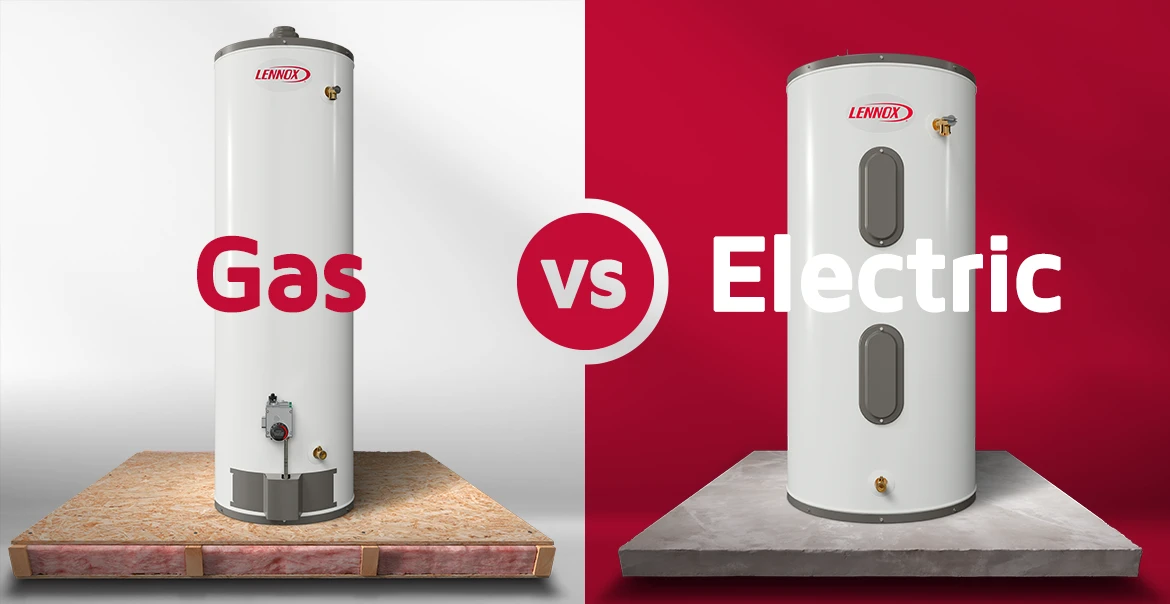
Your water heater quietly does one of the hardest jobs in your house, every single day. When it's time to replace it, the gas vs. electric decision can feel overwhelming, especially if you're not sure where to start. Luckily, a few key factors will help make your decision easier. This blog will walk you through the differences so you can make the right choice for your home.
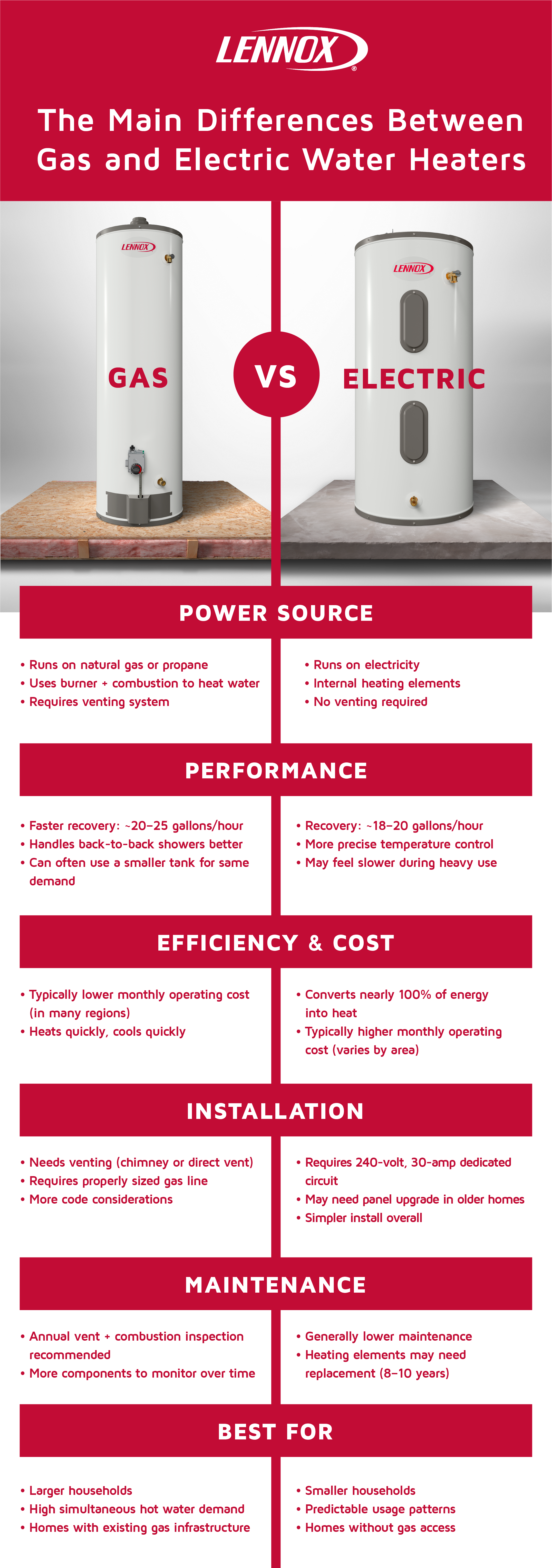
The Main Differences Between Gas and Electric Water Heaters
The core difference between a gas and electric water heater is exactly what it sounds like: one runs on natural gas or propane, and the other runs on electricity. But that single difference ripples out into everything, from how fast your shower recovers after the kids are done, to what your utility bill looks like in January, to how involved your installation is going to be.
- Gas water heaters use a gas valve, a venting system, and a burner at the base of the tank to heat water by direct combustion. They heat and cool quickly, and in most parts of the country, they cost less to operate month to month.
- Electric water heaters use fewer moving parts, heating elements inside the tank to convert electricity directly into heat. They're simpler in design, easier to install in most homes, and convert nearly all the energy they use into usable heat, though they typically take longer to recover after heavy use.
Neither is universally better, and the choice may depend on the utilities available in your area. The right choice is the one that fits your home, your household, and your habits.
Performance: Speed, Capacity, and Daily Life
Here's where you feel the difference most. A typical gas water heater can recover, or reheat a full tank after hot water has been used, at roughly 20 to 25 gallons per hour.
Electric units typically recover at a rate of 18 to 20 gallons per hour, and while that's a comparable range on paper, the real-world experience often feels slower, especially during back-to-back showers or when the dishwasher and laundry are running at the same time.
- For larger families or homes with high simultaneous hot water demand, gas tends to win on performance. A 40-gallon gas unit can often keep pace with a 50-gallon electric unit simply because it reheats faster. That means you might be able to go smaller on tank size and still meet your household's needs.
- Electric units, on the other hand, offer more precise temperature control, and convert nearly 100% of electricity they use into hot water. The dual-element design, with one element near the top and one near the bottom, keeps water ready at the top of the tank while the lower element maintains overall temperature. For smaller households with more predictable usage patterns, that consistency is more than enough.
One option worth knowing about: heat pump water heaters. These are electric units that pull warmth from the surrounding air to heat water, rather than generating heat from scratch. They can reach efficiency levels two to three times higher than standard electric resistance units, making them a compelling choice for homeowners who want the simplicity of electric with significantly lower operating costs.
Installation and Maintenance: What to Expect
Installation is where things get real, fast.
- Gas water heaters require a venting system to safely exhaust combustion gases, either through a chimney connection or a direct-vent setup through an exterior wall. They also need a properly sized gas line with the right pressure and BTU capacity. If your home already has all of that in place, installation is relatively straightforward. If it doesn't, the additional work can add a meaningful cost to your project.
- Electric water heaters need a 240-volt electrical connection and a dedicated 30-amp circuit. In older homes, this may require an electrical panel upgrade, which adds to the upfront cost. But beyond that, the installation process is generally simpler and less code-intensive than gas.
On the maintenance side, gas units require more attention over time. Annual inspections of the venting system, gas connections, and combustion chamber are recommended. Electric units are generally lower-maintenance, with the main concern being heating element replacement, typically every 8 to 10 years.
Both types benefit from the same routine care: flushing the tank annually to clear sediment, replacing the anode rod every few years to prevent corrosion, and testing the temperature and pressure relief valve to make sure it's functioning properly.
Making the Right Choice for Your Home
Before you land on a decision, run through these four questions:
- What does your home already have? If you have an existing gas line and venting, a gas replacement is usually the path of least resistance. If your home is all-electric, switching to gas means added infrastructure costs that may not be worth it.
- How much hot water does your household use? Larger families with high peak demand will benefit from higher gas recovery rates. Smaller households may find electric more than adequate.
- What are your local utility rates? In most regions, natural gas costs less per unit of energy than electricity, resulting in lower monthly operating costs. But rates vary significantly by location, so it's worth checking your local numbers before assuming.
- Environmental Considerations: In areas where the electrical grid is largely powered by renewables, electric water heaters have a smaller carbon footprint. As the grid continues to get cleaner, that advantage will only grow. High-efficiency gas units, with Annual Fuel Utilization Efficiency ratings between 80 and 95 percent, burn cleanly and efficiently, but they do produce direct emissions at the point of use. By pulling heat from the surrounding air rather than generating it from scratch, heat pumps use significantly less energy than standard electric units, making them one of the most efficient and environmentally friendly options available today.
There's no single right answer here. The best water heater is the one that fits your home's infrastructure, your family's routine, and your long-term comfort goals.
The Bottom Line
Gas or electric, the goal is the same: reliable, efficient hot water that fits your life without making you think about it. Gas heaters tend to be the better fit for high-demand households and homes already set up for gas. Electric heaters shine in their simplicity, lower maintenance needs, and growing environmental upside.
No matter which way you go, Lennox offers water heater options that match the needs of your house and your household. Lennox professionals can look at your home's specific setup, your usage patterns, and your local utility rates to point you toward the option that delivers the most comfort at the least cost over time.
Ready to find your perfect fit? Connect with a Lennox dealer near you and get expert guidance tailored to your home.
We’re here to help make home comfort solutions a little clearer and a lot less stressful.
No Worries. It’s a Lennox.™