
What Is a Furnace Flame Sensor?
Your furnace does a lot of quiet, behind-the-scenes work to keep your home comfortable. At the center of that work is a small metal rod called a flame sensor. Most homeowners never think about it until something goes wrong, but this little component plays a big role in keeping your heating system safe.
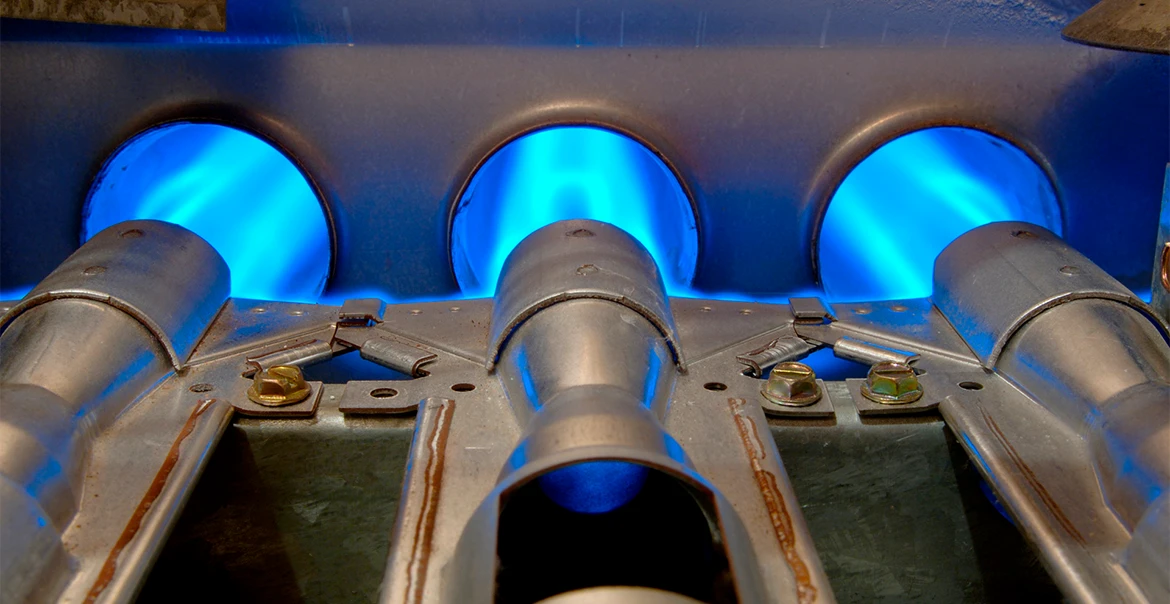
The flame sensor's job is simple: it checks that a flame is actually burning inside your furnace every time the system kicks on. If it detects a flame, it tells the control board to keep the heat going. If it doesn't, it shuts the furnace down before unburned gas can build up. That single function is what stands between a warm, comfortable home and a serious safety hazard like carbon monoxide lingering in your home’s vicinity.
There are two main types of flame sensors you'll find in home furnaces.
- Rod flame sensor. This is the most common type in modern furnaces. It's a slender metal rod with a single wire attached. It sits directly in the burner flame path and works by detecting a tiny electrical current that only flows when a flame is present. Because it operates in millionths of an amp, even a thin layer of soot or oxidation on the rod can block that signal and cause your furnace to shut down. If your furnace lights up for a few seconds and then cuts off, a dirty rod sensor is usually the first thing to check.
- Hot surface sensor. This type does double duty. It glows red-hot like a small heating element to ignite the gas, and in some systems, it also handles flame detection. It looks noticeably different from a rod sensor, more like a glowing stick than a straight rod, and it connects to the furnace with two wires instead of one. Because it handles both ignition and sensing, a failure here can show up as the furnace not lighting at all, rather than lighting and then shutting off. It also tends to be more fragile and can crack from normal handling or age.
Signs of a Failing Flame Sensor
When a flame sensor starts to go out, your furnace will let you know. Here are the most common signs to watch for:
- Burners ignite but shut off after a few seconds: The furnace lights, but the sensor isn't reading the flame properly, so the system cuts out as a safety measure.
- Short cycling: Your furnace turns on and off repeatedly within a short period. This is one of the clearest signs that the sensor is sending bad signals to the control board.
- Cold air blowing from your vents: If the furnace runs but only pushes out cold air, the sensor may be cutting the heat before it has a chance to warm up properly.
- Repeated ignition attempts or system lockouts: Your thermostat calls for heat, but the furnace keeps trying to stay on and failing. Eventually, the system may lock itself out entirely.
- The furnace runs briefly and shuts down without warning: Sudden stops mid-cycle often indicate a sensor that can't consistently detect the flame.
- Error codes related to flame detection or ignition failure: Many modern furnaces display error codes on the control board. A code tied to ignition or flame sensing is a direct indicator that the sensor needs attention.
- No heat, even when the thermostat is set correctly: If your settings look right but the house stays cold, a faulty flame sensor is one of the first things to check.
Common Causes of Flame Sensor Problems
Most flame sensor issues come down to a handful of root causes:
- Dirt, carbon buildup, or oxidation on the sensor rod. Over time, residue coats the rod and prevents it from reading the flame accurately. This is the most common cause of sensor problems, and it's also the most preventable.
- Misaligned, cracked, or physically damaged sensor. If the sensor isn't sitting in the right position in the flame path, it won't detect properly. Cracks or visible damage are a clear sign it's time for a replacement.
- Loose wiring or poor electrical connections. A weak connection between the sensor and the control board can cause intermittent failures that are hard to pin down.
- Normal wear and tear. Flame sensors don't last forever. Years of heat exposure gradually weaken the sensor's ability to do its job, even without any single dramatic failure.
Flame Sensor Maintenance
Keeping your flame sensor clean is one of the simplest things you can do to maintain your furnace. A dirty sensor is the number one cause of furnace shutdowns, and in most cases, a quick cleaning is all it takes to get things running smoothly again.
In addition to cleaning, a certified HVAC technician can inspect the sensor, test the electrical connections, and make sure everything is working the way it should. Getting a pro involved early can prevent a minor fix from turning into a bigger, more expensive repair and sets you up nicely for the next step: knowing when to replace the sensor altogether.
When to Replace a Furnace Flame Sensor?
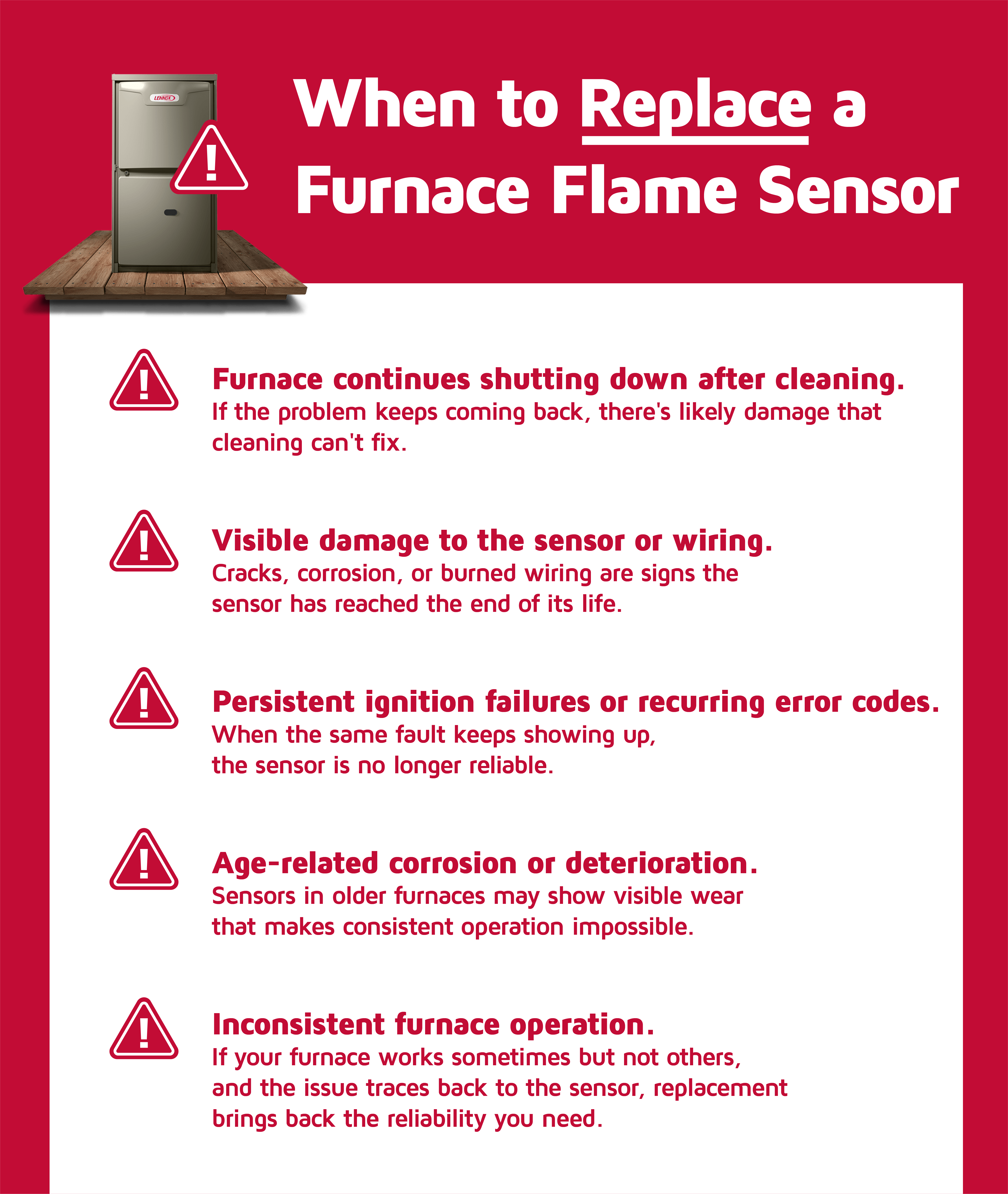
Cleaning can only do so much. If your furnace keeps shutting down after a cleaning, or if you're seeing any of the following, replacement is likely the right call:
- Furnace continues shutting down after cleaning. If the problem keeps coming back, there's likely damage that cleaning can't fix.
- Visible damage to the sensor or wiring. Cracks, corrosion, or burned wiring are signs the sensor has reached the end of its life.
- Persistent ignition failures or recurring error codes. When the same fault keeps showing up, the sensor is no longer reliable.
- Age-related corrosion or deterioration. Sensors in older furnaces may show visible wear that makes consistent operation impossible.
- Inconsistent furnace operation. If your furnace works sometimes but not others, and the issue traces back to the sensor, replacement brings back the reliability you need.
The benefits of having a professional handle the replacement go beyond just swapping out a part. A trained technician can accurately diagnose whether the sensor is truly the problem, perform the repair safely, and inspect the rest of the system while they're at it. That kind of thorough check gives you confidence that your furnace is ready for whatever the season throws at it.
Your Furnace, Your Way
Your furnace flame sensor is small, but it carries a lot of responsibility. Knowing what it does, recognizing when it's struggling, and staying on top of basic maintenance puts you in control of your home's comfort and safety. When in doubt, a Lennox dealer is always ready to help you get your system back to feeling just right.
We’re here to help make home comfort solutions a little clearer and a lot less stressful.
No Worries. It’s a Lennox.™