
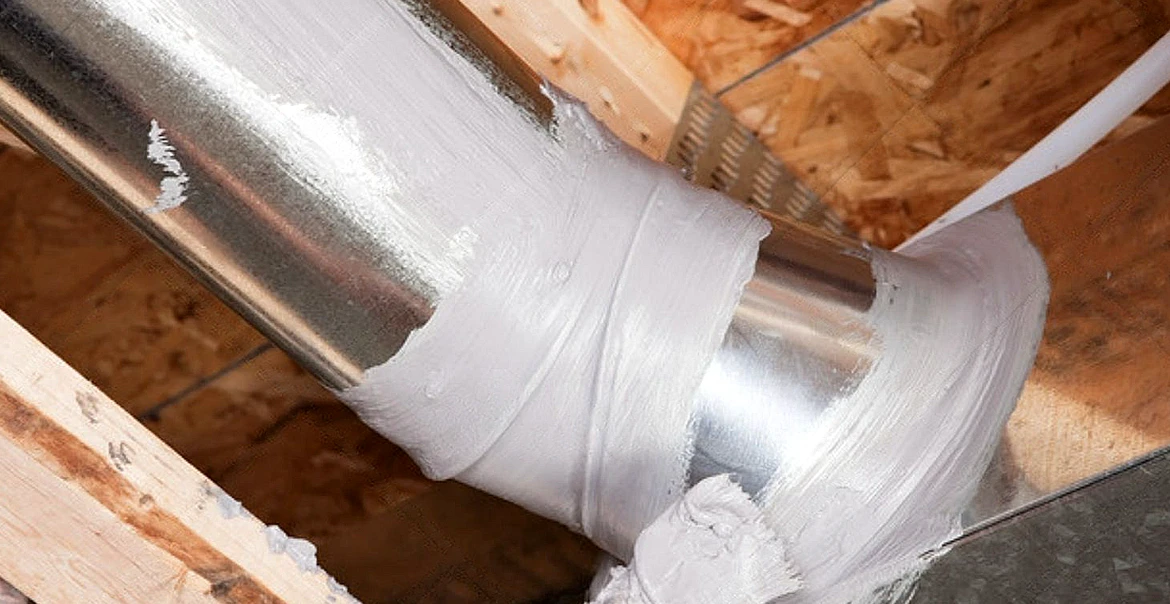
A bedroom that stays stuffy while the living room feels comfortable may point to an air distribution problem. The same is true of vents that barely move air or utility bills that climb without an obvious explanation. In some homes where HVAC equipment may be working properly, but damaged or disconnected ducts are keeping that conditioned air from reaching its destination, duct sealing could be the solution.
What Is Duct Sealing?
Your ductwork functions as a delivery route between your HVAC equipment and the rooms in your home, delivering heated and cooled air where you need it. Duct sealing repairs the openings that interfere with that route, including cracks, separated seams, loose fittings, and gaps near registers or equipment connections.
The location of a leak affects the problem it creates. An opening in a supply duct can release conditioned air into an attic, basement, or crawl space. A return-side leak can draw air and particles from those areas into the system. Once the openings are sealed, more of the air moving through the ducts can reach the spaces it was meant to serve.
Signs Your Ducts Need Sealing
Air duct leaks are not always visible, but their effects may show up throughout the house. Look for:
Rooms that heat or cool unevenly: A room may struggle to match the thermostat setting because it is receiving less airflow.
Unexpected energy-use increases: Lost air can result in longer system cycles as your equipment works to satisfy the thermostat.
More dust inside the home: Return leaks may pull particles from unfinished spaces into the circulating air.
Low airflow at registers: Air escaping earlier in the duct run can leave less air available at the vent, or cause your unit to freeze due to reduced airflow across the evaporator coil.
Problems near attics or crawl spaces: Ducts in unconditioned locations may face moisture, pests, temperature extremes, and accidental damage.
Poor installation can leave vulnerable connections from the start. Age, corrosion, deteriorating materials, renovation work, and routine system vibration can also create or enlarge leaks.
Benefits of Duct Sealing
A tighter duct system helps the air your HVAC equipment conditions move where your household needs it. That can support:
More manageable energy use: The system loses less heating or cooling along the way.
Better room-to-room comfort: Improved air delivery may help reduce stubborn temperature differences.
Improved indoor air quality: Sealed return ducts are less likely to collect dust, pollen, mold spores, and other particles from surrounding areas.
Less demand on HVAC components: More effective air distribution may reduce unnecessarily long operating cycles.
A more efficient home: Weatherization initiatives, like well-maintained ductwork, contribute to the overall performance of your heating and cooling system.
Types of Duct Sealing Methods
Manual Sealing
For accessible trouble spots, a technician may apply mastic, metal foil tape, or another material approved for HVAC ducts. Manual work allows the technician to focus directly on exposed seams, fittings, and connections. It is often a practical option when leakage is limited and the affected sections are easy to reach.
Aerosol-Based Sealing
Aerosol-based service approaches the duct network from inside. After preparing and pressurizing the system, a technician sends sealant particles through the ducts. Those particles settle around the edges of openings and build a seal. This method can address leaks located in areas where direct access would otherwise require opening finished surfaces.
How Professional Duct Sealing Works?
A professional visit begins with an evaluation rather than immediately applying sealant. The process commonly includes:
Inspecting the system: The technician reviews accessible ducts for wear, separation, and physical damage.
Finding hidden leakage: Pressure testing, thermal imaging, smoke tools, or other diagnostic methods can reveal problems that are difficult to see.
Selecting an approach: The technician chooses manual materials, aerosol treatment, or a combination based on the system’s condition and accessibility.
Checking the outcome: Testing after the service can show whether leakage decreased and airflow improved.
This process helps distinguish sealable openings from structural damage that requires a more extensive repair.
Cost of Duct Sealing
Professional duct sealing typically ranges from $300 to $1,000 or more. Pricing varies because every home has a different layout, amount of ductwork, and level of accessibility.
A larger network with numerous branches generally requires more labor and material. Ducts exposed in a utility room may be relatively straightforward to treat, while sections enclosed by walls or installed in tight spaces can add complexity. The selected sealing method also influences the final cost.
Tips for Maintaining Sealed Ducts
Arrange annual HVAC inspections so loose joints or new damage can be caught early. Change the air filter regularly, usually every one to three months, according to the filter type, system requirements, and conditions in your home.
After sealing, continue watching for low vent airflow, renewed temperature differences, excess dust, or unexplained changes in energy use. These symptoms can signal that the ductwork needs another evaluation.
Duct Sealing vs. Duct Insulation
Sealing and insulation address two separate forms of energy loss. Sealing repairs openings that release air. Insulation slows the movement of heat through the duct material itself.
Ducts installed in attics, basements, and crawl spaces may benefit from both. Sealing keeps air contained inside the system, while insulation helps protect its temperature as it travels through an unconditioned area.
When to Replace Ductwork Instead of Sealing?
Sealing is not intended to rebuild ductwork that has lost its shape or structural integrity. Replacement may be more appropriate when ducts have collapsed, developed widespread corrosion, or experienced extensive moisture or pest damage.
When ducts remain structurally sound, sealing may be more economical than replacing the complete system. Full duct replacement can cost $2,000 to $10,000 or more. Contractors usually price the overall project instead of relying on a universal per-linear-foot rate because accessibility and system condition can affect the workload substantially.
Duct systems older than 15 to 20 years may also warrant closer evaluation, particularly when their materials are deteriorating. Remodeling and HVAC replacement projects provide useful opportunities to inspect hidden sections and decide whether repair or replacement offers the better long-term solution.
Help Your HVAC System Deliver Comfort Where It Belongs
A professional duct inspection can clarify whether escaping air is contributing to uneven comfort, poor airflow, excess dust, or unnecessary system operation. Once the cause is identified, a technician can recommend targeted sealing, whole-system treatment, or replacement where needed. Find a Lennox dealer near you to arrange an HVAC evaluation.
We’re here to help make home comfort solutions a little clearer and a lot less stressful.
No Worries. It’s a Lennox.™