
Extend Your Home’s Comfort
Every square foot of your home matters. For homeowners short on lower-level space or who already have HVAC infrastructure running through the attic, installing a furnace up top is a practical and increasingly popular choice. An attic furnace is not a special category of furnace, simply a standard furnace, gas or electric, installed in the attic rather than a basement, closet, or utility room. The result? More usable space where you live, and a heating setup that works with your home's layout rather than against it. That said, this decision comes with real considerations around access, insulation, and installation, and getting those right makes all the difference.
What Is an Attic Furnace?
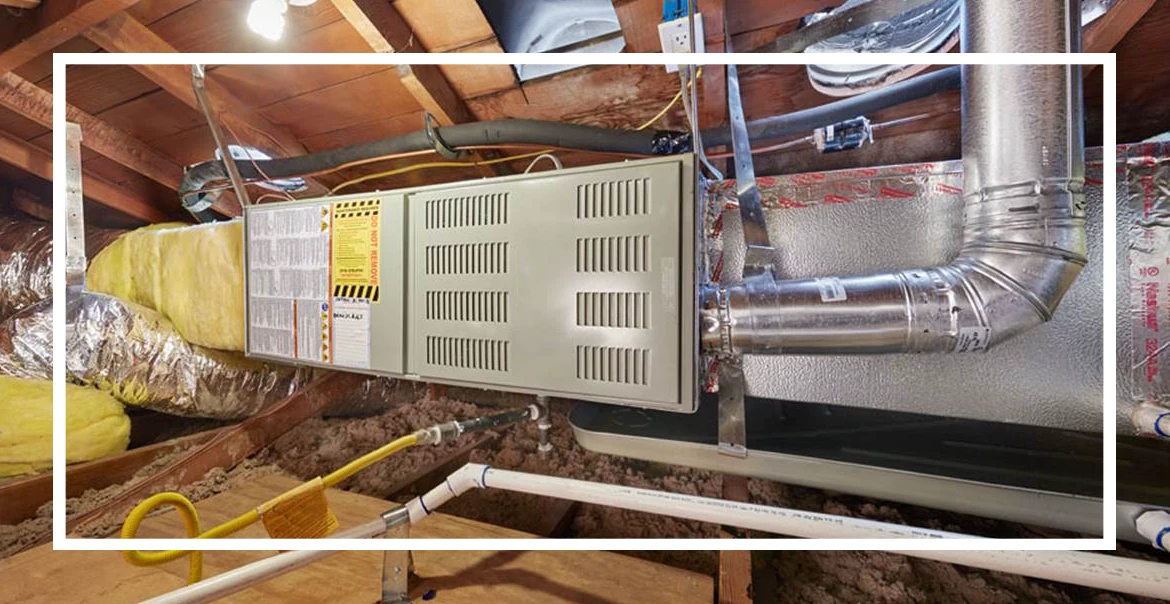
A furnace is a furnace, whether it sits in a basement, a utility closet, a garage, or overhead in your attic. The key difference between a furnace installed in an attic and a more traditional placement comes down to space and orientation. In a basement or utility room, a furnace typically stands upright with room to breathe. In an attic, tighter clearances often call for a horizontal configuration, where the unit lies on its side to fit within the available space. This shift in orientation also changes how technicians access the unit and how ductwork is routed throughout the home.
Furnaces installed in attics, available in both gas and electric models, give homeowners flexibility based on their home's existing energy setup and efficiency goals. A qualified technician will evaluate your attic's specific layout and clearance to determine the right approach for a clean, safe, and structurally sound installation.
Benefits of Installing a Furnace in the Attic
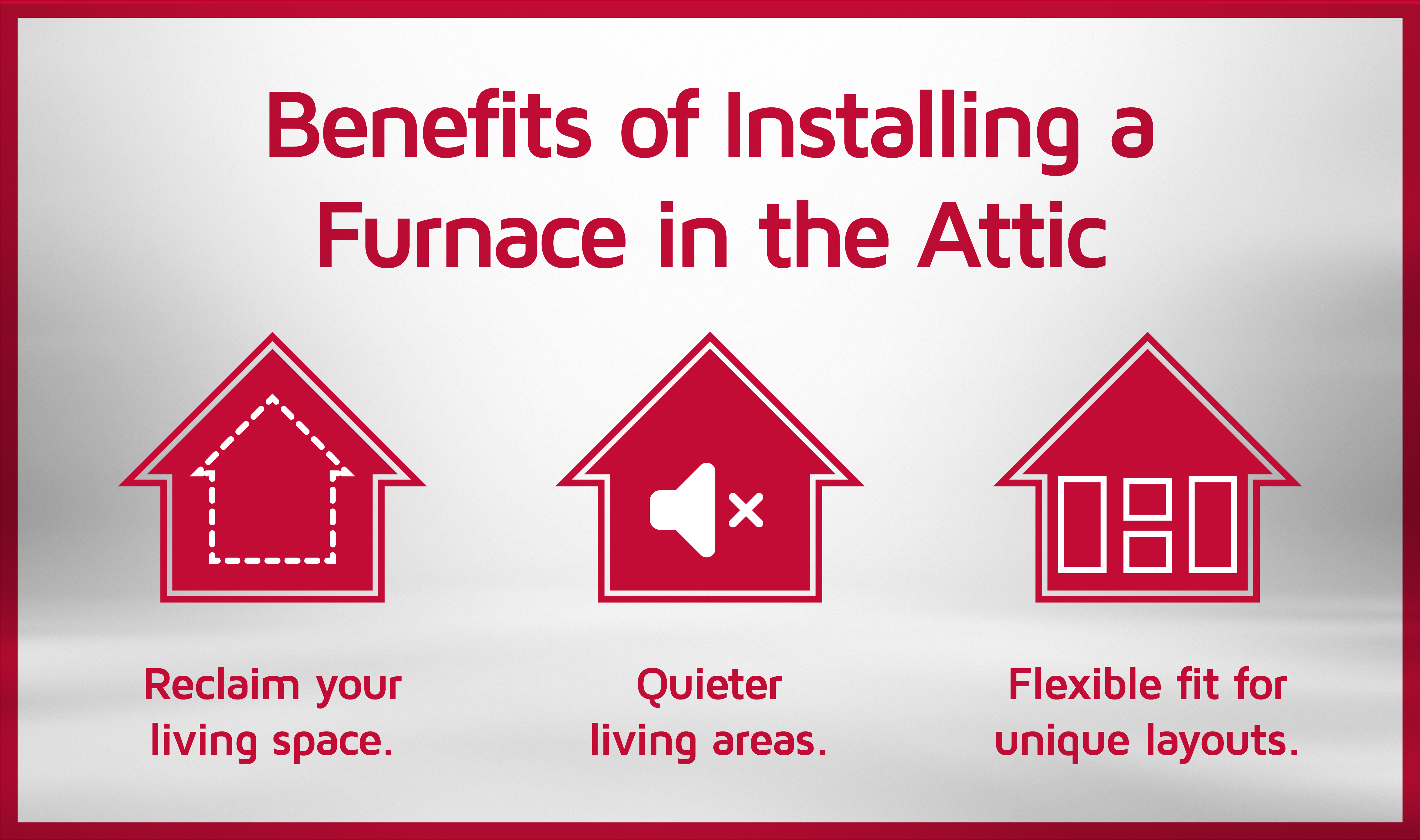
- Reclaim your living space. The most immediate win is space. Moving your furnace to the attic frees up square footage in your basement, utility room, or main-level closets, space that can go back to storage, a home office, or simply more breathing room for your family.
- Quieter living areas. With the furnace tucked away overhead, the noise of heating cycles stays out of your main living spaces. That means fewer interruptions and a calmer home environment.
- Flexible fit for unique layouts. Homes with slab foundations, no basement, or unconventional floor plans often have limited options for furnace placement. The attic becomes the practical solution, fitting into the home's existing structure without demanding extensive renovation.
Considerations for Attic Furnace Installation
Before committing to an attic installation, a few factors deserve a close look.
- Space and accessibility: The attic needs enough room for the unit to operate safely and for a technician to access it comfortably during routine maintenance and repairs. If the attic is cramped or difficult to reach, that can create real challenges down the road. Installing a proper stair or ladder access point is a smart investment from day one.
- Ventilation and safety: Proper ventilation is non-negotiable. Carbon monoxide risks and other safety concerns make it essential to follow all applicable building codes and to have a licensed professional handle the installation. Rigorous safety checks before and after installation are part of the process, not optional extras.
- Insulation and ductwork: Attics are exposed to wider temperature swings than interior spaces. Without solid insulation and well-constructed HVAC ductwork, the system has to work harder to compensate, which cuts into efficiency and comfort. Getting the insulation right protects both the equipment and your energy bills.
- When the attic is not the right fit: Not every attic is a viable installation site. Limited clearance, poor structural integrity, or extreme temperature exposure without adequate insulation can all make the attic a poor choice. If the structure requires significant reinforcement or if access is genuinely impractical, a different placement may serve the home better.
- Filter access and maintenance planning: With a furnace installed in the attic, something as routine as a filter change requires a trip up to access the unit directly. To cut down on how often that happens, consider installing a filter cabinet, which holds higher-capacity filters that need replacing less frequently. Another option is a return air filter grille, though keep in mind these typically only accommodate 1-inch filters, which need to be changed more often than thicker media filters.
The good news is that a qualified professional can assess all of these factors before a single piece of equipment is moved. Professional installation is not just about installing the unit. It is about evaluating the space, addressing any structural or ventilation needs, and ensuring the system is set up to perform reliably for years to come.
What to Expect During Installation?
- Pre-installation inspection. Before anything else, a technician will evaluate the attic to identify any structural modifications, insulation upgrades, or access improvements needed to accommodate the furnace safely.
- Installation timeline. Attic furnace installations typically span several days, accounting for equipment placement, ductwork integration, and all required safety checks. Rushing this process is not in anyone's interest.
- Final testing. Once the unit is in place, post-installation testing confirms that the system is operating correctly, that all connections are secure, and that the environment is leak-free and code-compliant.
Maintenance and Keeping Things Running Right
- Service schedule: Annual servicing is the baseline for any furnace. For attic installations, bi-annual servicing is worth considering, given the unit's greater exposure to temperature extremes throughout the year.
- Filter changes: Regular furnace filter replacements keep airflow clean and protect the system from the dust and debris that tend to accumulate in attic environments. Seasonal checks keep efficiency where it should be.
- Safe attic access and footing: A proper stair or ladder setup is not just a convenience. It is a safety measure that ensures professional access is reliable and prevents maintenance from becoming a logistical headache. Many attic installations also require a catwalk, a raised platform built across the attic joists, to give technicians safe and stable footing when servicing the unit. This is not always included in a basic installation estimate, so it is a cost worth factoring in from the start.
If you are relocating a furnace from another area of the home to the attic, the scope of work grows considerably. Moving the system overhead means rerouting refrigerant lines, reconfiguring ductwork, and relocating electrical service. A qualified Lennox dealer can walk you through exactly what your specific situation would involve before any decisions are made.
Why Choose Lennox for Your Attic Furnace?
Lennox heating equipment is designed to deliver outstanding warmth, efficiency, and energy savings. Engineered for quiet operation, dependable performance, and exact comfort control, Lennox's advanced features lead the industry in intelligent heating equipment design. Whether your home calls for an attic installation or a more traditional setup, Lennox has the equipment and the expertise to make it work. Ready to find the right furnace for your home? Explore Lennox furnaces and connect with a dealer near you
We’re here to help make home comfort solutions a little clearer and a lot less stressful.
No Worries. It’s a Lennox.™