
To AC? Or Not to AC?
Here is a question that quietly costs homeowners real money every summer: is it smarter to turn the AC off when you walk out the door, or keep it running at a higher temperature? The mechanics behind startup, shutdown, humidity load, and recovery runtime tell a complicated story, and getting it right means your system runs smarter, lasts longer, and your utility bill reflects it.
How Air Conditioners Keep Your Home Cool?
Before drawing any conclusions about on versus off, let’s discuss how your air conditioner works to cool down your home.
The Basic Cooling Cycle
Your air conditioner does not manufacture cold air, but instead pulls heat out of your living space. Refrigerant circulates between an indoor evaporator coil, where it absorbs heat from your air, and an outdoor condenser coil, where it releases that heat to the outside. Your thermostat acts as the referee, telling the system when to run and when to stand down.
When the AC Starts Up Vs. When it Stays On
Your AC’s compressor is what drives this cooling cycle. Every time it fires up after being off, it draws a brief surge of electricity to build pressure in the refrigerant circuit. This is the highest electrical load the system will see in any given cycle, but once the system is running and catching up to your set temperature, electrical consumption levels out.
Why Thermostat Settings Matter?
Many modern thermostats include built-in compressor short-cycle protection, typically a five-minute delay, that prevents the system from restarting too quickly and experiencing that startup surge back to back in a short window. That distinction matters a lot when you are weighing your options, because repeated rapid cycling puts components under stress without giving the system a chance to recover between runs.
Turning AC On and Off: What Happens?
Cutting the system off entirely when you leave feels logical. An empty house doesn’t need cooling, right? That reasoning holds up only part of the time.
Pros
Eliminates energy consumption entirely during unoccupied hours
Reduces total system runtime over a season
Can produce measurable savings for full-day or multi-day absences in well-insulated homes
Cons
The home can heat up significantly, forcing a prolonged, high-output recovery run when you return
Humidity control is lost the moment the system stops, creating conditions where moisture builds up and mold risk increases
Repeated hard starts in extreme heat accelerate wear on the compressor and electrical components over time
Leaving AC On All the Time: What Happens?
Keeping the system running at a consistent, slightly elevated set temperature is the strategy most HVAC professionals lean toward for daily absences. It does not mean locking in a cold temperature and walking out the door. The approach is a deliberate setback that keeps the home at a manageable temperature without overcooling an empty space.
Pros
Maintains stable indoor humidity, protecting occupants, furniture, hardwood floors, and electronics from moisture swings
Keeps the compressor from facing a hard restart into a super-heated environment, distributing load more evenly
Home is comfortable immediately upon return, with faster to no recovery wait
Cons
Continuous operation means continuous energy consumption
Costs climb faster than necessary if the set point is not managed responsibly
Extended run cycles contribute to component wear over the long term if the set point is kept too low
The key distinction is that "leaving the AC on" doesn’t mean locking it at a cold setting all day. It means maintaining a responsible set point that keeps the home manageable without wasting energy.
Turning AC On and Off vs Leaving It On: Which Uses More Energy?
The answer depends almost entirely on how long you are away and how hot the home gets in that window.
The Restart Energy Spike: Fact vs Fiction
A widely repeated belief holds that the surge of power at startup is so large that it wipes out whatever savings you gained from shutting the system off, but this is not true. While the higher electrical surge when the compressor kicks on is real, it only lasts a few seconds. The real energy question is about recovery runtime and humidity load, not a brief spike at ignition.
Short Absence vs Full-Day Absence
For a two-hour absence, the energy difference between turning the AC off and raising the thermostat is minimal. For an eight-hour-or-longer absence, the home may climb to or above 85 degrees Fahrenheit, and the system has to run at full capacity for a sustained period just to bring temperatures back to a moderate temperature. In many cases, that prolonged recovery run consumes more energy than simply maintaining a higher set point throughout the day would have. In fact, a Lennox homeowner energy efficiency study found that more than half of homeowners who powered their systems off completely during vacations ended up consuming more energy upon return than those who maintained a higher set point the whole time.
Climate and Insulation Are Variables
In humid climates, leaving the system on at a higher set point often makes more sense because moisture management is just as critical as temperature control. In drier regions, the full-shutdown approach is more forgiving, but it is still only genuinely advantageous for long, full-day absences in mild temperatures. Your home's insulation quality is also a significant factor.
What Works Best for Different Situations?
There is no single right answer that applies to every home and every climate, but overwhelmingly, the recommendation is to keep the AC on at a managed set point while out rather than shut it off completely.
When You’re Home All Day
Hold a consistent 74 to 76 degrees Fahrenheit. Chasing the thermostat up and down throughout the day is less efficient than steady moderate operation, and the system spends more time in recovery mode than it needs to.
When You’re Away for a Few Hours
Raise your thermostat 7 to 10 degrees rather than powering the system down. Humidity stays controlled, the thermal load stays manageable, and the system recovers quickly when you get back.
When You’re Away for a Full Day or Longer
To maximize savings, set the thermostat to around 85 degrees Fahrenheit. This gives the system a significant setback without letting the home deteriorate thermally or humidity-wise to the point where recovery becomes an extended, high-output event.
During Extreme Heat
Do not shut the system off. Raise the set point and let it run. A system straining to pull an overheated home back to a comfortable temperature during a heat wave is burning energy at its least efficient operating point.
When Pets, Children, or Elderly Family Members Are Home
Leave the AC running at a safe, consistent temperature. These occupants are significantly more sensitive to heat and humidity, and safe indoor conditions are not optional under those circumstances.
During Mild Weather
This is the one scenario where turning the AC off could be the right call. Open windows for cross-ventilation and use ceiling fans to keep air moving. Keep in mind that ceiling fans lower the perceived temperature for people in the room, not the room itself, so turn them off when no one is present.
Thermostat Tips for Better Efficiency
Recommended Temperature Settings
ENERGY STAR recommends 78 degrees Fahrenheit when you are home and 85 degrees Fahrenheit when you are away. Each degree above 78 produces a meaningful reduction in cooling energy use, and those incremental gains add up considerably across a full cooling season.
Programmable Thermostats
A programmable thermostat takes the guesswork out of this entirely. You build a schedule once, and the system adjusts automatically based on when you are typically home, asleep, or out. No manual decisions at the door, no second-guessing on the way to work.
Smart Thermostats
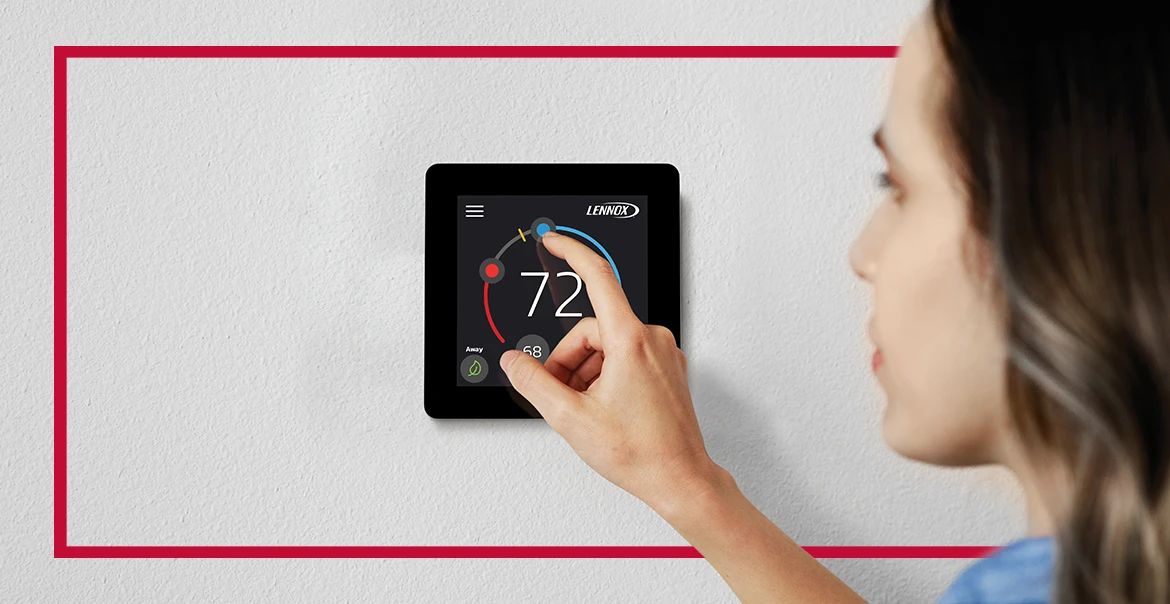
Where a programmable thermostat follows the schedule you set, a smart thermostat builds one for you. It picks up on your patterns, responds to whether anyone is home, and lets you override settings from anywhere. These capabilities can drive significant energy savings.
Impact on AC Lifespan
How Cycling Affects System Components
Every startup places the compressor at its peak mechanical and electrical stress point. Capacitors, electrical contacts, and refrigerant circuit components all experience their greatest load in those first moments of a cycle. Over a full cooling season of repeated full shutdowns and restarts, that accumulated stress accelerates wear in ways that consistent moderate operation does not.
Compressor Wear and Tear
The compressor is the most critical and expensive component in your system. Hard starts, which occur when a warm compressor is asked to build pressure quickly from a full stop in extreme heat, place it under a considerably higher load than the gradual fluctuations of steady setback operation. Fewer of those high-stress restarts across a season translates directly to less wear on the component that costs the most to replace.
Continuous Operation vs Frequent Starts and Stops
Steady, moderate operation is generally gentler on mechanical components than full cycling throughout the day. That does not mean leaving the AC running at a cold setting is always the right call. It means maintaining a consistent, reasonable set point keeps mechanical wear predictable and manageable, and gives your system the best possible chance at a long service life.
Tips to Maximize AC Efficiency
Change filters on schedule. A restricted filter forces the blower to work harder for the same airflow, raising energy consumption regardless of your thermostat strategy.
Seal insulation leaks. Air leaks around windows, doors, and attic access points allow outdoor heat to infiltrate and conditioned air to escape, undermining whatever efficiency your set point strategy is trying to achieve.
Use ceiling fans strategically. Run them in occupied rooms to make the air feel cooler without lowering the thermostat. Cut them off when the room is empty.
Audit thermostat placement. A thermostat located near a heat source, a sunny window, or an exterior wall reads inaccurate temperatures and causes the system to cycle at the wrong times, wasting energy in both directions.
Pairing a smart thermostat with sealed insulation, clean filters, and correctly placed controls gives you the strongest possible foundation for energy savings no matter the season.
Keep Your Home Feeling Great
Powering the AC off entirely is not inherently wrong, but it is also not a universal money-saver. For short absences, a small thermostat setback wins. For full-day gaps, a higher set point typically beats a full shutdown in most situations. During heat waves or when any vulnerable household member is home, the system should stay on. The cleanest solution is a smart or programmable thermostat that handles those decisions automatically, removing human guesswork from one of the most consistent drains on summer energy costs.
Find a Lennox dealer near you to schedule a maintenance visit, explore thermostat options, or get a professional assessment of your home's cooling setup.
We’re here to help make home comfort solutions a little clearer and a lot less stressful.
No Worries. It’s a Lennox.