

High indoor humidity can make a home feel muggy and uncomfortable and make it difficult to cool. It can also contribute to musty odors, mold growth, and poor indoor air quality. Learning how to control humidity is one of the most effective ways to maintain a healthier, more comfortable living environment. With the right strategies and tools, homeowners can reduce excess moisture and protect both their property and their well-being.
Why Dehumidification Matters
Moisture control is a core part of maintaining indoor air quality. When humidity climbs above recommended levels, it creates conditions where mold, mildew, and dust mites thrive. According to the U.S. Environmental Protection Agency (EPA), keeping indoor humidity between 30% and 50% helps slow the growth of many allergens and reduces the likelihood of moisture damage.
High humidity can also impact the structure of a home. Wood can swell or rot, paint may peel, and metal components can corrode. Over time, these issues require costly repairs. By managing moisture levels, homeowners protect building materials and maintain a comfortable indoor climate.
Signs Your Home Has Too Much Humidity
Many homeowners first notice humidity problems through changes in comfort or appearance around the house. Common indicators include:
- A Damp or Muggy Feeling Indoors: If the air feels sticky or heavy even when the temperature is mild, humidity is likely too high.
- Condensation on Windows or Cold Surfaces: Moisture forming on glass or surfaces often signals that the air contains more water vapor than the room can handle.
- Musty Odors: Persistent musty smells often point to mold or mildew, especially in areas with limited ventilation.
- Visible Mold Growth: Black, white, or green spots on walls, ceilings, fabrics, or window frames indicate excess moisture and require immediate attention.
- Frequent Allergy or Respiratory Symptoms: Dust mites and mold spores increase in humid conditions and can worsen indoor air quality.
Effective Ways to Dehumidify Your Home
There are several methods to reduce indoor humidity, ranging from simple ventilation practices to whole-home moisture control strategies.
Use a Dehumidifier
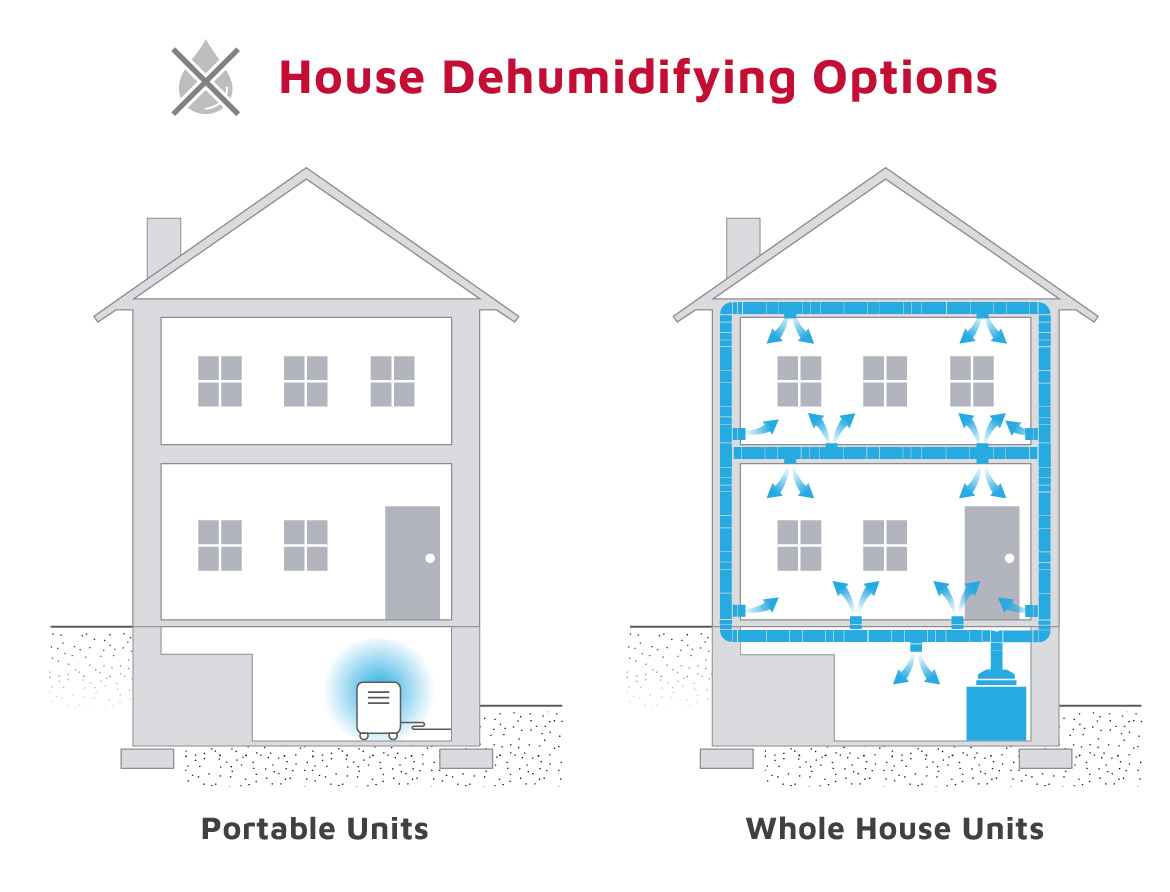
A reliable dehumidifier is one of the fastest and most effective ways to remove excess moisture. Portable models can help manage humidity in basements, laundry rooms, or other damp areas. Whole-home dehumidifiers integrate with an HVAC system to maintain consistent humidity throughout the entire house.
To avoid long-term issues like mold growth or condensation damage, we recommend adding a dehumidifier to your home when you see a persistent humidity level above 60%, smell musty odors, or can see visible condensation.
Improve Ventilation
Proper ventilation helps moisture escape before it accumulates.
- Use bathroom exhaust fans during and after showers.
- Run the kitchen exhaust fan while cooking.
- Vent clothes dryers to the outdoors.
- Open windows when weather conditions allow.
These habits help release steam and moisture that would otherwise settle indoors.
Increase Air Circulation
Moving air helps moisture evaporate more efficiently.
- Use ceiling fans to keep air circulating.
- Move furniture away from walls to improve airflow.
- Keep interior doors open so rooms do not trap humidity.
Good circulation also allows HVAC systems and dehumidifiers to operate more effectively.
Identify and Fix Moisture Sources
Humidity problems often stem from specific areas:
- Leaky pipes
- Damp basements or crawl spaces
- Poorly sealed windows
- Roof or foundation cracks
Fixing these issues stops moisture at the source and prevents recurring humidity problems.
Reduce Everyday Moisture Production
Small daily adjustments can significantly lower indoor humidity:
- Take shorter or cooler showers.
- Cover pots when cooking.
- Dry clothes outside when possible.
- Use moisture-absorbing materials in closets or storage areas.
Homes that sit at unusually high humidity levels often have a combination of moisture sources. Managing these activities helps reduce that constant buildup.
Use Your HVAC System Effectively
Air conditioning naturally removes moisture as it cools the air. Keep your system well maintained so it can dehumidify properly:
- Replace air filters
- Ensure ducts are sealed.
- Clean evaporator coils as recommended.
- Schedule regular maintenance to ensure it operates efficiently.
A well-maintained HVAC system provides better airflow and humidity control.
Seasonal shifts also play a role in how your system maintains humidity levels. Warm summer temperatures generally bring higher humidity and may call for increased dehumidification, while drier winter weather may require using a humidifier to keep your home from becoming too dry. Consistently monitoring your homes humidity and adjusting your system settings season to season will keep your home comfortable and help prevent long-term moisture damage.
When to Call a Professional
Persistent humidity issues, mold growth, or moisture coming from structural problems should be evaluated by a professional. An HVAC technician or indoor air quality specialist can assess your home, identify hidden moisture sources, and recommend whole-home humidity solutions tailored to your environment and climate.
Reducing indoor humidity is one of the most powerful ways to improve comfort, protect your home, and support healthier indoor air. With the right tools and routine habits, homeowners can maintain balanced humidity levels and create a more resilient living space year-round.