
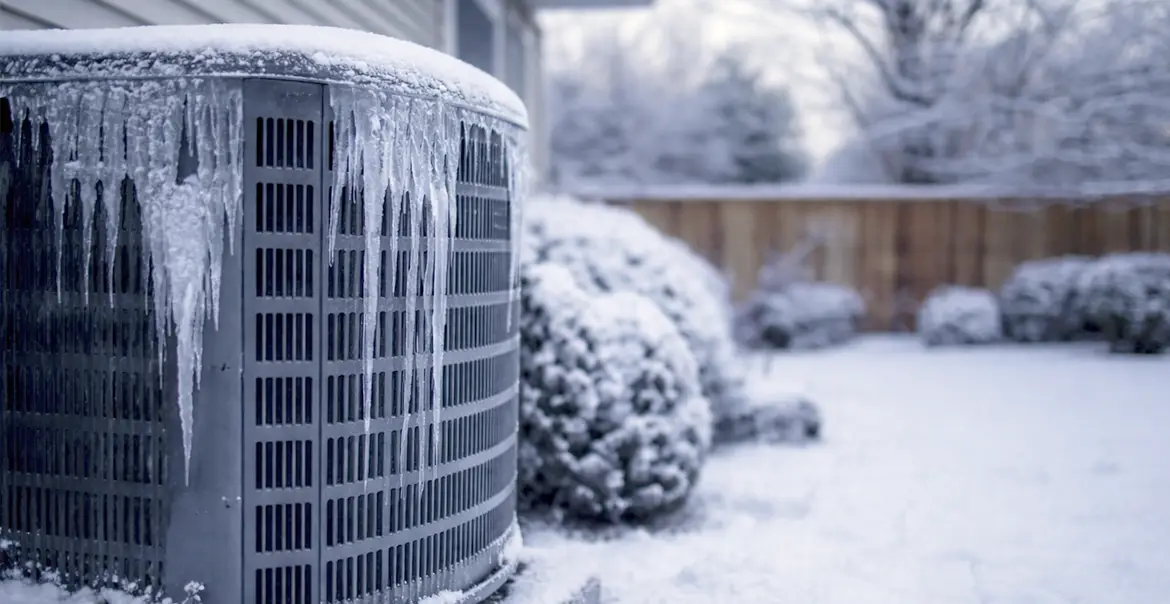
Walking outside on a cold morning to find your heat pump covered in ice can be alarming. When your heat pump freezes and can no longer heat your home effectively, most systems will rely on a backup heating element until the unit thaws, which is less efficient than normal heat pump operation. The good news is that some frost and ice buildup is normal during winter operation, and many freeze-ups can be addressed with simple, safe steps.
Understanding what to do when your heat pump is frozen helps you respond quickly and avoid damage to your system. This guide gives you clear, step-by-step instructions for safely handling a frozen heat pump, recognizing when professional help is needed, and preventing future freeze-ups through simple maintenance.
Why Your Heat Pump Is Freezing?
While light frost is normal, excessive ice buildup usually points to one of these common causes:
Defrost cycle malfunction: Your heat pump has a built-in defrost cycle that should kick in automatically to melt frost from the coils. If the defrost control board, timer, or sensor fails, ice continues to build up without melting. This is one of the most common reasons for severe freeze-ups.
Low refrigerant levels: Refrigerant is the fluid that allows your heat pump to transfer heat. When refrigerant levels drop due to leaks, the coils get too cold and ice forms quickly. Low refrigerant also reduces heating performance and can damage your compressor if not fixed.
Restricted airflow: Your heat pump needs steady airflow to work properly. Blocked or restricted airflow causes the coils to get too cold, leading to ice buildup. Common airflow problems include:
- Dirty or clogged air filters inside your home
- Debris, leaves, or snow blocking the outdoor unit
- Collapsed or blocked ductwork
- Closed or blocked supply vents in your home
Drainage issues: During normal operation and defrost cycles, your heat pump produces condensation that needs to drain away. If the drain pan or drain line is clogged, water pools around the unit and refreezes, creating ice buildup.
Extreme weather conditions: While heat pumps are designed for cold weather, prolonged periods of freezing rain, sleet, or heavy wet snow can overwhelm the defrost system. High humidity combined with very cold temperatures also increases frost formation.
Faulty components: Worn or broken parts can cause freezing, including:
- Malfunctioning reversing valve
- Failed outdoor fan motor
- Broken defrost thermostat or sensor
- Faulty control board
Knowing these causes helps you understand when a freeze-up is a simple fix (like changing a filter) versus when you need professional diagnosis and repair (like refrigerant leaks or control failures).
Signs Your Heat Pump is Frozen
Before you take action, confirm that your heat pump is actually frozen, not just in its normal defrost cycle. Here's what to look for:
Normal frost vs. problem ice: A light layer of frost on the outdoor coils is completely normal, especially in cold, humid weather. Your heat pump should automatically defrost itself every 30 to 90 minutes. However, heavy ice buildup that covers the entire unit or blocks airflow signals a problem.
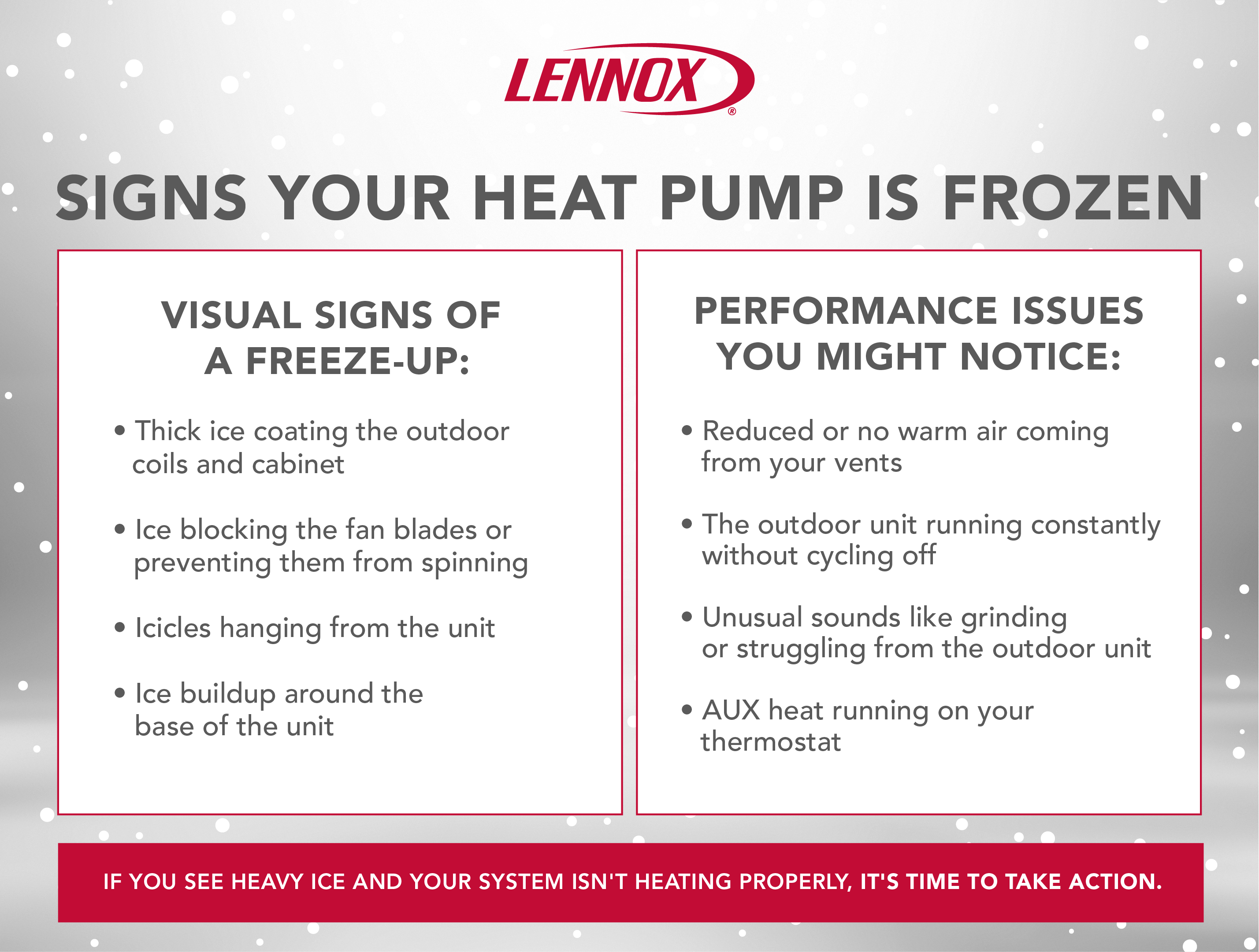
Visual signs of a freeze-up:
- Thick ice coating the outdoor coils and cabinet
- Ice blocking the fan blades or preventing them from spinning
- Icicles hanging from the unit
- Ice buildup around the base of the unit
Performance issues you might notice:
- Reduced or no warm air coming from your vents
- The outdoor unit running constantly without cycling off
- Unusual sounds like grinding or struggling from the outdoor unit
- AUX heat running on your thermostat
If you see heavy ice and your system isn't heating properly, it's time to take action.
Immediate Steps to Take When Your Heat Pump is Frozen
Before you attempt any troubleshooting, follow these steps to stay warm and safe:
- Turn off your heat pump at the thermostat. Switch it to "off" mode to stop the system from running and prevent potential damage.
- Keep the area around the unit clear. Make sure there's no snow, leaves, or debris blocking airflow around the outdoor unit. Clear at least two feet of space on all sides.
- Check your air filter inside. A clogged filter restricts airflow and can contribute to freezing. Replace it if it's dirty.
Remember to never pour hot water on the unit, as the sudden temperature change can crack components and cause serious damage. Also, don't try to chip or break the ice. Using tools to remove ice can damage the delicate coils, fins, and fan blades. Even a small dent can reduce efficiency and lead to expensive repairs.
Taking these precautions protects both you and your equipment while you assess the situation.
Prevention and Maintenance Tips
Preventing freeze-ups is easier and less expensive than dealing with them. Follow this seasonal heat pump inspection checklist:
Regular maintenance actions:
- Schedule professional tune-ups twice a year (spring and fall) to catch small issues before they cause freeze-ups
- Replace your air filter every 1-3 months to maintain proper airflow
- Keep the outdoor unit clear of snow, ice, leaves, and debris year-round
- Trim vegetation at least two feet away from the unit on all sides
- Check that the unit sits level on its pad; settling can cause drainage problems
- Inspect the defrost sensor and controls during professional maintenance visits
Winter-specific tips:
- Clear snow away from the unit after storms, but don't pile it against the sides
- Gently remove light snow from the top of the unit with a broom (never use sharp tools)
- Ensure gutters and downspouts don't drain onto or near the heat pump
- Consider a protective cover, such as a snow guard, for the top only (never cover the sides, which blocks airflow)
- Monitor your system during extreme cold snaps and heavy, wet snow
- Adequate home insulation minimizes heat loss, preventing the unit from overworking, which can lead to freezing
Catching these warning signs early and addressing them with professional maintenance keeps your heat pump running all winter long.
When to Call a Professional?
Some situations require professional help. Contact a Lennox dealer right away if:
- The system is short cycling, or turning on and off frequently
- The system is experiencing longer run times than usual
- You notice higher energy bills without explanation
- You feel weak airflow from vents
- The unit refreezes quickly after thawing, which suggests refrigerant leaks, airflow problems, or defrost control issues
- You see refrigerant lines covered in ice inside or outside your home
- The outdoor fan isn't spinning even after the ice melts
- You hear grinding, squealing, or banging noises from the unit
- Ice forms only on one side of the unit or in unusual patterns
- Your system is low on refrigerant (you'll notice reduced heating and possible hissing sounds)
- The defrost cycle never kicks in after running for several hours
A trained HVAC technician can diagnose issues like faulty defrost controls, refrigerant leaks, reversing valve problems, or sensor malfunctions that cause repeated freezing. Trying to fix these problems yourself can void your warranty and lead to more expensive repairs.
Frequently Asked Questions
Q: Will thawing my heat pump void the warranty?
A: No, safely thawing your heat pump using the methods described here won't void your warranty. However, using improper methods like chipping ice, pouring hot water, or using high heat sources can cause damage that may not be covered. Always follow manufacturer guidelines and contact a professional for complex issues.
Q: How long should it take for my heat pump to thaw?
A: Natural thawing typically takes 2-4 hours when temperatures are above freezing, but can take longer in colder weather. Using the emergency heat setting allows the outdoor unit to thaw while keeping your home warm. If ice doesn't melt within 6-8 hours or refreezes quickly, call a technician.
Q: Is it normal for my heat pump to have frost on it?
A: Yes, a light layer of frost on the outdoor coils is completely normal during cold, humid weather. Your heat pump should automatically run a defrost cycle every 30-90 minutes to melt this frost. Heavy ice buildup that doesn't clear during defrost cycles indicates a problem that needs attention.
Keep Your Home Comfortable All Winter
A frozen heat pump doesn't have to mean a cold, uncomfortable home. By recognizing the signs early, taking safe action, and knowing when to call for help, you can protect your system and restore your comfort quickly. Regular maintenance and simple prevention steps keep freeze-ups from happening in the first place, saving you money and stress.
If your heat pump keeps freezing or you're experiencing heating problems, don't wait. A qualified technician can diagnose the root cause and get your system running reliably again. Find a certified Lennox dealer near you to schedule service from professionals who know your system inside and out.