
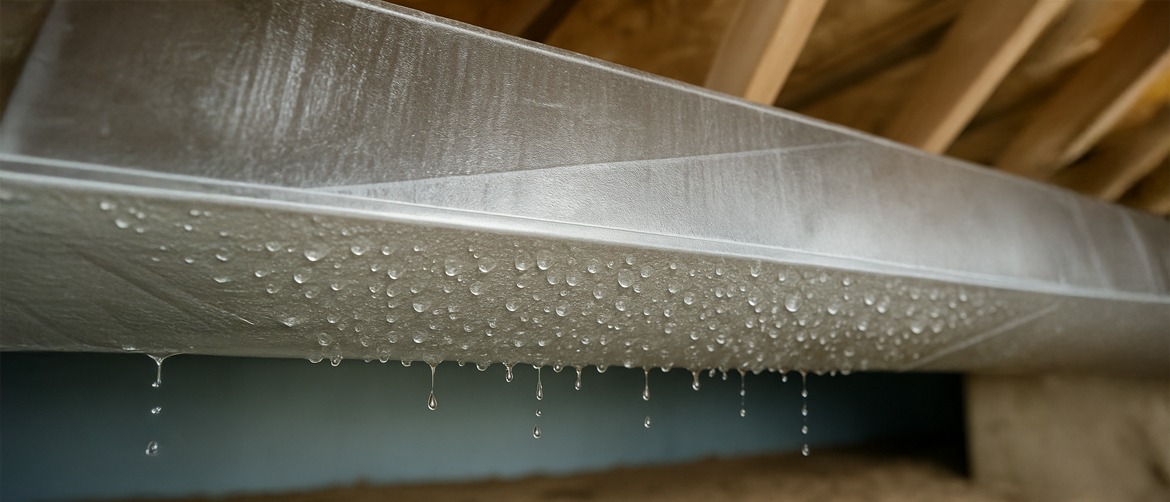
If you’ve noticed water droplets forming or dripping from your air ducts, you’re not alone. Condensation on ductwork, often called “duct sweating”, is a common issue that can impact energy efficiency, indoor air quality, and even the integrity of your home’s structure. While a small amount of moisture may seem harmless, persistent condensation is a sign that something in your system or environment needs attention.
This guide explains what causes condensation on air ducts, why it matters, and the steps homeowners can take to prevent or resolve it.
What Causes Condensation on Air Ducts?
Condensation forms when warm, humid air comes into contact with a cooler surface. Your air ducts, especially those carrying chilled air during the warmer seasons, often provide the perfect environment for this to happen.

Here are the most common causes:
- High Indoor Humidity Levels
When humidity levels in your home exceed 60%, the air contains enough moisture to condense on cool duct surfaces. This is more likely to happen in basements, crawl spaces, or other poorly ventilated areas where ductwork is routed. - Temperature Differences
Large gaps between the indoor air temperature and the temperature inside your ducts can encourage condensation. For example, during the summer, your air conditioning ducts may carry cool, dehumidified air while the surrounding air in your attic or crawl space remains hot and humid. - Poor Insulation
Ducts that lack proper insulation have trouble maintaining consistent temperatures. Without that protective barrier of insulation, the warm air meeting the cold metal can cause condensation. - Air Leaks in Ductwork
Even small gaps or holes in your ducts can allow warm, moist air to infiltrate. This invading warm air cools rapidly and can create water droplets on or near the affected area. - Dirty Air Filters or Restricted Airflow
Reduced airflow causes your ducts to become colder than they should be. The colder the ducts, the more likely condensation is to occur.
Signs of Condensation Problems
It’s easy to overlook the early signs of duct condensation but catching them early can save you from bigger issues later.
- Visible moisture or droplets forming on ducts or vents
- Musty or damp odors in rooms or near vents
- Mold or mildew spots around registers or insulation
- Water stains on ceilings or walls below duct runs
- Rising energy bills as your HVAC system struggles to operate efficiently
If you see water actually dripping from ducts or pooling on the floor, the issue is advanced and should be addressed right away.
Why Condensation on Air Ducts Is a Problem?
While a little condensation may seem like a minor nuisance, it can lead to more serious consequences if ignored:
- Structural and Insulation Damage
Persistent or excessive exposure to moisture can lead to wood rot and drywall damage. Insulation can also become saturated, reducing its effectiveness and breaking it down over time. - Reduced HVAC Efficiency
Wet insulation and corroded ducts force your HVAC system to work harder to maintain consistent airflow and temperature, leading to higher energy use and more frequent repairs. - Compromised Indoor Air Quality
Damp, moldy ducts can circulate allergens and unpleasant odors throughout your home, impacting comfort and health—especially for those with allergies or asthma. - Health Risks and Financial Impacts
Moisture on or around ducts creates a breeding ground for mold, which can spread through the HVAC system and into the air you breathe. Air conditioning systems require special cleaning to remove airborne spores. The cost to remove mold from an HVAC system can get expensive, with remediation costs ranging from $500 to $6,000 or more, depending on the type of system you have.
How to Prevent Condensation on Air Ducts?
Fortunately, most condensation issues are preventable with a few key maintenance and system improvements.
- Improve Duct Insulation
While flexible, tube-style ductwork has build-in insulation, adding insulation to rigid metal ductwork can help prevent condensation. Special attention should be paid to areas where ducts run through unconditioned spaces like attics, basements, or crawl spaces. Proper insulation maintains consistent surface temperatures and keeps condensation from forming. - Control Indoor Humidity
The S. Environmental Protections Agency (EPA) advises keeping indoor humidity between 30% and 50%. Running a whole-home dehumidifier or a portable unit in damp areas can help. Good ventilation in kitchens, bathrooms, and basements also keeps humidity in check. - Seal Air Leaks
Have your ductwork inspected and sealed by a professional to prevent warm air infiltration. This simple step not only stops condensation but also improves overall system efficiency. - Maintain Proper Airflow
Check and replace air filters regularly—typically every one to three months, depending on the filter type and manufacturer recommendations. Ensure supply and return vents remain clean and clear to allow your system to breathe and maintain optimal air circulation. During your annual tune-up or inspection, you should also make sure your technician cleans the ducts to eliminate any obstructions or dust buildup that might be affecting air flow. - Schedule Professional HVAC Maintenance
A trained technician can check refrigerant levels, airflow balance, and duct insulation during seasonal tune-ups. Preventive maintenance helps ensure your system operates efficiently and reduces the conditions that cause condensation.
When to Call a Professional?
If you notice persistent moisture, visible mold, or a musty odor that doesn’t go away, it’s best to call a licensed HVAC professional. They can inspect for insulation gaps, air leaks, or system imbalances and recommend the right corrective measures. In cases where mold has already developed, a certified remediation specialist may be needed to safely clean the ducts and restore air quality.
Condensation on air ducts may start as a small inconvenience, but over time it can lead to system inefficiency, structural damage, and even health concerns. By understanding what causes it and taking steps to prevent it, you can protect both your home and your comfort.