
What Does the AC Compressor Do?
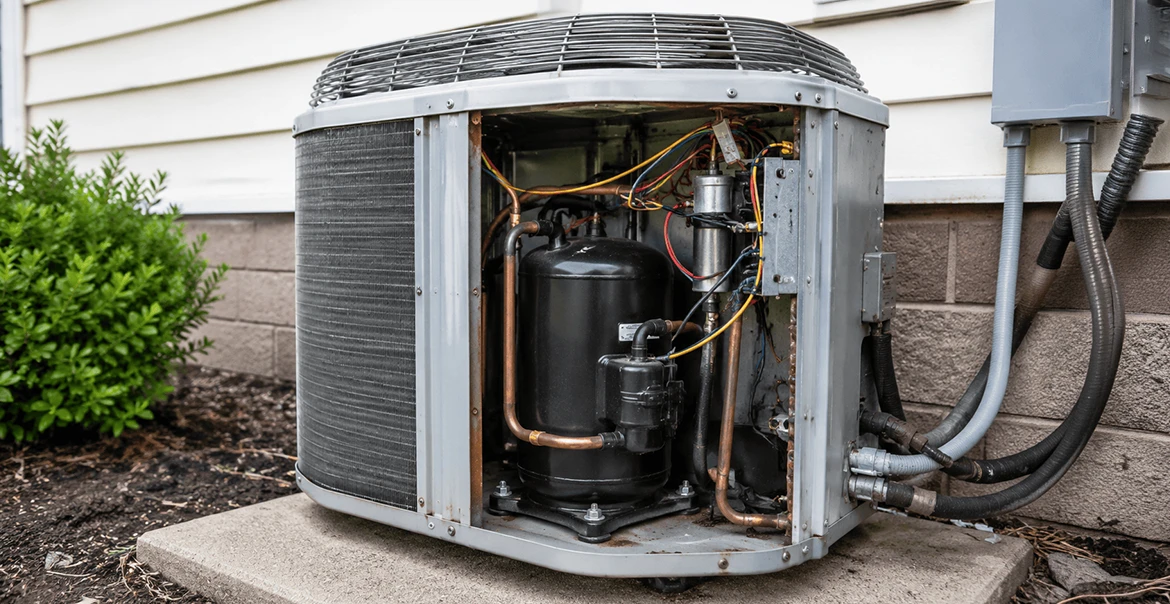
Your air conditioner (AC) compressor lives in your HVAC system’s outdoor unit, working alongside your indoor air handler or furnace to move refrigerant, transfer heat, and keep cool air circulating throughout your home. It's the heart of your entire cooling system.
The compressor works hand in hand with two other key components. The evaporator coil, located inside your home, absorbs heat from your indoor air. The condenser coil, located in the outdoor unit, releases that heat outside. The compressor keeps the refrigerant moving between these two coils in a continuous loop. When it breaks down, the whole system feels it.
What Are the Signs Your AC Compressor Is Not Turning On?
Catching a compressor issue early can save you from a much bigger headache down the road. Here's what to look and listen for:
The outdoor fan is running, but no cool air is coming out. Power is reaching the unit, but the compressor itself isn't engaging.
Your AC is blowing warm or room-temperature air. Without the compressor circulating refrigerant, there's no heat exchange happening.
The circuit breaker keeps tripping. Repeated trips point to an electrical fault tied directly to the compressor's power draw.
You hear clicking or humming from the outdoor unit, but it never fully starts. This is a classic sign of a struggling capacitor or motor.
Complete silence from the outdoor unit when the AC is switched on. No sound, no vibration. The compressor may have failed mechanically or electrically.
Common Reasons an AC Compressor Won't Turn On
Thermostat Issues
Before assuming the worst, check the basics. A thermostat that's set too high, has dead batteries, or is misconfigured simply won't send the signal your compressor needs to start. Check your settings first.
Power Supply Problems
A tripped breaker or a loose power connection to the outdoor unit can cut the compressor off completely. Check your electrical panel and confirm the outdoor disconnect switch near the unit is in the ON position.
Faulty Capacitor
The capacitor gives the compressor's motor its starting jolt of electricity. When it fails, you'll often hear a clicking or humming sound as the system tries and fails to start. Capacitor replacement is a job for a technician.
Contactor Problems
The contactor acts as a switch inside the outdoor unit, controlling whether power reaches the compressor. Physical damage or wear can cause it to stop working, cutting power to the compressor entirely. Regular inspections can catch this before it becomes a problem.
Refrigerant Issues
Low refrigerant almost always points to a leak somewhere in the system. When levels drop too low, the compressor can't operate effectively and will shut itself down as a protective measure. A licensed technician must handle refrigerant diagnosis and repair.
Overheating or Safety Shutoff
On extremely hot days or after prolonged heavy use, a compressor can overheat and trigger its internal thermal overload protection. This causes a temporary shutdown until the unit cools down. If it happens repeatedly, there's an underlying issue worth investigating.
Compressor Failure
In more serious cases, the compressor itself may have failed due to long-term electrical stress or mechanical wear. This is the most significant repair scenario and typically means it's time for a full system evaluation.
Basic Troubleshooting Steps Homeowners Can Take
Before picking up the phone, run through these safe, no-tools-required checks:
Check your thermostat. Make sure it's set to "Cool," the temperature setpoint is set lower than the current room temperature, and the batteries aren't dead.
Reset the circuit breaker. If the breaker for your AC is tripped, reset it once and see if the system restarts normally.
Confirm the outdoor disconnect switch is ON. It's usually in a small box mounted near the outdoor unit.
Clear debris from around the outdoor unit. Leaves, dirt, and overgrowth restrict airflow and can cause overheating. Any debris inside your system should be left for a professional to remove.
If overheating, give the system time to cool down. If the compressor shuts off due to overheating, wait 30 minutes before restarting it.
When to Call an HVAC Professional?
Some situations are not safe to handle on your own. Call a licensed technician when:
Electrical components need testing. Capacitors, contactors, and wiring require specialized tools and expertise to safely diagnose.
You suspect a refrigerant leak. Handling refrigerant requires EPA certification. It is not an easily fixable repair.
The circuit breaker keeps tripping after a reset. This points to a deeper electrical issue that needs professional investigation.
A compressor replacement may be needed. This is a major repair that requires professional tools, skills, and system evaluation.
Minor issues like a bad capacitor, worn contactor, or a refrigerant top-off can often be resolved without replacing the entire unit. But if your compressor is 10 to 15 years old or has been racking up repair bills, a full system replacement is worth serious consideration. A newer, more efficient system can lower your energy costs and eliminate the cycle of repeated service calls. Your Lennox dealer can walk you through the numbers and help you make the right call.
How to Prevent AC Compressor Problems Before They Start?
The best compressor repair is the one you never need. Keep your system running strong with these habits:
Schedule annual professional maintenance. A Lennox dealer can catch small issues before they get bigger.
Keep condenser coils clean. Turn off power to the unit, then gently rinse the coils with a garden hose, spraying from the inside out to clear away dirt and debris.
Change your air filter regularly. A clogged filter restricts airflow and quietly stresses the entire system, including the compressor.
Keep the area around the outdoor unit clear. Maintain clearance from shrubs, fencing, and other obstructions.
Get Your Comfort Back with Lennox
An AC compressor that won't start is your system telling you it needs attention. Whether the fix is simple or the situation calls for a full system upgrade, a Lennox dealer has the expertise to get your home back to the comfort it deserves. Find a dealer near you and get your system diagnosed by a trusted professional today.
We’re here to help make home comfort solutions a little clearer and a lot less stressful.
No Worries. It’s a Lennox.™
