
Keeping your home comfortable year-round shouldn’t come at the expense of high energy bills or noisy equipment. That’s why many homeowners are upgrading to HVAC systems with inverter technology, an innovation designed to make heating and cooling more efficient, consistent, and quiet.
If you’ve noticed fluctuating indoor temperatures or higher electricity costs, understanding how inverter technology works can help you make a more informed decision about your next HVAC upgrade.
What Is Inverter Technology?
Inverter technology is an advanced feature found in some modern HVAC systems that allows the compressor motor to operate at variable speeds in tiny increments instead of switching on and off like traditional systems.
In a conventional air conditioner or heat pump, the compressor runs at full power until the desired temperature is reached, then shuts off completely. Once the temperature changes, it restarts—using a burst of energy each time it cycles on.
By contrast, an inverter system continuously adjusts the compressor’s speed to maintain the exact temperature you set. This means your system uses only as much power as needed, keeping indoor temperatures stable and reducing energy waste.
In simple terms, inverter technology works like cruise control for your HVAC system. Once your home reaches the desired temperature, it slows down to maintain comfort efficiently, rather than repeatedly stopping and starting.
How Inverter Technology Works?
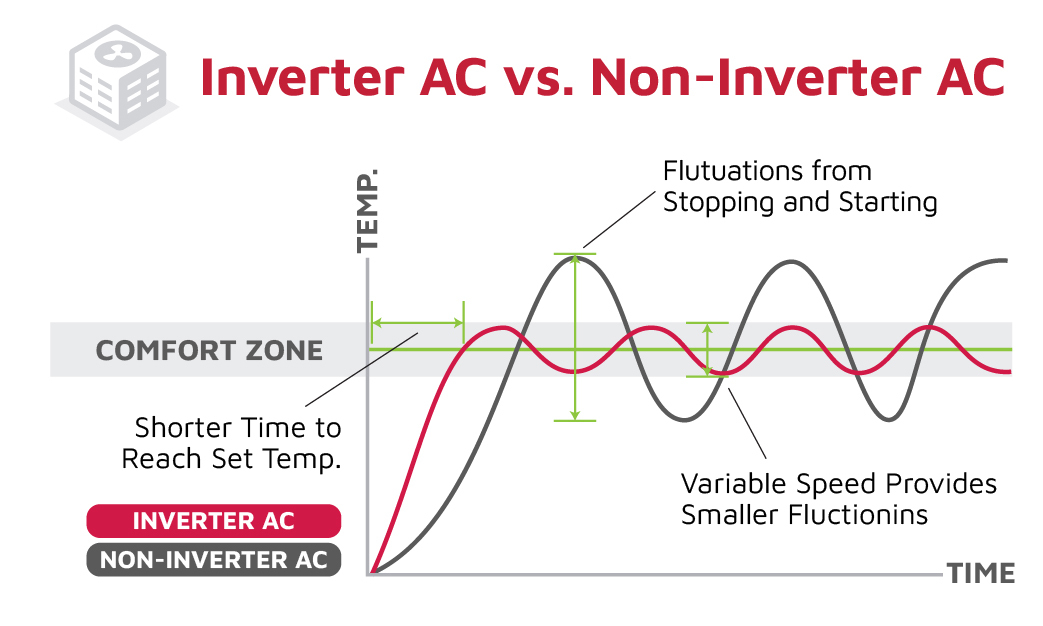
The key component behind inverter technology is the variable-speed compressor. Instead of running at one fixed speed, the compressor adjusts automatically based on your home’s heating or cooling demand.
When the temperature inside your home is far from your set point, the compressor speeds up to reach it quickly. Once the ideal temperature is achieved, it slows down and maintains that level without shutting off.
How Inverter Technology Differs from Traditional Systems?
The main difference between inverter and traditional HVAC systems lies in how they manage energy use and maintain comfort.

- Compressor Operation
Traditional systems operate in an on/off cycle — the compressor runs at full power until the desired temperature is reached, then shuts off completely before starting up again when more heating or cooling is needed.
Inverter systems, by contrast, run continuously at variable speeds. The compressor adjusts its output based on demand, maintaining comfort more efficiently. - Energy Consumption
Non-inverter systems draw large amounts of electricity each time the compressor restarts, causing frequent energy spikes.
Inverter systems consume less energy overall by maintaining a steady operating level instead of repeatedly cycling on and off. - Temperature Control
Conventional systems allow noticeable temperature swings as the system turns on and off.
Inverter systems deliver consistent, precise temperature control that keeps indoor conditions stable. - Noise Level
Because traditional systems ramp up to full power each time they start, they’re typically louder during operation.
Inverter systems start and stop gradually, resulting in much quieter performance both indoors and outdoors. - System Lifespan
Frequent cycling in non-inverter systems puts greater strain on components, leading to faster wear and shorter equipment life.
Inverter systems experience less mechanical stress thanks to smoother, continuous operation, which helps extend their lifespan.
Because inverter systems avoid the stress of frequent start-stop cycles, they tend to last longer, run more quietly, and operate more efficiently.
Applications for Inverter Technology in HVAC Systems
Inverter technology is widely used in various HVAC applications, including air conditioners, heat pumps, and ductless mini-split systems. Its ability to provide precise temperature control makes it ideal for residential settings. By maintaining a consistent indoor climate, inverter systems enhance comfort and improve indoor air quality.
Whether you live in a humid southern climate or a region with cold winters, inverter systems adapt to your comfort needs while using energy more efficiently than traditional on/off systems.
Benefits of Inverter Technology for Homeowners
Homeowners who switch to inverter-based systems often notice an immediate difference in performance, comfort, and efficiency.
- Lower energy bills
Because the compressor adjusts its speed rather than cycling on and off, inverter systems use less electricity. According to the S. Department of Energy, inverter systems can reduce energy consumption by up to30% compared to traditional systems, making them a smart choice for budget-conscious homeowners. - Consistent indoor comfort
Inverter systems eliminate the temperature swings common with conventional HVAC units. They maintain a steady indoor temperature that feels more natural and comfortable. - Quieter operation
The gradual start and stop of inverter compressors means significantly less noise during operation. You’ll enjoy a quieter environment both inside your home and outside near the unit. - Longer equipment lifespan
Traditional compressors experience more wear and tear due to frequent cycling. By operating smoothly at variable speeds, inverter systems experience less strain and can last longer with proper maintenance. - Reduced environmental impact
Many inverter systems are ENERGY STAR® certified, a distinction that recognizes their ability to meet the U.S. Environmental Protection Agency’s rigorous standards for energy efficiency and performance. Lower energy consumption means fewer greenhouse gas emissions. Choosing an inverter system supports a more sustainable home and aligns with eco-friendly energy goals.
Are There Any Drawbacks?
While inverter technology offers clear advantages, there are a few considerations. Inverter systems typically have a higher upfront cost than standard models. However, the long-term energy savings, quieter operation, and extended lifespan often offset this initial investment.
Maintenance and repairs should also be handled by qualified HVAC professionals familiar with inverter technology, as the components are more advanced than traditional systems.
Why Homeowners Are Choosing Inverter Systems?
From central air conditioners to ductless mini-splits and heat pumps, inverter technology is rapidly becoming the new standard in energy-efficient home comfort. Homeowners who upgrade often find that their systems respond faster, operate more quietly, and deliver consistent comfort without the constant cycling that drives up energy costs.
If you’re considering replacing your HVAC system, an inverter-based model offers long-term benefits that go far beyond comfort. It’s an investment in efficiency, reliability, and peace of mind that can deliver long-term savings in the form of lower utility bills and reduced system wear.
Inverter technology represents the next generation of home heating and cooling. With the ability to adapt to your comfort needs in real time, it keeps your home cozy in winter, cool in summer, and efficient all year long.