
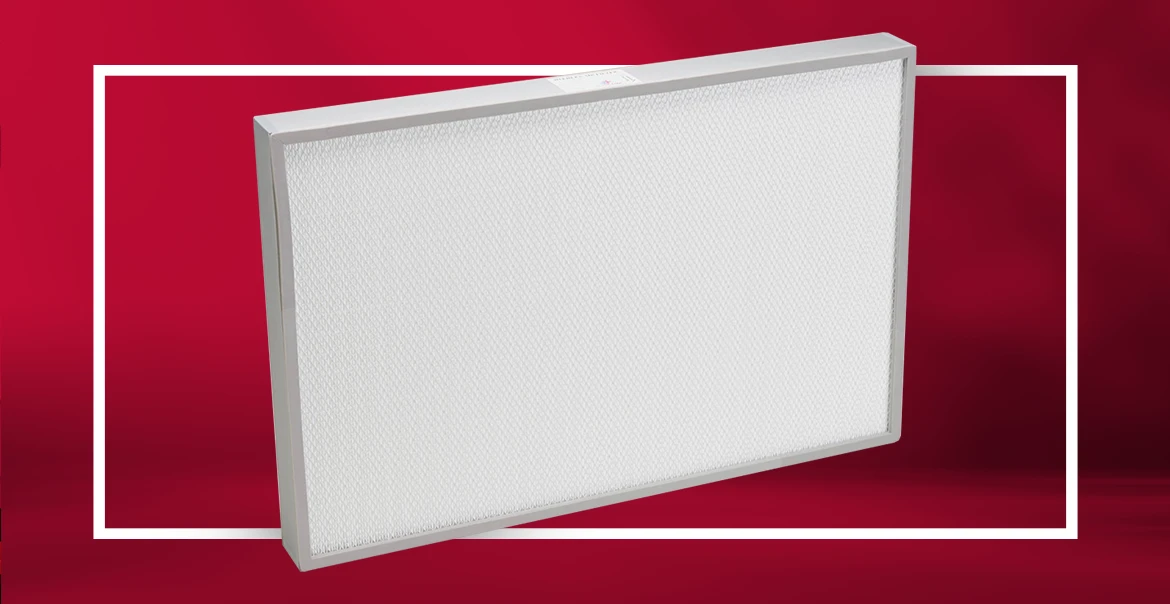
Indoor air may look clean while still carrying a mixture of fine particles. Everyday activities such as cooking, cleaning and spending time with pets can add material to the air. Outdoor pollen, smoke and pollution may also enter through open doors, windows and small gaps around the home.
HEPA filters give homeowners a way to reduce many of these airborne particles. However, choosing an effective solution takes more than finding a product with “HEPA” on the label. You also need to consider the area you want to treat, your HVAC system’s capabilities and the maintenance each option requires.
What Is a HEPA Filter?
HEPA is short for High-Efficiency Particulate Air, a filtration standard that requires removing at least 99.97% of airborne particles at 0.3 microns in size. Although 0.3 microns is the measurement used for testing, HEPA media can also capture particles above and below that size with high efficiency.
Within the MERV rating system, HEPA performance is associated with ratings from MERV 17 through 20. That level of filtration comes from dense media that can create more airflow resistance than an ordinary residential filter.
HEPA filters appear in hospitals and purpose-built HVAC filtration systems. For residential use, the right application depends on whether a homeowner needs focused filtration in one room or coverage throughout the house.
How HEPA Filters Work?
Instead of functioning like a basic screen, a HEPA air filter relies on a dense maze of fibers. Air can pass through this material, but suspended particles have difficulty following the same path.
Some particles run directly into the fibers. Others drift close enough to attach to them, while larger particles may be unable to maneuver through the filter’s winding air passages. These different capture methods allow one filter to collect particles across a range of sizes.
A HEPA filter improves the air that passes through it. It cannot clean air that never reaches the unit, which makes placement, operating time and airflow important parts of performance.
Types of HEPA Filters
True HEPA and HEPA-Type Filters
“True HEPA” indicates that a filter meets the recognized 99.97% particle-removal standard. “HEPA-type” describes products that may resemble HEPA filters, but are not necessarily verified against that same benchmark. Checking the product specifications can help homeowners understand what level of filtration they are purchasing.
Whole-Home HEPA Systems
A whole-home option works alongside central heating and cooling equipment to filter air from multiple rooms. Because HEPA media can restrict airflow, these systems require equipment designed to accommodate that resistance. Adding a HEPA filter directly to an incompatible return slot may reduce system airflow instead of improving performance.
Benefits of Using HEPA Filters
HEPA filtration can collect several particles commonly found in residential air:
Household dust
Pollen
Pet dander
Dust mite debris
Mold spores
Some bacteria
Fine particles from smoke or outdoor pollution
This filtration can be especially useful in homes with pets, allergy concerns or recurring dust. People spend approximately 90% of their time indoors, and certain pollutants may occur indoors at concentrations two to five times higher than typical outdoor levels.
Homeowners sometimes ask, “Do HEPA filters remove mold?”. They can trap mold spores carried through the air, but they do not eliminate existing growth or stop the moisture allowing it to return. Correcting the source of moisture remains necessary. The EPA recommends keeping indoor relative humidity between 30% and 50% to prevent mold growth.
Signs Your HEPA Filter Needs Replacement
A filter may need attention when you notice:
Less air moving through the supply vents
Faster dust accumulation around the home
Persistent odors near the unit
A return of allergy-related discomfort
Visible dirt covering the filter media
Longer HVAC cycles or uneven temperatures
These changes do not always point to the filter alone, but they provide a practical reason to inspect it.
Causes of HEPA Filter Performance Issues
The filter’s life may be reduced in a home with pets, ongoing remodeling or elevated smoke and pollen levels. A missing or dirty prefilter can also allow larger debris to reach the HEPA media sooner.
Installation problems create another concern. If the filter does not fit securely, air can move around it without being cleaned. If the connected equipment cannot overcome the filter’s resistance, airflow may decline. In an air-conditioning system, insufficient airflow can contribute to a frozen unit by restricting airflow across the evaporator coil.
When to Replace or Service a HEPA Filter?
Replacement timing varies by product and household, but filters in whole-home systems typically last up to a year, with annual replacement recommended.
Those ranges are starting points, not guarantees. Operating hours, pets, household activity and outdoor conditions all affect how quickly the filter collects debris. Follow the equipment manufacturer’s instructions and inspect the filter sooner when airflow or air quality changes.
HEPA filters do not usually lose their ability to trap particles all at once. Instead, accumulated material makes it harder for air to pass through. Replacing the filter at the proper time helps preserve useful airflow.
Why Professional Installation Matters?
A professional HVAC technician can determine whether existing equipment and ductwork can support a whole-home HEPA system. The evaluation may include airflow testing, equipment compatibility, cabinet sizing, and sealing.
Tips to Maintain HEPA Filter Performance
Review the manufacturer’s care and replacement instructions.
Check the prefilter and HEPA media at regular intervals.
Keep furniture and other objects away from intakes and outlets.
Confirm that the filter sits firmly in its housing.
Clean dust from the exterior of the unit.
Replace visibly damaged or heavily loaded media.
Wash a filter only when the manufacturer specifically identifies it as washable.
Consistent care may help the filter reach its expected service life, but cleaning cannot restore disposable HEPA media once it becomes loaded.
Find the Right HEPA Filtration Solution for Your Home
The best HEPA filter for a home is one that matches the space, indoor air concerns and available equipment. A Lennox dealer can review your current system, assess airflow and help you determine which indoor air quality solutions make the most sense for your needs. Find a Lennox dealer to start exploring your options.
We’re here to help make home comfort solutions a little clearer and a lot less stressful.
No Worries. It’s a Lennox.