
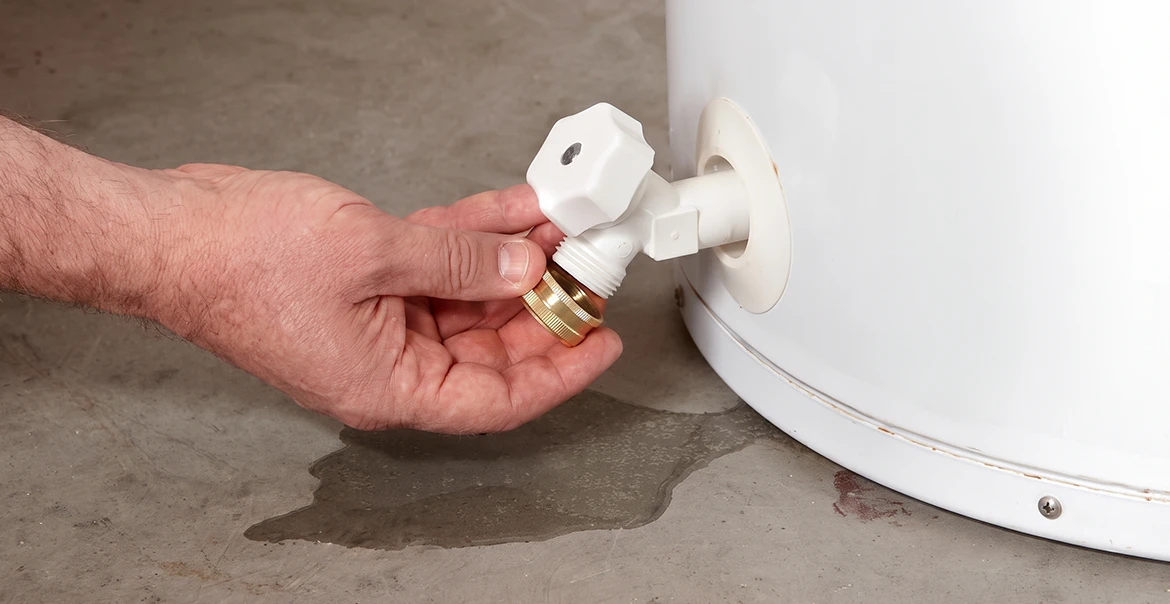
What Is a Water Heater Drain Valve?
Your water heater’s drain valve is located close to the base of the tank. It creates a controlled exit point for the tank’s water, which is necessary when the unit needs maintenance, service, or removal.
Minerals naturally carried by household water can settle inside the tank. Opening the drain valve allows water to carry this material out through an attached hose. Without a working valve, draining and flushing the water heater becomes more difficult, and buildup may remain inside the unit.
Is a Leaking Drain Valve Dangerous?
A water heater drain valve dripping slowly may not create an immediate emergency, but it should still be investigated.
Risk of Water Damage
A repeated drip can leave flooring, walls, insulation, and nearby belongings damp. Mold may begin developing within 24 to 48 hours of water exposure, so even a limited amount of moisture deserves attention.
Potential for Tank Corrosion
Water that remains around the tank base can contribute to rust. Corrosion may affect the valve, its connection point, or other parts of the water heater.
Long-Term Impact on System Lifespan
The leak itself may point to sediment accumulation or aging components. If those conditions continue, the water heater may become less reliable and require additional repairs.
When It Becomes Urgent
Respond immediately when water is spreading across the floor, the valve looks split, the tank shows visible damage, or the leak is close to electrical equipment. Shut down the water heater and its incoming water supply if you can do so safely.
Signs Your Water Heater Drain Valve Is Leaking
Possible signs of a drain valve problem include:
A puddle that returns after the floor has been dried
Droplets forming at the valve opening
Water appearing around the valve’s connection to the tank
Reddish discoloration or pale mineral residue
Changes in the amount or consistency of available hot water
Longer or less predictable heating cycles
Before choosing a repair, confirm where the water begins. A leak higher on the unit can run down the tank and make the drain valve appear responsible.
Why Is Your Water Heater Drain Valve Leaking?
Loose Drain Valve
Changes in temperature and normal equipment movement can gradually shift a threaded valve. Once the connection is no longer snug, water may escape around its base.
Worn-Out Washer or Seal
The valve relies on an internal sealing component to hold back water. Years of heat and pressure can degrade that material, causing a drip even when the handle is fully closed.
Sediment Buildup
Calcium, magnesium, and other minerals can collect near the bottom of the tank. If particles become caught inside the valve, they may leave a narrow path for water to pass through.
Faulty or Damaged Valve
A fractured plastic body or severely corroded metal valve cannot be restored by tightening it. Physical damage typically means the component must be replaced.
Improper Installation
A valve may leak if it entered the fitting at an angle, was not secured correctly, or failed to form a watertight connection during installation.
How to Stop a Water Heater Drain Valve From Leaking?
Turn off the unit’s electricity or gas and close the cold-water inlet before working around the valve. Remember that water remaining in the tank may be extremely hot.
Tightening the Valve
A slight clockwise adjustment may stop water escaping from a loose connection. Apply pressure gradually and stop when the valve feels secure. Forcing it farther can break plastic or damage the tank fitting.
Flushing the Tank
When debris is interfering with the seal, flushing may clear the obstruction. Attach a garden hose, lead it to an appropriate drainage location, and follow the manufacturer’s instructions for emptying the tank. Continue until the discharge appears clear.
Using a Valve Cap
A properly fitted garden hose cap may control dripping from the valve outlet until a repair can be arranged. It does not correct a broken seal, cracked body, or underlying pressure problem, so it should only serve as a temporary measure.
Replacing the Valve
Valve replacement involves emptying the tank, removing the existing part, preparing the replacement’s threads, and installing it without damaging the tank connection. A valve that is stuck, heavily rusted, or difficult to access is better handled by a licensed plumbing contractor.
How to Prevent Future Drain Valve Leaks?
1. Regular Maintenance
Periodically inspect the bottom of the water heater. Fresh moisture, rust marks, and mineral deposits can reveal a developing leak before it spreads.
2. Periodic Flushing
Flush the tank once a year. Homes with hard water may benefit from flushing every six months because minerals can accumulate more quickly.
3. Professional Inspections
An annual inspection can uncover corrosion, pressure concerns, and worn components that may not yet be producing visible symptoms.
What Affects the Cost of Fixing a Leaking Water Heater Drain Valve?
When it comes to fixing a leaking water heater drain valve, the scope of the problem determines the repair cost. Tightening a connection is far less involved than removing a corroded valve or repairing a damaged fitting. Valve material, labor, accessibility, and the condition of the tank can all affect the final estimate.
When to Replace the Entire Water Heater?
Tank-style water heaters generally last 8 to 12 years. Once a unit reaches that range, recurring leaks may indicate that several components are nearing the end of their useful life.
Replacement may be more practical when repairs are becoming frequent, performance has declined, or the expected repair cost approaches 50% of the cost of a new unit.
Frequently Asked Questions
Can I Use My Water Heater if the Drain Valve Is Leaking?
A minor drip may not immediately interrupt operation, but continued use can allow the leak to worsen. Shut the unit down if the flow increases, water approaches electrical components, or the tank appears damaged.
Is a Small Drip Something to Worry About?
Yes. A slow leak can still stain surfaces, encourage corrosion, and expose surrounding materials to prolonged moisture.
Can Sediment Cause the Valve to Leak?
Yes. Mineral particles can keep the valve from closing tightly. Flushing the tank may clear the material if the valve itself is still in good condition.
How Can I Stop a Water Heater From Leaking at the Bottom Temporarily?
Shut off the energy source and incoming cold water if it is safe to do so. Place a container beneath the leak, and consider a compatible valve cap for a drip coming directly from the outlet. Arrange a permanent repair rather than relying on the cap.
Address Your Leaking Drain Valve Before It Becomes an Issue
The right response depends on whether the water tank is leaking from the drain valve because of debris, a weak seal, a loose fitting, or structural damage. Identifying the source early gives you more options and helps limit moisture damage. If the tank is corroded or the repair is outside your comfort level, arrange a professional inspection with a licensed plumbing contractor.
We’re here to help make home comfort solutions a little clearer and a lot less stressful.
No Worries. It’s a Lennox.