
Understanding Your Mini-Split System and Its Compressor
Before diving into diagnostics, it helps to understand what a mini-split system actually is and how it differs from a traditional central AC setup. A mini-split is a ductless system made up of two main components: an indoor air handler and an outdoor unit. Unlike a standard central air system that relies on ductwork to distribute conditioned air, a mini-split delivers heating and cooling directly to the space it serves, no ductwork needed. That targeted efficiency is one of its biggest advantages.
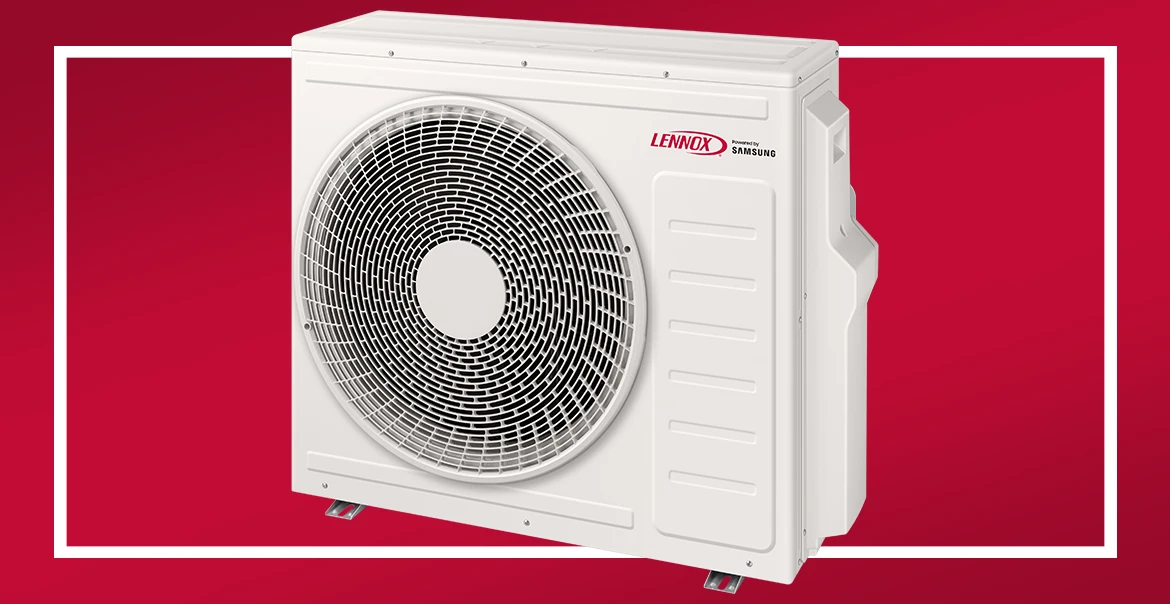
The compressor lives inside the outdoor unit and acts as the driving force behind your entire system. It puts refrigerant under pressure and moves it through a closed loop connecting the indoor and outdoor components, and that continuous movement is what produces conditioned air on either end. In heating mode, the cycle reverses direction, pulling heat from outside air and transferring it indoors rather than expelling it. Pull the compressor out of that equation, and the system is reduced to a fan blowing unconditioned air.
That’s an early clue that the compressor is specifically at fault: the indoor air handler runs and moves air, but the temperature in the room never changes. When the fan operates normally, and the outdoor unit stays completely silent, power is reaching the indoor side while the outdoor unit is not responding at all.
Signs Your Mini-Split Compressor Is Not Working
Watch for these indicators before you start troubleshooting:
Indoor unit runs, but no cooling or heating is produced
Outdoor unit is completely silent when the system is commanded to run
Clicking or humming sounds from the outdoor unit with no full startup
Warm air blowing from a system set to cool
Common Causes of a Mini-Split Compressor Not Turning On
Power Supply Issues
The outdoor unit is the first place power problems show up, and they are more common than most homeowners expect. A tripped breaker, a blown fuse, a loose wire at the connection point, or an outdoor disconnect box that was left open after maintenance can all cut power before it ever reaches the compressor. Voltage spikes from storms or grid fluctuations can also push the system into a protective shutdown. If you are dealing with no power to your AC compressor, start at the breaker panel and the outdoor disconnect box. Those two locations will either confirm the problem or clear it quickly.
Faulty Thermostat or Remote Settings
This is one of the most overlooked causes, and it is almost always the easiest to fix. If the system is set to Fan Only rather than Cool or Heat, the compressor will never receive a call to operate. The same is true when the target temperature is not separated from the current room temperature by at least 3 to 5 degrees Fahrenheit. The system simply has no trigger. Weak or dead remote batteries and dropped communication between the remote and the indoor unit round out the list of common culprits. Before assuming a mechanical failure, switch the mode, adjust the setpoint, swap the batteries, and try running the system directly from the controls on the indoor unit.
Capacitor Failure
Think of the start/run capacitor as the ignition charge for the compressor motor. Without it delivering a strong burst of electricity at startup, the motor cannot get off the ground. A failing capacitor often produces a telltale symptom: the outdoor unit hums for a few seconds and then goes quiet, or it clicks repeatedly without completing a full startup cycle. This is not a repair to attempt on your own. Capacitors store a dangerous electrical charge that does not discharge when the power is cut, making them hazardous without the proper training and tools.
Control Board Problems
The printed circuit board is essentially the brain of the mini-split system. It receives the signal to cool or heat and then orchestrates every component response, including the command to start the compressor. When the board malfunctions, that command may never go out, even when every other part of the system is fully operational. Most mini-split systems communicate board faults through error codes displayed on the indoor unit, whether that is a flashing light pattern or an alphanumeric sequence. If you see an error code, pull up your owner's manual and decode what the system is showing you before drawing any other conclusions.
Refrigerant Issues
Refrigerant is the working fluid that makes your entire system function, and when its charge drops due to a leak, a low-pressure safety switch steps in and shuts the compressor down before damage can occur. An overcharged system triggers the opposite reaction: a high-pressure cutoff that produces the same result. Both conditions stop the compressor from running. Refrigerant handling is regulated at the federal level, and only technicians holding specific certification can legally diagnose and repair these issues. This is strictly a call-a-professional situation.
Compressor Overload Protection
Every mini-split compressor includes a built-in thermal overload protector, and it exists for one reason: to shut the system down before heat buildup causes permanent damage. Dirty outdoor coils, restricted airflow around the unit, or sustained operation during extreme temperature conditions are the usual triggers. After the protector trips, the system will typically attempt a restart on its own somewhere between 30 minutes and two hours later. If your mini-split compressor is not staying on and keeps cutting out shortly after startup, thermal overload is worth investigating before anything else.
Faulty Compressor
When all other causes have been ruled out, internal mechanical failure becomes the likely explanation. A seized motor, a cracked valve, or worn-out windings can make it physically impossible for the compressor to start. The sound the outdoor unit makes, or does not make, can be an early indicator. A unit that is completely silent when it should be running points more strongly toward total failure than one that hums or clicks. A confirmed compressor failure is the costliest repair on this list, and depending on the system's age and overall condition, a full replacement may be the more financially sound path forward.
How to Troubleshoot a Mini-Split Compressor That Won't Turn On?
Step 1: Inspect Thermostat and Remote Settings
Make sure the mode is set to Cool or Heat, not Fan Only. Verify the target temperature is at least 3 to 5 degrees from the current room reading. Swap out any remote batteries if the display looks dim, and try running the system from the indoor unit's manual controls to confirm whether the remote itself is the issue. If you’re running into further problems, a thermostat replacement might be necessary.
Step 2: Look for Error Codes
Check the indoor unit's display for any flashing lights or fault codes. Use your owner's manual to decode what the system is displaying. These codes often point directly to the cause and tell you whether professional service is needed immediately.
Step 3: Inspect the Outdoor Unit
Walk to the outdoor unit and do a visual sweep first. Clear away any leaves, overgrown grass, or debris that may be pressed against the coil or blocking the fan intake, then power the system on from the thermostat and listen for any humming, clicking, or silence. If a reset is warranted, cut power at the breaker and leave the system off for a minimum of 30 minutes so the thermal overload protector has enough time to fully recover. Restore power, test, and if the compressor still will not hold, call a professional before any additional reset attempts.
When to Call a Professional?
Some repairs are not negotiable and require a licensed technician:
Electrical issues: Any burnt components, wiring damage, or repeated breaker trips require a licensed HVAC technician. Capacitor replacement, control board diagnosis, and contactor testing all fall into this category due to the risk of electrical shock.
Refrigerant leaks: Only certified technicians can legally handle refrigerant. Pressure faults require specialized recovery equipment and proper certification.
Compressor replacement: A confirmed compressor failure requires professional tools, refrigerant recovery equipment, and the expertise to assess whether replacement makes more sense than a full system upgrade.
Persistent failures: Any recurring issue that reappears after a basic reset should be evaluated by a professional before further damage occurs.
How to Prevent Compressor Issues?
Regular HVAC Maintenance
Annual professional maintenance is the most effective way to extend your compressors' life. A technician will inspect electrical connections, verify refrigerant levels, test capacitors, clean coils, and assess overall system health, ideally before each major season.
Cleaning Filters and Coils
Clean or replace your indoor filters once a month during peak-use seasons. Schedule professional coil cleaning once a year. Keep the area around the outdoor unit clear of leaves, grass clippings, and vegetation to maintain proper airflow.
Cost to Repair a Mini-Split Compressor
Repair costs vary widely depending on what is wrong. Minor fixes, like a capacitor swap, thermostat recalibration, or a breaker reset typically fall in the lower end of the range. Major repairs, including control board replacement, refrigerant leak repair, or a full compressor replacement, carry significantly higher costs that can vary based on the system, location, labor rates, and parts available. Always get a written estimate before authorizing work.
When it comes to the repair-versus-replace decision: if repair costs approach 50 to 70 percent of the price of a new system and the unit is over 10 years old, replacement is often the more sound investment. A Lennox certified dealer can walk you through the numbers specific to your system.
FAQs About Mini-Split Compressors
Why is my mini-split running but not cooling?
The compressor in the outdoor unit is almost certainly not operating. Begin by confirming the mode is set to Cool rather than Fan Only, verifying the setpoint is low enough to call for cooling, and checking the indoor unit display for any active fault codes. If those checks do not surface anything obvious, it is time to call a licensed technician to dig deeper.
Can I reset my mini-split compressor?
Yes. Shut the system off at the breaker, then wait a full 30 minutes. This gives the thermal overload protector enough time to fully reset. Once the wait is up, restore power and run the system normally. If the compressor starts and holds, you are good. If it still will not start or trips off again shortly after, stop there and contact a professional rather than repeating the cycle.
How long do mini-split compressors last?
A well-maintained compressor can hold up for 10 to 15 years. Systems that receive consistent annual service, clean coils, and unobstructed airflow consistently outperform those that are run hard and ignored. If your unit is approaching that 10 to 15-year window and is now showing compressor issues, the repair-versus-replace conversation is worth having sooner rather than later.
Is it worth repairing a compressor?
It depends on two things: the age of the system and the cost of the repair relative to what a new system would run. If the repair estimate lands at 50 to 70 percent or more of a new system's price and the unit is already past the 10-year mark, replacement tends to be the stronger investment. A Lennox certified dealer can walk you through both options with numbers specific to your system.
Keep Your Mini-Splits Running Smoothly
A compressor that will not start is never a comfortable situation, but it’s a diagnosable one. Move through the checklist methodically: power supply first, then settings, error codes, and the outdoor unit. Draw a clear line between what is safe for a homeowner to address and what requires licensed hands, particularly anything tied to wiring, capacitors, or refrigerant. The homeowners who see the fewest emergency service calls are the ones who stay current on annual maintenance. When the time comes to bring in a professional, a Lennox certified dealer has the training, the parts, and the system-specific knowledge to restore your home's comfort the right way. Find a certified Lennox dealer near you to get service scheduled.
We’re here to help make home comfort solutions a little clearer and a lot less stressful.
No Worries. It’s a Lennox.