
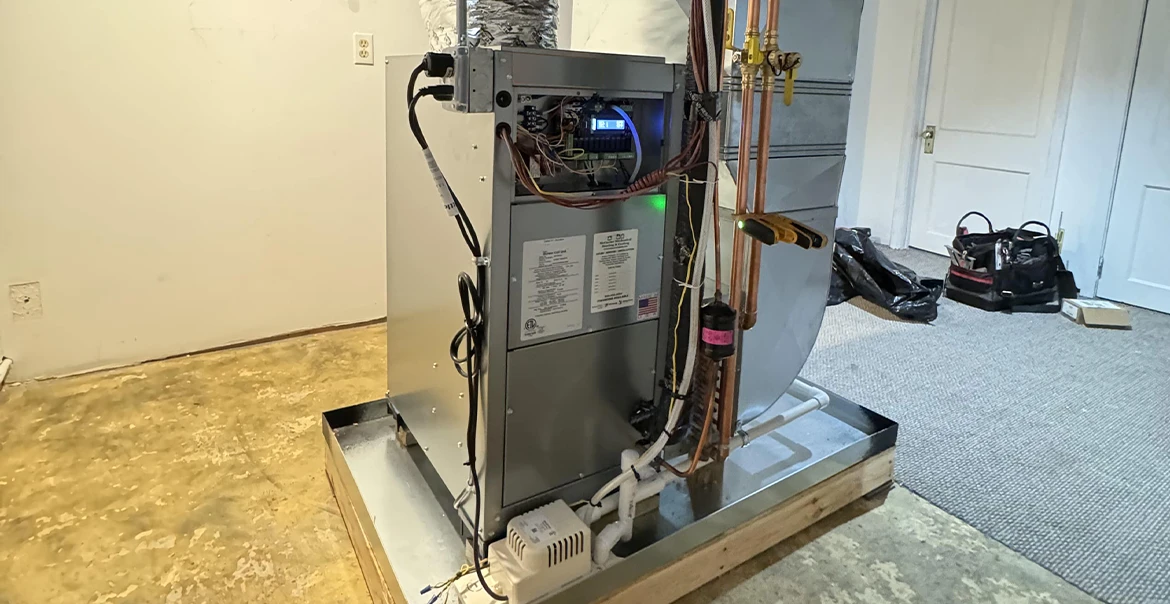
An Overview of High Velocity Air Conditioning
Where conventional HVAC systems rely on wide ducts to move large volumes of air at lower speeds, a high velocity HVAC system takes a different approach entirely: smaller tubing, higher pressure, faster delivery. The result is even, consistent cooling that reaches rooms a standard system sometimes can't comfortably serve. That's what makes these systems a go-to for historic properties, century-old craftsman homes, and additions where preserving the structure is non-negotiable.
How High Velocity Air Conditioners Work?
The physics here are straightforward. The system moves a smaller volume of air but pushes it through narrow, flexible ducts at significantly higher pressure. That high-speed delivery creates an aspiration effect: as conditioned air enters a room through the outlet, it draws surrounding air into the stream and mixes it thoroughly.
That mixing is the key. It eliminates the hot and cold pockets that plague homes with poorly distributed airflow. Floors, corners, rooms above garages: spots that traditional systems often neglect become fully reachable.
Role of Air Handlers and Outlets
The air handler unit sits at the center of the whole operation. It conditions the air and drives it through the duct network. Because high velocity air handlers are compact, they tuck into attics, closets, or crawl spaces without demanding square footage your home doesn't have.
From the air handler, air travels through tubing that's typically 2-3 inches in diameter. That tubing routes through existing wall cavities, under floors, and above ceilings with minimal demolition. At the room level, small round supply outlets, often just 2-3 inches across, deliver airflow discreetly. They blend into ceilings and walls without the visual interruption of large rectangular vents, which matters a great deal in homes with original architectural details worth preserving.
Key Components of a High Velocity AC System
A high velocity system is a type of split system. Here's what the full setup typically includes:
Air Handler Unit
The compact air handler is the workhorse. Unlike standard air handlers, high velocity models are purpose-built for the pressure demands of the system and sized to fit in spaces that would never accommodate a conventional unit. Attics, closets, and utility areas all work.
Small-Diameter Ductwork
The 2-inch flexible, insulated tubing is what separates this system from everything else. It snakes through existing wall cavities with minimal structural disruption, preserving finishes, plaster, and framing that a traditional installation would require cutting through.
Outlet Vents
Round, compact, and easy to style into any room. These supply outlets can go in ceilings, walls, or floors and are designed to be unobtrusive. Maintaining balanced airflow throughout the home means pairing them properly with return air vents.
Thermostat and Control System
High velocity systems are compatible with programmable and smart thermostats, giving homeowners precise control over comfort and schedules.
Benefits of High Velocity Air Conditioners
Space-Saving Design
The 2- to 3-inch tubing requires only a fraction of the space traditional ductwork occupies. For homes where carving out room for large ducts would mean tearing into walls or dropping ceilings, that's a meaningful advantage.
Improved Indoor Air Quality
Because high velocity systems move air continuously at higher speeds, they cycle it through filtration more frequently than slower systems. That means more consistent removal of dust, allergens, and airborne particles throughout the day.
Aesthetic Advantages
Small, round outlets are easy to position discreetly and simple to match with any interior. For historic homes with original crown molding, plaster ceilings, and custom woodwork, keeping the system visually minimal isn't a preference. It's a requirement.
Drawbacks to Consider
1. Higher Initial Installation Cost
Costs to install a high velocity HVAC system are usually higher than a standard central air installation. The specialized equipment, additional labor and materials for duct runs, and the expertise required to size and route the system correctly both factor into that number. It's worth budgeting for accordingly.
2. Lower Efficiency Ratings Compared to Traditional Systems
An AHRI (Air-Conditioning, Heating, and Refrigeration Institute) rating measures the energy efficiency of your HVAC system. For high velocity systems, the AHRI rating is typically lower than those for top-tier variable-capacity central systems.
3. Noise if Not Installed Correctly
Improper installation is the primary cause of noise complaints with these systems. High-speed airflow through incorrectly sized or poorly positioned outlets can produce a whistling or rushing sound that's difficult to live with. This is a job for a qualified HVAC professional, not a weekend project.
Ideal Homes for High Velocity Air Conditioning
High velocity systems aren't for everyone, but for the right home, they're hard to beat. They perform best in:
Older Homes Without Existing Ductwork
If your home was built before central air became common, the walls and ceilings weren't designed around ductwork. High velocity tubing works with what's there instead of demanding that you rebuild it.
Historic Properties Where Preservation Matters
Preserving original architectural features is often just as important as staying comfortable. The minimal footprint of the small-duct system means the home's character stays intact.
Homes With Limited Space for Large Ducts
Plaster walls, finished ceilings, tight utility chases: spaces like these make conventional duct installation prohibitively invasive. Two-inch tubing opens up options that would otherwise be closed.
Retrofit Projects
Adding cooling to a previously uncooled addition, guest suite, or converted space is one of the strongest use cases for high velocity systems. You get real comfort with many small duct runs.
If you're still deciding between approaches, comparing ducted vs. ductless heat pump systems can help you figure out which direction makes the most sense for your home.
Installation Process Overview
If you’re ready to make the switch to a high velocity system, a professional installation follows a clear sequence:
Home Evaluation and System Design
A technician assesses your home's layout, square footage, and existing structure to design a duct routing plan and select the right equipment. Getting this step right determines everything that follows.
Installing Compact Ductwork
The 2- to 3-inch flexible tubing is routed through wall cavities, floor joists, and ceiling spaces. Because it bends and maneuvers where large ducts cannot, most installations require less demolition than a traditional duct job.
Mounting the Air Handler and Vents
The air handler goes into the designated space, whether that's an attic, closet, or utility room. Supply outlets are cut in and positioned according to the system design.
System Testing and Calibration
Before the job is done, the technician tests HVAC static pressure and airflow throughout the system. Proper calibration at this stage is what prevents the noise issues and uneven cooling that come with a rushed installation.
Common Problems and Troubleshooting
Uneven Cooling
The most frequent cause is a blocked outlet or an outlet that was incorrectly sized during installation. Check for furniture or obstructions covering supply vents, and confirm that all outlets are open and unblocked.
Airflow Problems
Restricted airflow typically traces back to a dirty filter or a duct obstruction. Replace filters on a consistent schedule and have ducts inspected if airflow drops noticeably.
Noise Concerns
Whistling or rushing sounds usually mean an outlet is undersized or a duct connection has come loose. Both are fixable, but the fix requires a qualified technician who knows the system.
When to Seek Professional Help
If you've checked filters, cleared obstructions, and the problem persists, it's time to call in a professional. Persistent noise, uneven temperatures across multiple rooms, and unexplained spikes in energy use are all signs that the system needs a trained set of eyes.
Maintenance Tips for High Velocity AC Systems
Regular Filter Replacement
Consistent filter changes are the single most impactful thing a homeowner can do to keep a high velocity system running well. Clogged filters restrict airflow and force the system to work harder than it should.
Cleaning Ducts and Vents
Keeping supply outlets clear is straightforward, but duct cleaning should be handled by a professional with the right equipment. Buildup inside flexible tubing can restrict airflow and degrade performance over time.
Annual Professional Inspections
Once a year, have a qualified technician inspect the full system. They'll check static pressure, test airflow at every outlet, inspect duct connections, and catch small issues before they turn into expensive repairs.
Monitoring Airflow Performance
Pay attention to how your home feels throughout the cooling season. If certain rooms start feeling warmer than usual, or if the system seems to run longer than normal to reach the set temperature, those are early indicators worth investigating.
Energy Efficiency and Performance
High velocity systems deliver real comfort, but it's important to go in with clear expectations around efficiency.
Comparison With Standard HVAC Efficiency
High velocity systems generally don't match the peak efficiency numbers of top-tier variable-capacity central systems. The technology is optimized for installation flexibility and even air distribution, not for chasing the highest possible efficiency rating. Review the AHRI data for any system you're considering before making a final decision.
Tips to Maximize Performance
Keep filters clean and on a regular replacement schedule. Schedule annual professional inspections. Make sure outlet vents stay clear of furniture and obstructions. Pairing the system with a programmable or smart thermostat also adds another layer of control over energy use.
Ready to Find Out if a High Velocity System Is Right for Your Home?
A high velocity air conditioner solves a very specific problem: how to cool a home that wasn't built with central air in mind. For older homes, historic properties, and tight retrofit spaces, it delivers even, consistent comfort with less structural disruption than any conventional alternative.
The tradeoffs are real. Upfront costs are higher. AHRI efficiency ratings run lower than top-tier central systems. And the quality of the installation matters enormously. But for the homes it's designed to serve, this system changes what comfort actually feels like.
The best way to know for sure is to talk with a qualified HVAC professional who can evaluate your home, explain your options, and design a system around your specific space. Find a qualified HVAC professional near you and take the first step toward a home that feels exactly the way it should.
We’re here to help make home comfort solutions a little clearer and a lot less stressful.
No Worries. It’s a Lennox.